
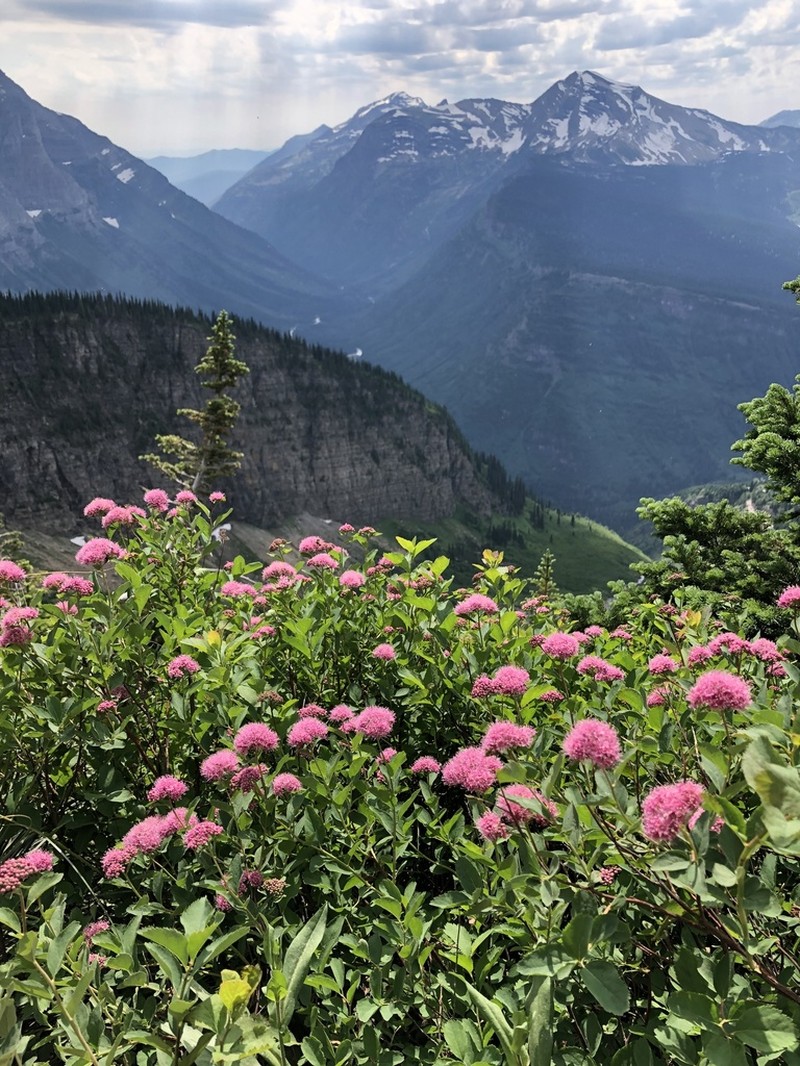
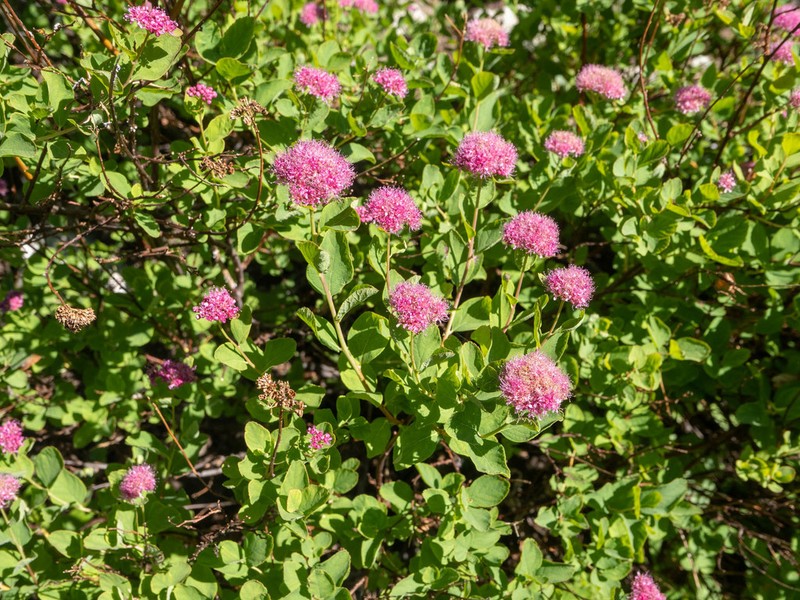
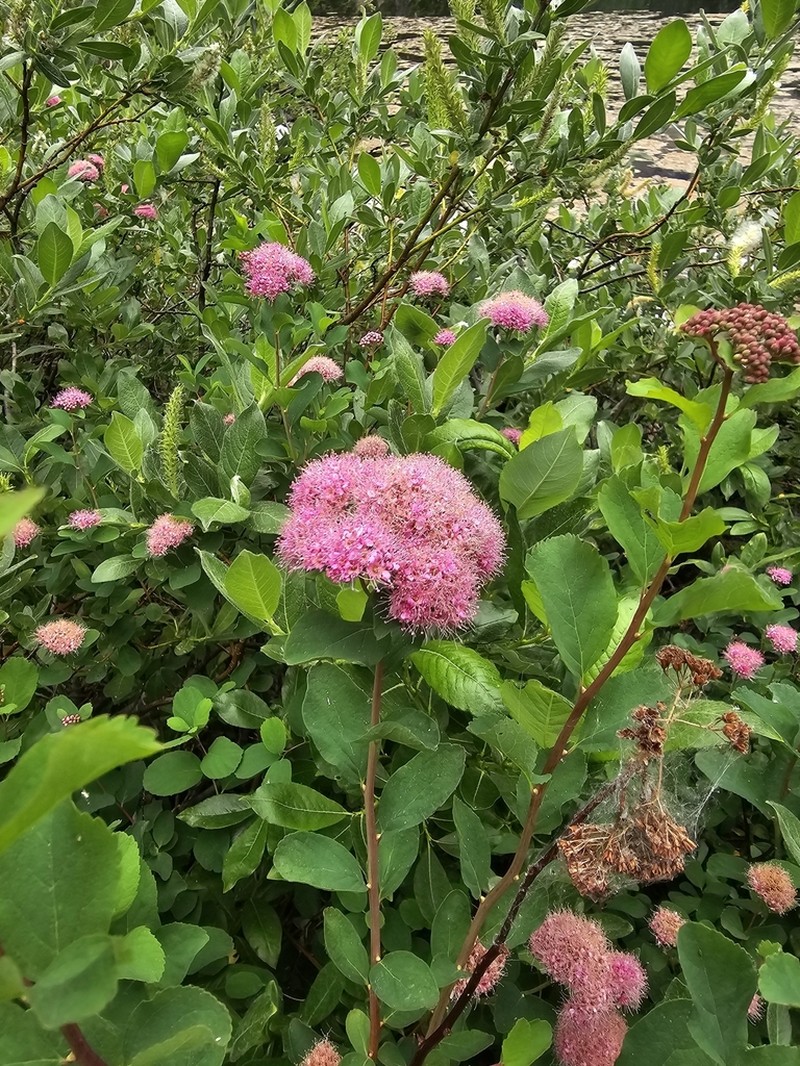
Rose Meadowsweet
Spiraea splendens
- Native to:
- Canada, United States
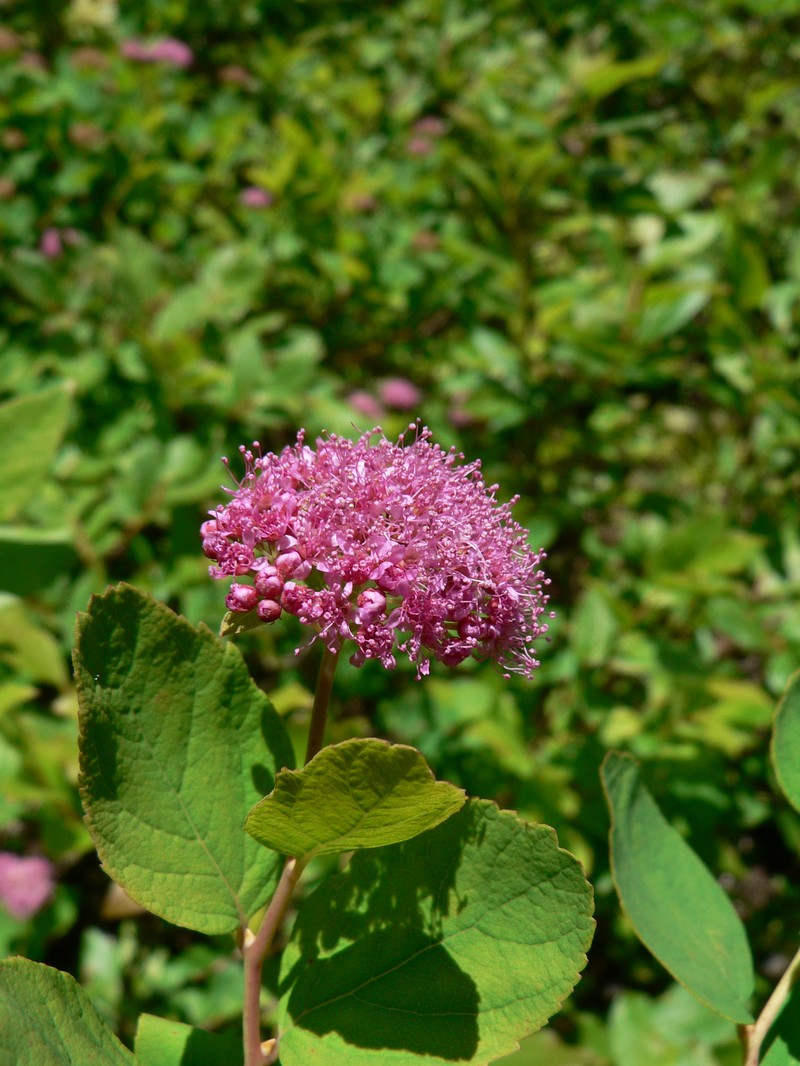
Walter Siegmund (talk)
Taxonomy
- Division:
- Magnoliophyta | - Flowering plants
- Family:
- Rosaceae
- Genus:
- Spiraea
- Species:
- Spiraea splendens
- USDA Symbol:
- SPSP2
Growth Characteristics
- Life Cycle:
- Perennial
- Growth Habit:
- Shrub
- Height:
- 90 cm
- Light Requirements:
- Full Sun
- Drought Tolerance:
- Medium
- Bloom Months:
- jun,jul,aug
- Bloom Colors:
- pink, rose
- Landscaping Shrub:
- Yes
Wildlife Benefits
- Bees:
- ★☆☆☆☆ Documented bee visitation (GBIF)
- Butterflies & Moths:
- ★☆☆☆☆ Documented Lepidoptera association (GBIF)
Keystone Species Ranking
- Caterpillar Keystone:
- ★★★★☆ Butterfly & moth species supported by this genus (NWF)
Reported Fauna Sightings
Garden & Ecology Notes
- Wildlife Value:
- bees, butterflies
- Fall Color:
- red, orange
Soil Requirements
- Soil Type:
- rocky, well-drained loamy soil
- pH:
- 5.5 - 7.0 (slightly acidic to neutral)
- Drainage:
- excellent drainage required
- Moisture:
- dry to moderate
- Notes:
- native to mountainous regions; prefers open, sunny areas
Propagation & Germination
- Stratification:
- Cold/moist stratification required — 30–60 days
- Germination Time:
- 30–90 days
- Notes:
- Seeds benefit from cold moist stratification for 30-60 days; surface sow on moist medium and keep warm after stratification.
Pre-treatment: Seeds are imbibed in water for 24 hrs and placed into a 75 day cold, moist stratification at 1 to 3 C or a 48 days cold-moist stratification. Cuttings are cut into 15 to 20 cm lengths and 8 mm in caliper, treated with 5000 ppm liquid IBA, and struck in mist bed with bottom heat.
Establishment: Seeds are collected in early October when follicles turn brown and begin to split open. Seeds are light tan at maturity. Clusters of follicles are cut from using scissors. Material is collected in paper bags. Collections are kept in a well ventilated drying shed prior to cleaning. Cuttings were collected in late May after snowmelt. The plant is found from British Columbia to Sierran California, east to southeast B.C., Idaho, Montana, and eastern Oregon. It is found mostly in higher elevation forests.
Source: npn.rngr.net
ORGHPS Germination Guide: Sow @ 10C.