
Guettarda speciosa
Guettarda speciosa
- Native to:
- Aldabra, American Samoa, Andaman Is., Australia, Bangladesh, Bismarck Archipelago, Borneo, Cambodia, Caroline Is., Chagos Archipelago, China, Christmas I., Cocos (Keeling) Is., Comoros, Cook Is., Federated States of Micronesia, Fiji, Gilbert Is., Guam, Hainan, India, Jawa, Kenya, Laccadive Is., Lesser Sunda Is., Line Is., Madagascar, Malaya, Maldives, Maluku, Marianas, Marquesas, Marshall Is., Marshall Islands, Mozambique, Mozambique Channel Is., Nansei-shoto, Nauru, New Caledonia, New Guinea, Nicobar Is., Niue, Northern Mariana Islands, Palau, Philippines, Phoenix Is., Pitcairn Is., Samoa, Seychelles, Society Is., Solomon Is., South Africa, South China Sea, Sri Lanka, Sulawesi, Sumatera, Taiwan, Tanzania, Thailand, Tokelau-Manihiki, Tonga, Tuamotu, Tubuai Is., Tuvalu, U.S. Minor Outlying Islands, Vanuatu, Vietnam, Wallis-Futuna Is.
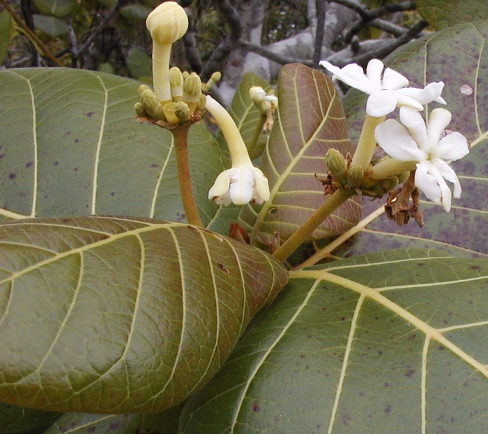
Halenhardy


Taxonomy
- Division:
- Magnoliophyta | - Flowering plants
- Family:
- Rubiaceae
- Genus:
- Guettarda
- Species:
- Guettarda speciosa
- USDA Symbol:
- GUSP3
Growth Characteristics
- Life Cycle:
- Perennial
- Growth Habit:
- Shrub , Tree
- Height:
- 1200 cm
- Light Requirements:
- Full Sun
- Drought Tolerance:
- High
- Bloom Months:
- may,jun,jul,aug,sep
- Bloom Colors:
- white
- Landscaping Shrub:
- Yes
Wildlife Benefits
- Butterflies & Moths:
- ★☆☆☆☆ Documented Lepidoptera association (GBIF)
Garden & Ecology Notes
- Wildlife Value:
- birds, butterflies
- Deer Resistant:
- Yes
- Salt Tolerant:
- Yes
- Fragrant:
- Yes
Soil Requirements
- Soil Type:
- sandy, well-drained, nutrient-poor soil
- pH:
- 6.0 - 7.5 (slightly acidic to neutral)
- Drainage:
- excellent drainage required
- Moisture:
- dry to moderate
- Notes:
- commonly found in coastal areas with salty conditions
Propagation & Germination
Pre-treatment: Seeds are soaked in water to remove any inhibitors and allow full imbibition prior to sowing. Seeds are then sown into deep flats and covered with composted leaf mold.
Establishment: Blaw is indigenous from eastern Africa and tropical Asia, northern Australia to the Marshall Islands and southeastern Polynesia, but not to Hawaii. It is a common coastal strand plant. Mature fruits are hard, ovoid, and yellow-green that turn black at maturity. Fruits are collected throughout the year.
Source: npn.rngr.net