
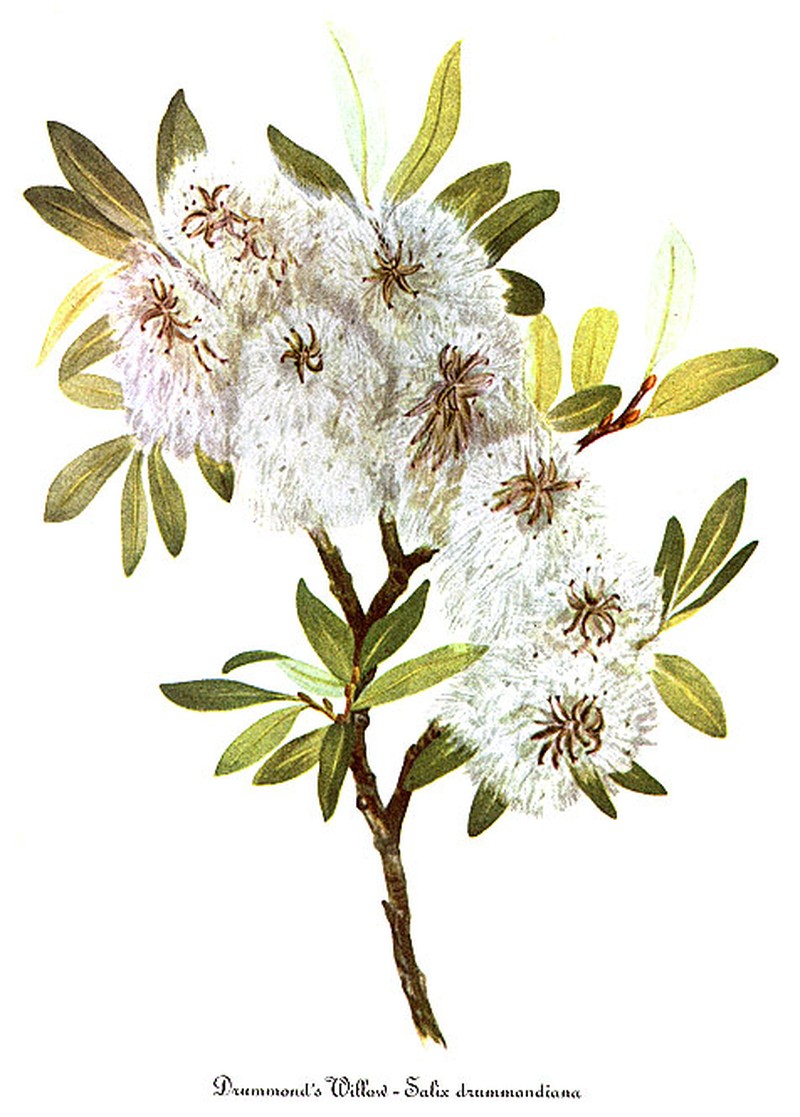
Drummond's Willow
Salix drummondiana
Taxonomy
- Division:
- Magnoliophyta | - Flowering plants
- Family:
- Salicaceae
- Genus:
- Salix
- Species:
- Salix drummondiana
Growth Characteristics
- Life Cycle:
- Perennial
- Growth Habit:
- Shrub
- Height:
- 12-20 ft
- Light Requirements:
- Full Sun
- Drought Tolerance:
- High
- Bloom Months:
- apr, may, jun, jul
- Bloom Colors:
- Yellow, Green, Purple, Brown, Black
- Landscaping Shrub:
- Yes
Native Range
United States: California, Colorado, Idaho, Montana, New Mexico, Nevada, Oregon, Utah, Washington, Wyoming, Canada: Alberta, British Columbia, Northwest Territories, Saskatchewan, Yukon
Keystone Species Ranking
- Caterpillar Keystone:
- ★☆☆☆☆ Based on number of butterfly and moth species using this genus as host plant (Source: National Wildlife Federation)
- Bee Keystone:
- ★☆☆☆☆ Based on number of native bee species using this genus for pollen and nectar (Source: National Wildlife Federation)
Host Plant for Caterpillars
Weidemeyer's Admiral (Basilarchia weidemeyerii)
Soil Requirements
- Soil Type:
- moist, nutrient-rich, well-drained soil
- pH:
- 5.5 - 7.5 (slightly acidic to neutral)
- Drainage:
- tolerates poor drainage
- Moisture:
- consistently moist
- Notes:
- commonly found along streams and riverbanks
Germination Information
Pre-treatment: Cuttings are 15 to 20 cm in length and 7 mm in caliper. They are placed in a 2 minute fungicide bath to remove surface pathogens and treated with 1000 ppm liquid IBA. They are then struck in a mist bed with at least 2 nodes below the surface of the rooting media.
Establishment: Cuttings can be either spring hardwood or summer softwood stem cuttings. Hardwood tip cuttings are collected before bud break, while softwood cuttings can be collected any time of year after flowering.
Source: npn.rngr.net