
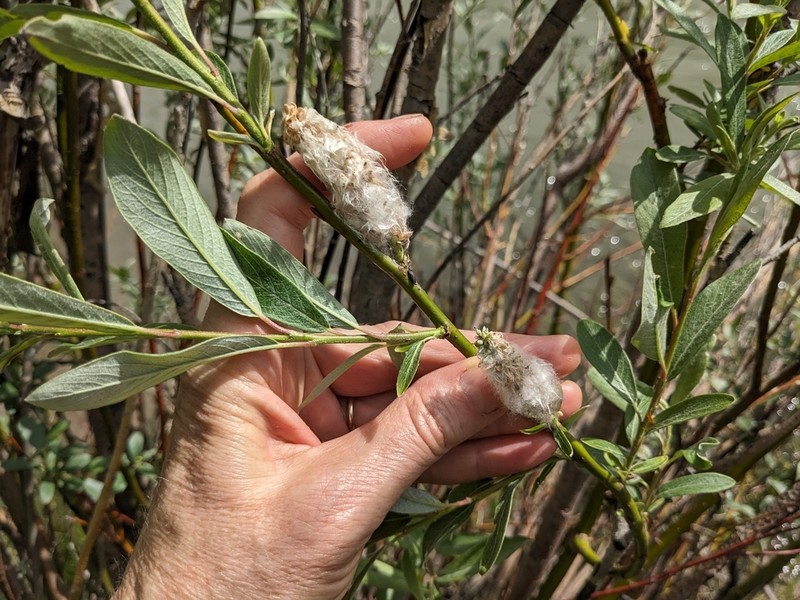
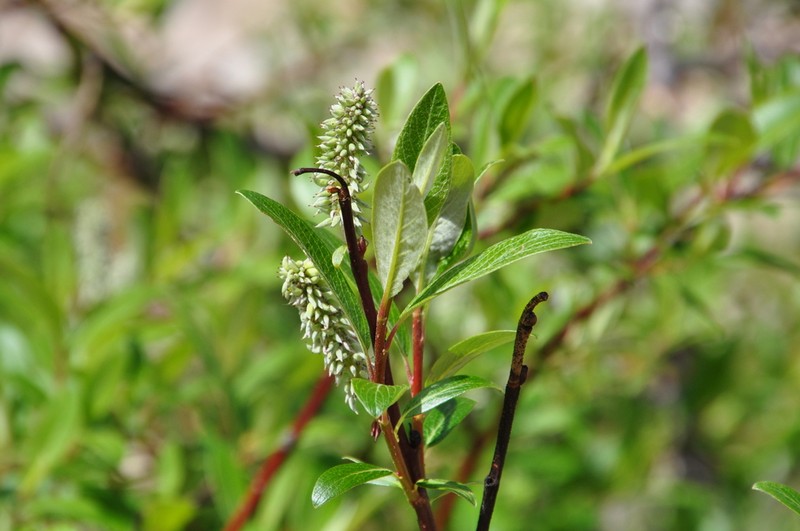
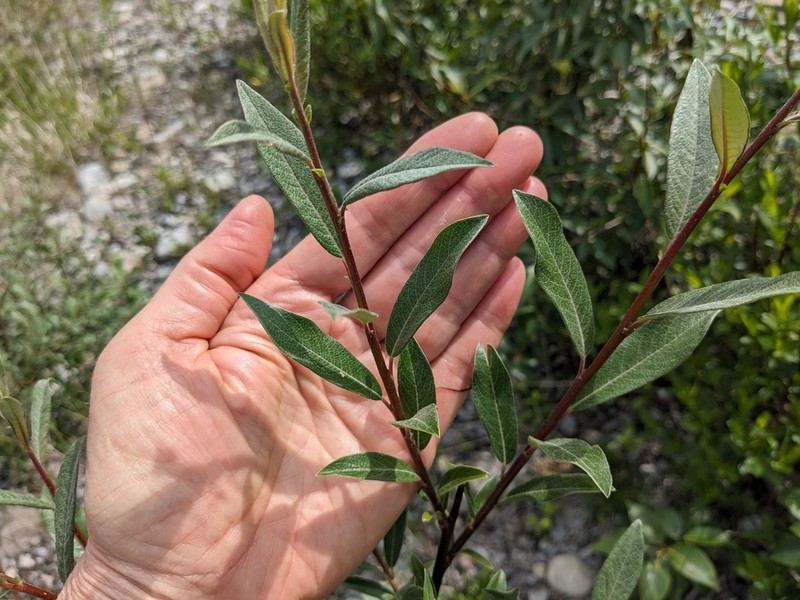
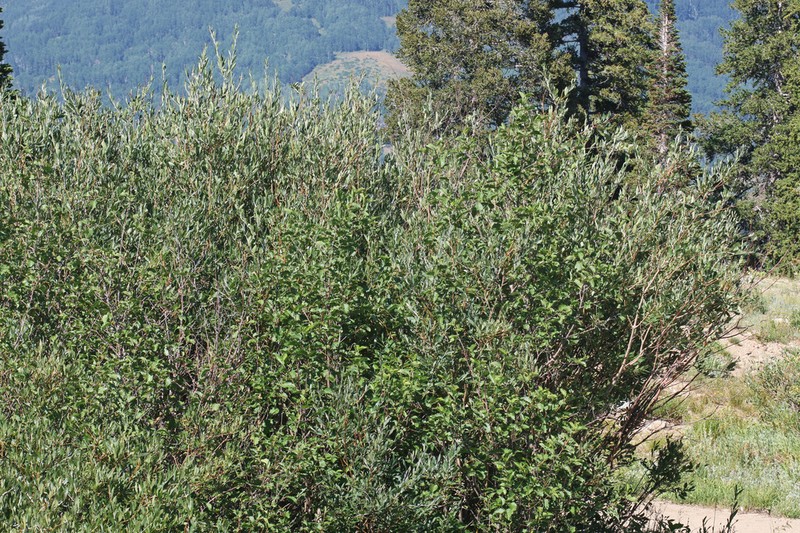
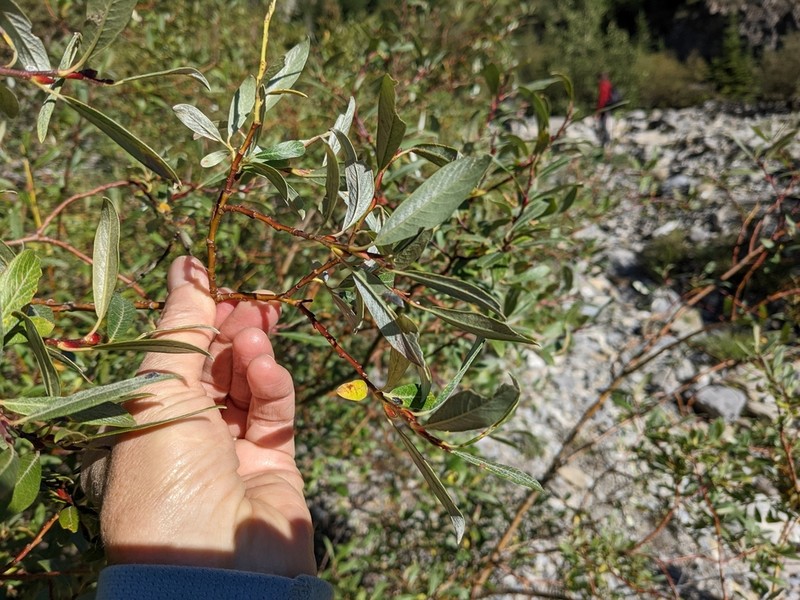
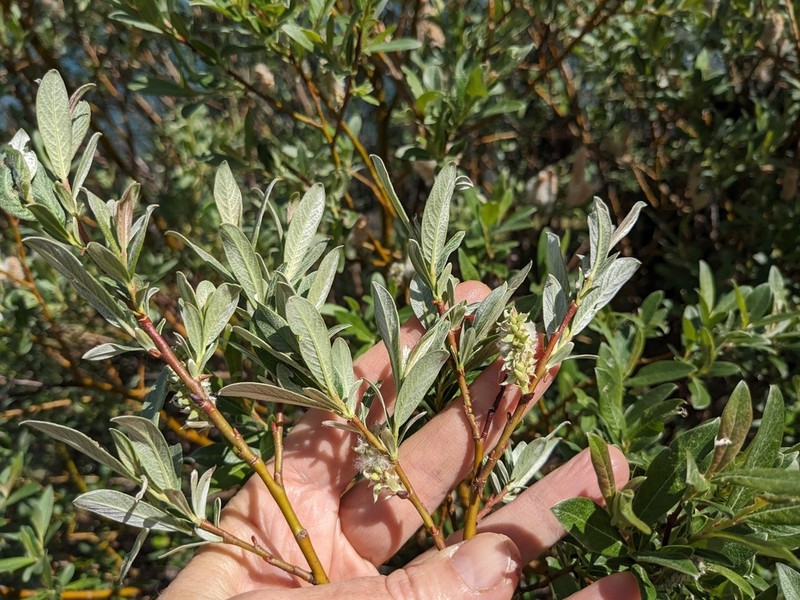
Drummond's Willow
Salix drummondiana
- Native to:
- Canada, United States
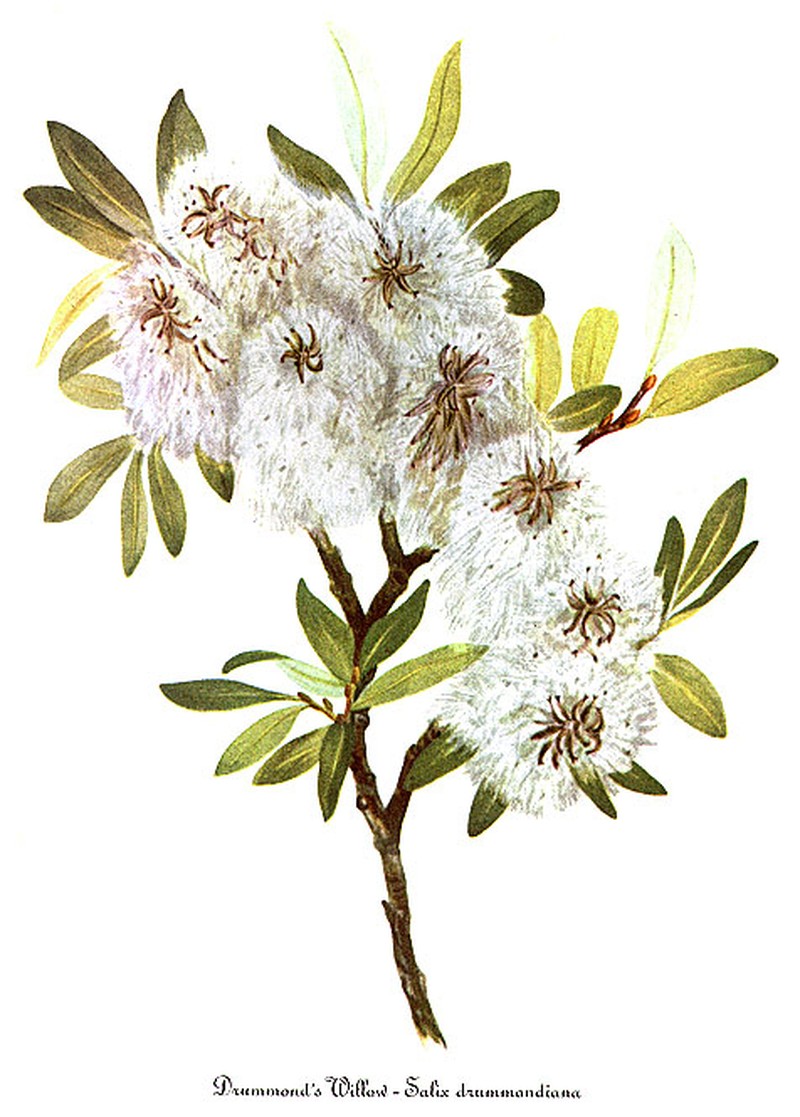
Mary Vaux Walcott (en.wikipedia.org)
Taxonomy
- Division:
- Magnoliophyta | - Flowering plants
- Family:
- Salicaceae
- Genus:
- Salix
- Species:
- Salix drummondiana
- USDA Symbol:
- SADR
Growth Characteristics
- Life Cycle:
- Perennial
- Growth Habit:
- Shrub
- Height:
- 600 cm
- Light Requirements:
- Full Sun
- Drought Tolerance:
- Low
- Bloom Months:
- apr,may
- Bloom Colors:
- yellow, green
Wildlife Benefits
- Bees:
- ★☆☆☆☆ Documented bee visitation (GBIF)
- Butterflies & Moths:
- ★☆☆☆☆ Documented Lepidoptera association (GBIF)
- Caterpillars:
- ★☆☆☆☆ Recorded caterpillar host plant (HOSTS Database)
Keystone Species Ranking
- Caterpillar Keystone:
- ★★★★★ Butterfly & moth species supported by this genus (NWF)
- Pollen Specialist Bee Keystone:
- ★★★★★ Native pollen specialist bee species supported by this genus (NWF)
Host Plant for Caterpillars
Weidemeyer's Admiral (Basilarchia weidemeyerii)
Garden & Ecology Notes
- Wildlife Value:
- bees, butterflies, birds, small mammals
- Fall Color:
- yellow
- Fire Ecology:
- Fire adapted — tolerates or benefits from fire
- Fire Notes:
- Resprouts from root crown after fire; often colonizes burned riparian areas.
Soil Requirements
- Soil Type:
- moist, nutrient-rich, well-drained soil
- pH:
- 5.5 - 7.5 (slightly acidic to neutral)
- Drainage:
- tolerates poor drainage
- Moisture:
- consistently moist
- Notes:
- commonly found along streams and riverbanks
Propagation & Germination
- Stratification:
- Cold/moist stratification required — 30–60 days
- Germination Time:
- 14–30 days
- Notes:
- Seeds are short-lived; sow fresh on moist soil surface without covering.
Pre-treatment: Cuttings are 15 to 20 cm in length and 7 mm in caliper. They are placed in a 2 minute fungicide bath to remove surface pathogens and treated with 1000 ppm liquid IBA. They are then struck in a mist bed with at least 2 nodes below the surface of the rooting media.
Establishment: Cuttings can be either spring hardwood or summer softwood stem cuttings. Hardwood tip cuttings are collected before bud break, while softwood cuttings can be collected any time of year after flowering.
Source: npn.rngr.net