
Arroyo Willow
Salix lasiolepis
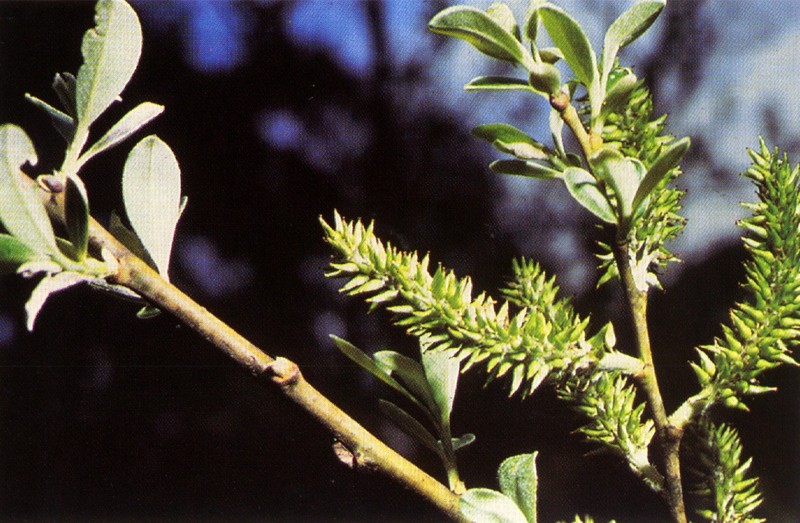
William & Wilma Follette @ USDA-NRCS PLANTS Database / USDA NRCS. Western wetland flora: Field office guide to plant species. West Region, Sacramento, CA.
Taxonomy
- Division:
- Magnoliophyta | - Flowering plants
- Family:
- Salicaceae
- Genus:
- Salix
- Species:
- Salix lasiolepis
Growth Characteristics
- Life Cycle:
- Perennial
- Growth Habit:
- Shrub , Tree
- Height:
- 20-40 ft
- Light Requirements:
- Full Sun
- Drought Tolerance:
- High
- Bloom Months:
- jan, feb, mar, apr, may, jun
- Bloom Colors:
- Yellow, Purple
Native Range
United States: Arizona, California, Idaho, New Mexico, Nevada, Oregon, Texas, Utah, Washington
Keystone Species Ranking
- Caterpillar Keystone:
- ★☆☆☆☆ Based on number of butterfly and moth species using this genus as host plant (Source: National Wildlife Federation)
- Bee Keystone:
- ★☆☆☆☆ Based on number of native bee species using this genus for pollen and nectar (Source: National Wildlife Federation)
Host Plant for Caterpillars
Soil Requirements
- Soil Type:
- rich, moisture-retentive loamy soil
- pH:
- 5.5 - 7.5 (slightly acidic to neutral)
- Drainage:
- tolerates poor drainage
- Moisture:
- consistently moist
- Notes:
- Commonly found in riparian zones and wetlands
Germination Information
Pre-treatment: Cuttings are dipped in a mild bleach solution for 30 seconds, recut to include 3 nodes (5 inches long), treated with Hormex (3000 ppm IBA) rooting powder, and struck in flats containing 3:1 Perlite/Vermiculite.
Establishment: Hardwood cuttings are collected between December 15th and January 31st. Cutting diameter is 3/8 inch to 1/2 inch and length is 10 inches. S. lasiolepis is found below 7,000 feet elevation and is common along streams, from Washington south to California and east to Idaho and New Mexico.
Source: npn.rngr.net