
Shining Willow
Salix lucida
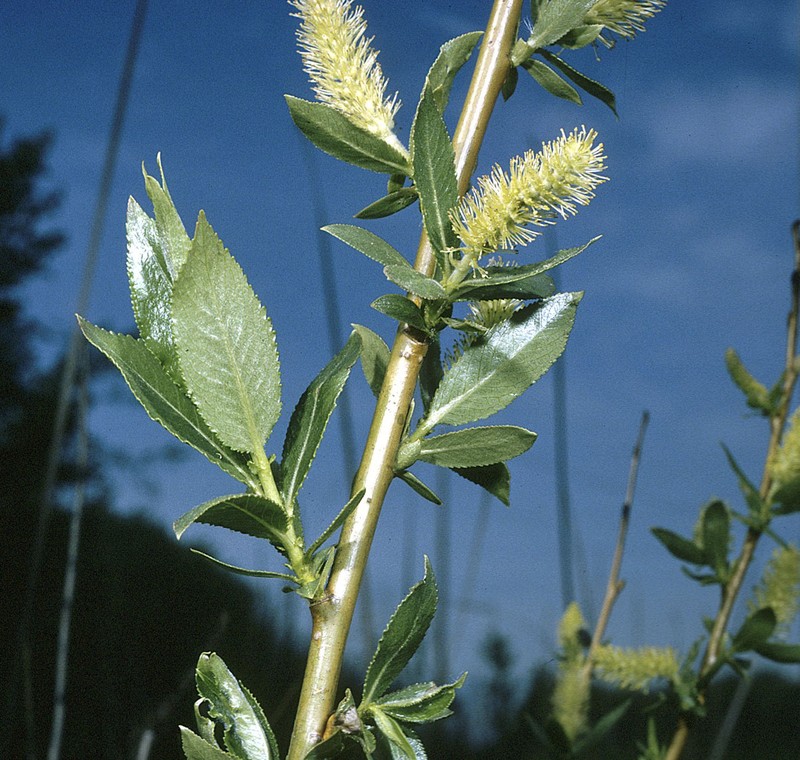
Taxonomy
- Division:
- Magnoliophyta | - Flowering plants
- Family:
- Salicaceae
- Genus:
- Salix
- Species:
- Salix lucida
Growth Characteristics
- Life Cycle:
- Perennial
- Growth Habit:
- Shrub , Tree
- Height:
- 20-40 ft
- Light Requirements:
- Full Sun, Part Shade, Shade
- Drought Tolerance:
- High
- Bloom Months:
- apr, may, jun, jul
- Bloom Colors:
- Yellow
Native Range
United States: Alaska, Arizona, California, Colorado, Connecticut, Delaware, Iowa, Idaho, Illinois, Indiana, Kansas, Massachusetts, Maryland, Maine, Michigan, Minnesota, Montana, North Dakota, New Hampshire, New Jersey, New Mexico, Nevada, New York, Ohio, Oregon, Pennsylvania, Rhode Island, South Dakota, Utah, Virginia, Vermont, Washington, Wisconsin, West Virginia, Wyoming, Canada: Alberta, British Columbia, Manitoba, New Brunswick, Nova Scotia, Northwest Territories, Ontario, Prince Edward Island, Quebec, Saskatchewan, Yukon
Keystone Species Ranking
- Caterpillar Keystone:
- ★☆☆☆☆ Based on number of butterfly and moth species using this genus as host plant (Source: National Wildlife Federation)
- Bee Keystone:
- ★☆☆☆☆ Based on number of native bee species using this genus for pollen and nectar (Source: National Wildlife Federation)
Host Plant for Caterpillars
Soil Requirements
- Soil Type:
- rich, well-drained loamy soil
- pH:
- 5.5 - 7.5 (slightly acidic to neutral)
- Drainage:
- tolerates poor drainage
- Moisture:
- consistently moist
- Notes:
- Commonly found along streams and wetlands
Germination Information
Pre-treatment: None required
Establishment: S. boothii is found throughout western United States and Canada in montane and subalpine riparian areas. Cuttings are collected from stooling beds that are hedged to maintain juvenile wood that is straight and for ease of handling and sticking in field beds. Wild collections are also grown at our nursery and kept separated according to source.
Source: npn.rngr.net