
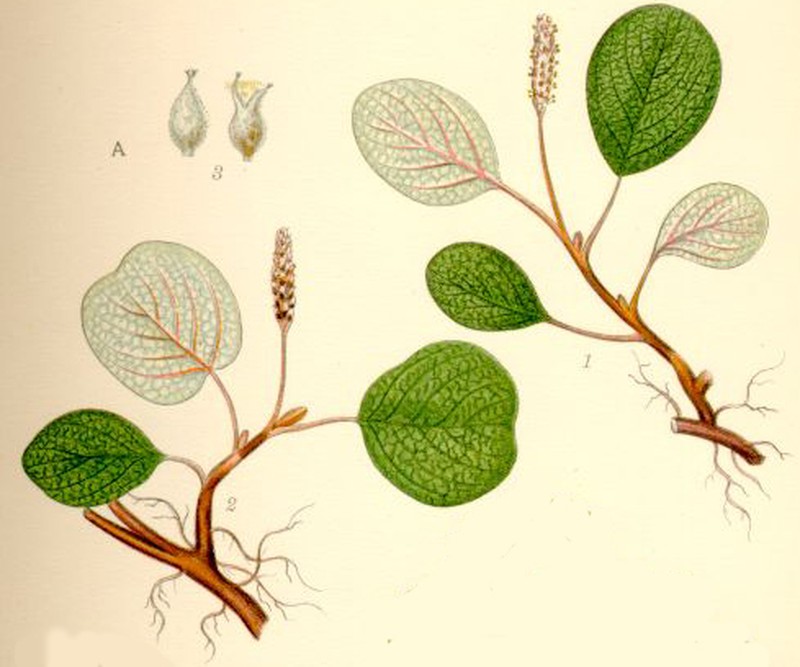
Netleaf Willow
Salix reticulata
Taxonomy
- Division:
- Magnoliophyta | - Flowering plants
- Family:
- Salicaceae
- Genus:
- Salix
- Species:
- Salix reticulata
Growth Characteristics
- Life Cycle:
- Perennial
- Growth Habit:
- Shrub , Subshrub
- Height:
- 6 in - 1 ft
- Light Requirements:
- Part Shade, Shade
- Drought Tolerance:
- High
- Bloom Months:
- mar, apr, may, jun, jul, aug
- Bloom Colors:
- Red, Yellow
- Ground Cover:
- Yes
Native Range
United States: Alaska, Canada: Alberta, British Columbia, Manitoba, Nova Scotia, Northwest Territories, Nunavut, Ontario, Quebec, Saskatchewan, Yukon
Keystone Species Ranking
- Caterpillar Keystone:
- ★☆☆☆☆ Based on number of butterfly and moth species using this genus as host plant (Source: National Wildlife Federation)
- Bee Keystone:
- ★☆☆☆☆ Based on number of native bee species using this genus for pollen and nectar (Source: National Wildlife Federation)
Host Plant for Caterpillars
Soil Requirements
- Soil Type:
- rocky, well-drained, nutrient-poor soil
- pH:
- 5.0 - 7.0 (slightly acidic to neutral)
- Drainage:
- excellent drainage required
- Moisture:
- consistently moist
- Notes:
- Common in alpine and arctic regions.
Germination Information
Pre-treatment: For seeds: Cold moist stratification for 56 days. For cuttings: Hardwood tip cuttings are collected before leaf buds break dormancy, softwood cuttings are collected when stems are fully leafed. Cuttings are 3 to 5 cm in length and 4 mm in caliper and are treated with 1000 ppm IBA.
Establishment: S. reticulata is found in subalpine and alpine zones; from Alaska to Newfoundland and south to New Mexico, Utah and California. S. reticulata ssp. nivalis occurs from southern B.C. and Alberta to California, Utah and south through the Rocky Mountains to New Mexico at high elevations in meadows, talus and scree slopes.
Source: npn.rngr.net