
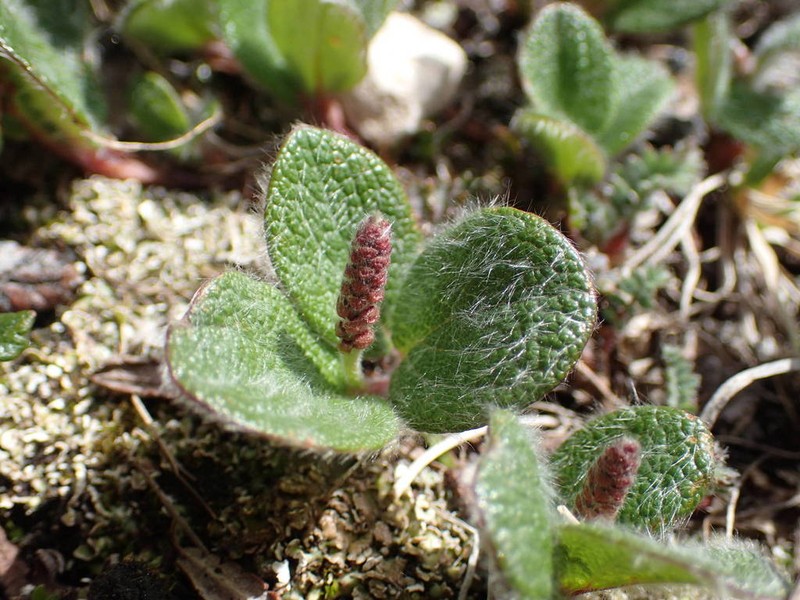
Netleaf Willow
Salix reticulata
- Native to:
- Albania, Aleutian Is., Austria, Bulgaria, Canada, Czechia-Slovakia, Finland, France, Germany, Great Britain, Italy, Kazakhstan, Labrador, Norway, NW. Balkan Pen., Poland, Romania, Russia, Spain, Svalbard, Sweden, Switzerland, United States
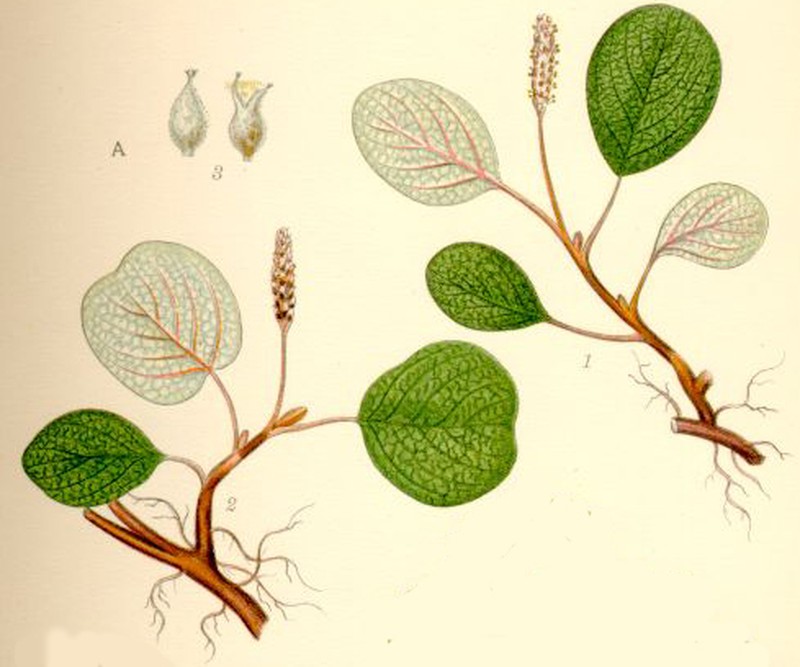
Carl Axel Magnus Lindman (en.wikipedia.org)
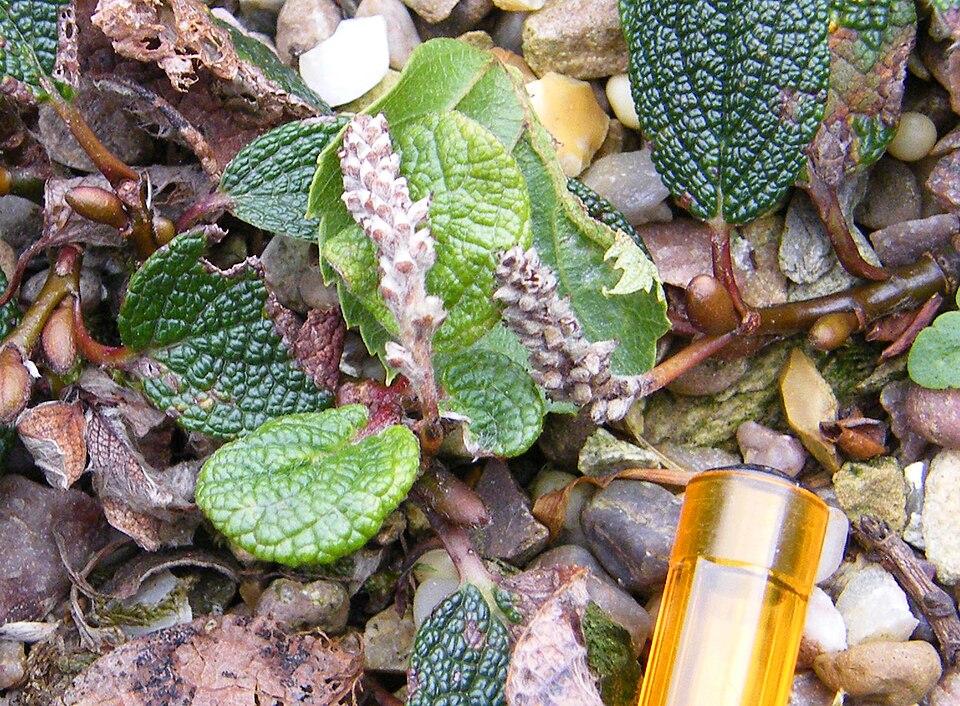
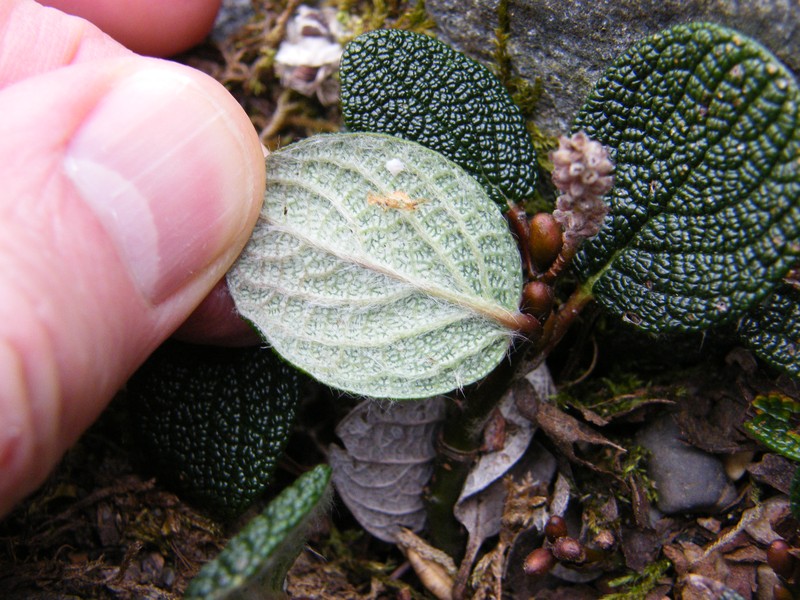
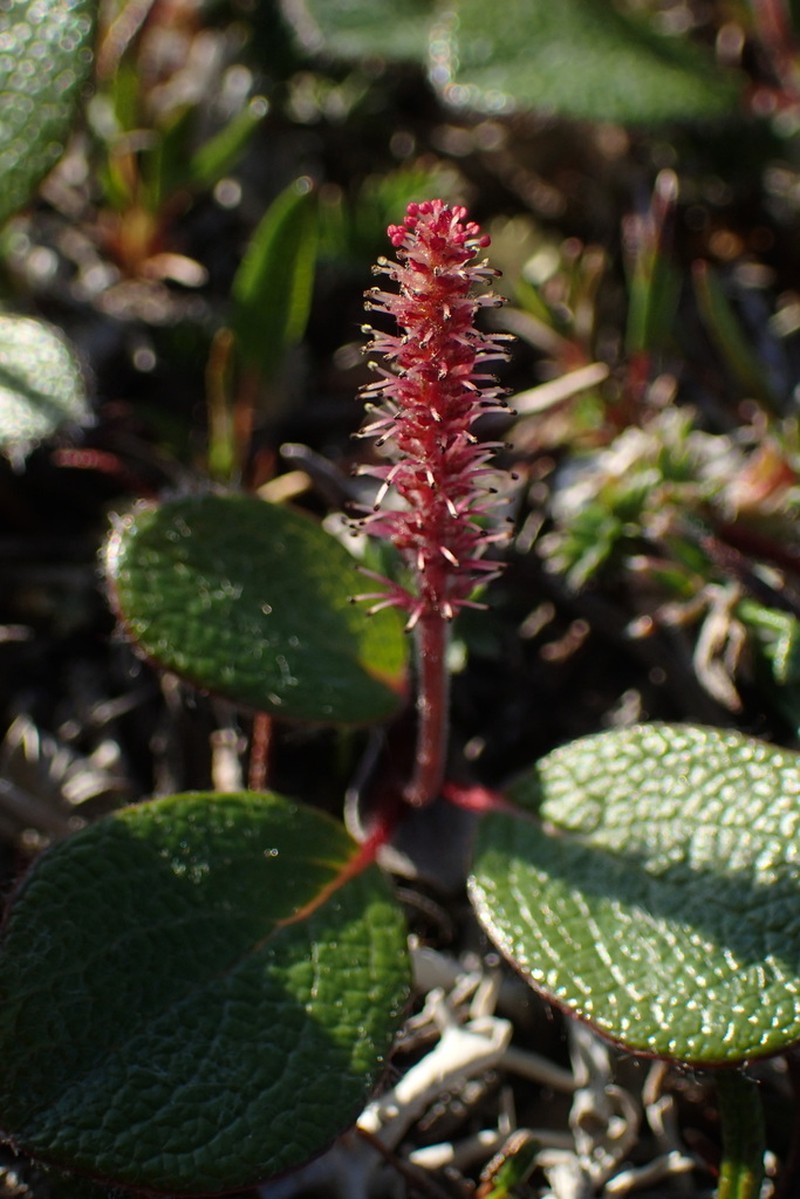
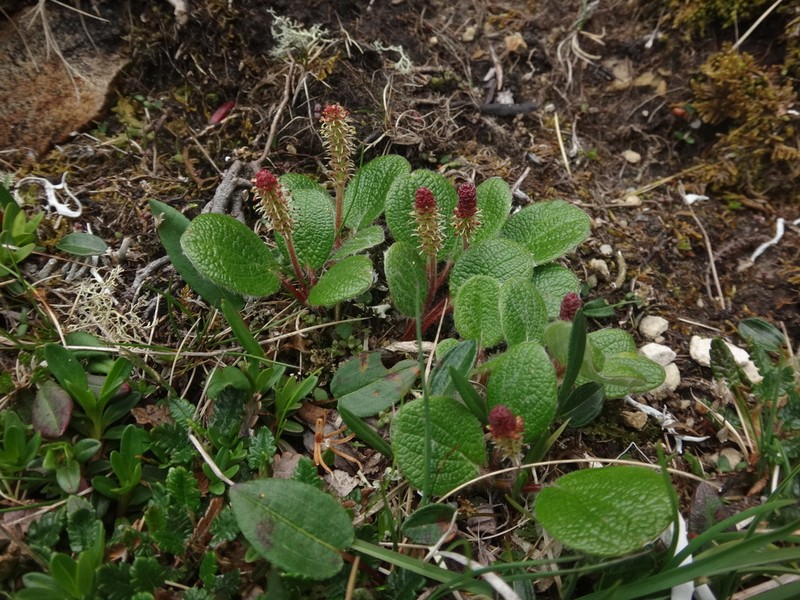
Taxonomy
- Division:
- Magnoliophyta | - Flowering plants
- Family:
- Salicaceae
- Genus:
- Salix
- Species:
- Salix reticulata
- USDA Symbol:
- SARE2
Growth Characteristics
- Life Cycle:
- Perennial
- Growth Habit:
- Shrub , Subshrub
- Height:
- 30 cm
- Light Requirements:
- Part Shade,Shade
- Drought Tolerance:
- Low
- Bloom Months:
- may,jun,jul
- Bloom Colors:
- yellow, green
- Ground Cover:
- Yes
Wildlife Benefits
- Bees:
- ★☆☆☆☆ Documented bee visitation (GBIF)
- Butterflies & Moths:
- ★☆☆☆☆ Documented Lepidoptera association (GBIF)
- Caterpillars:
- ★☆☆☆☆ Recorded caterpillar host plant (HOSTS Database)
Keystone Species Ranking
- Caterpillar Keystone:
- ★★★★★ Butterfly & moth species supported by this genus (NWF)
- Pollen Specialist Bee Keystone:
- ★★★★★ Native pollen specialist bee species supported by this genus (NWF)
Host Plant for Caterpillars
dingy fritillary (Clossiana improba), Giant Sulphur (Colias gigantea), Titania's fritillary (Clossiana titania), 🛑Uncompahgre fritillary (Boloria acrocnema)
Garden & Ecology Notes
- Wildlife Value:
- bees, butterflies, birds
Soil Requirements
- Soil Type:
- rocky, well-drained, nutrient-poor soil
- pH:
- 5.0 - 7.0 (slightly acidic to neutral)
- Drainage:
- excellent drainage required
- Moisture:
- consistently moist
- Notes:
- Common in alpine and arctic regions.
Propagation & Germination
- Stratification:
- Cold/moist stratification required — 60–90 days
- Germination Time:
- 14–30 days
- Notes:
- Seeds are short-lived; sow fresh or stratify cold moist for 60-90 days.
Pre-treatment: For seeds: Cold moist stratification for 56 days. For cuttings: Hardwood tip cuttings are collected before leaf buds break dormancy, softwood cuttings are collected when stems are fully leafed. Cuttings are 3 to 5 cm in length and 4 mm in caliper and are treated with 1000 ppm IBA.
Establishment: S. reticulata is found in subalpine and alpine zones; from Alaska to Newfoundland and south to New Mexico, Utah and California. S. reticulata ssp. nivalis occurs from southern B.C. and Alberta to California, Utah and south through the Rocky Mountains to New Mexico at high elevations in meadows, talus and scree slopes.
Source: npn.rngr.net