
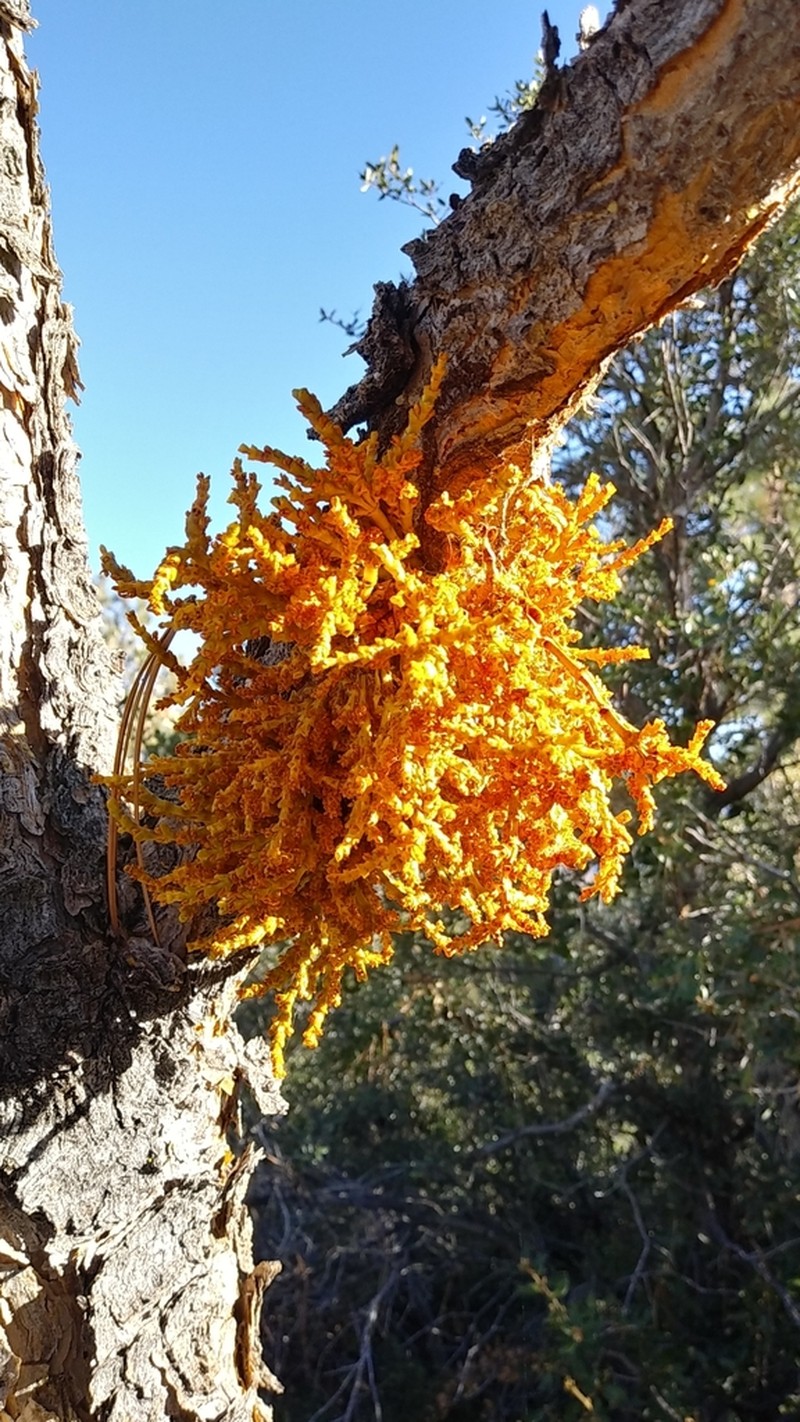
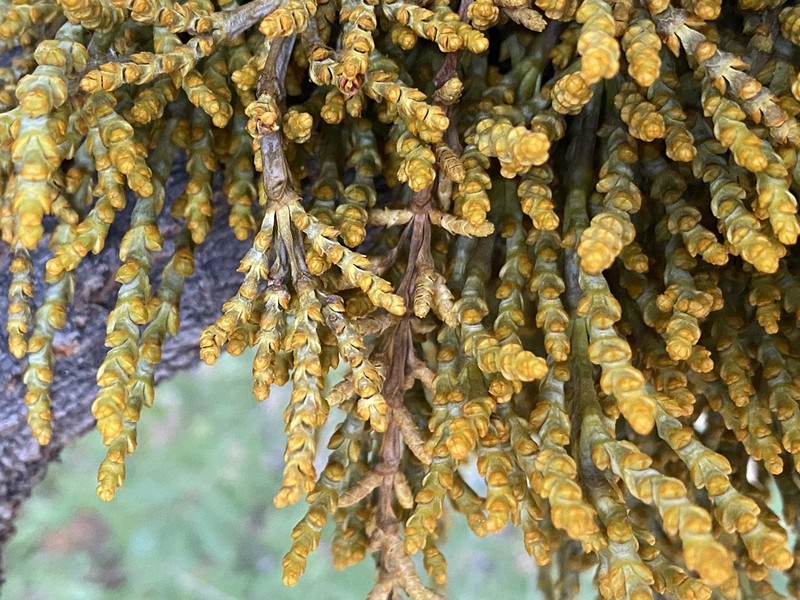
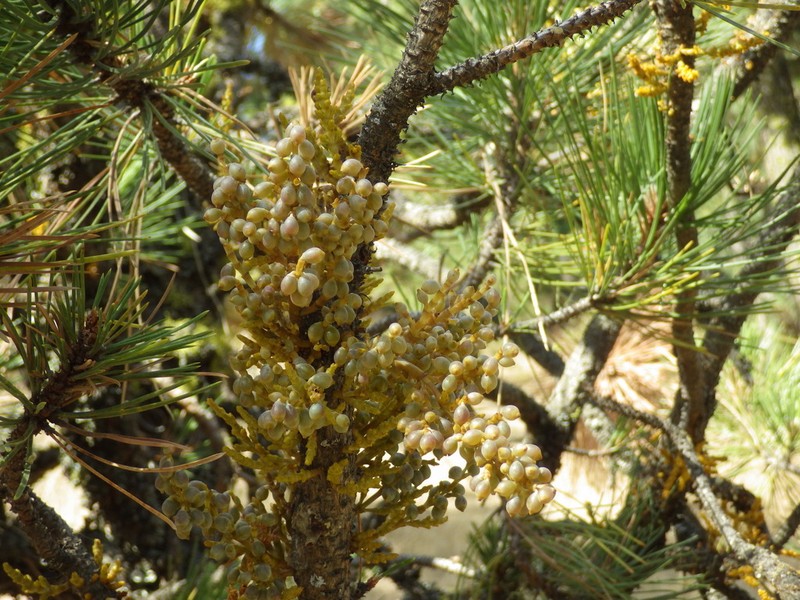
Western Dwarf Mistletoe
Arceuthobium campylopodum
- Native to:
- Canada, Mexico, United States
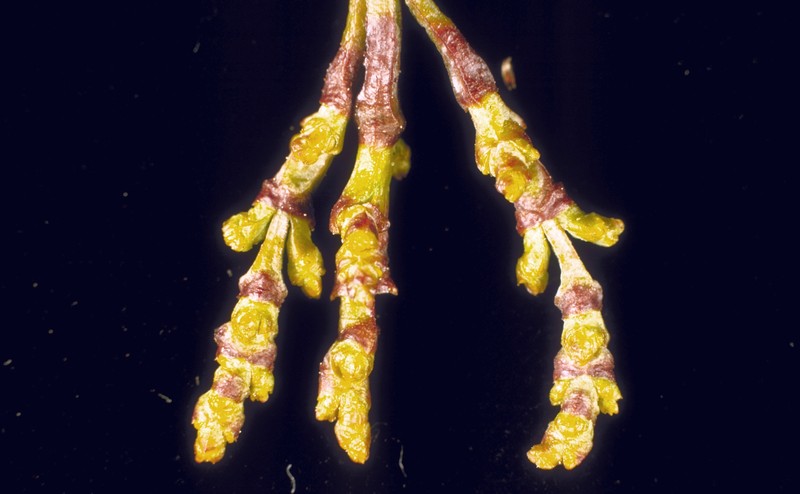
Oscar Dooling
Taxonomy
- Division:
- Magnoliophyta | - Flowering plants
- Family:
- Santalaceae
- Genus:
- Arceuthobium
- Species:
- Arceuthobium campylopodum
- USDA Symbol:
- ARCA3
Growth Characteristics
- Life Cycle:
- Perennial
- Growth Habit:
- Shrub , Subshrub
- Height:
- 30 cm
- Light Requirements:
- Full Sun
- Drought Tolerance:
- High
Wildlife Benefits
- Butterflies & Moths:
- ★☆☆☆☆ Documented Lepidoptera association (GBIF)
- Caterpillars:
- ★☆☆☆☆ Recorded caterpillar host plant (HOSTS Database)
Host Plant for Caterpillars
⚠️Johnson's hairstreak (Mitoura johnsoni), Thicket Hairstreak (Mitoura spinetorum)
Garden & Ecology Notes
- Deer Resistant:
- Yes
- Fire Ecology:
- Fire adapted — tolerates or benefits from fire
- Fire Notes:
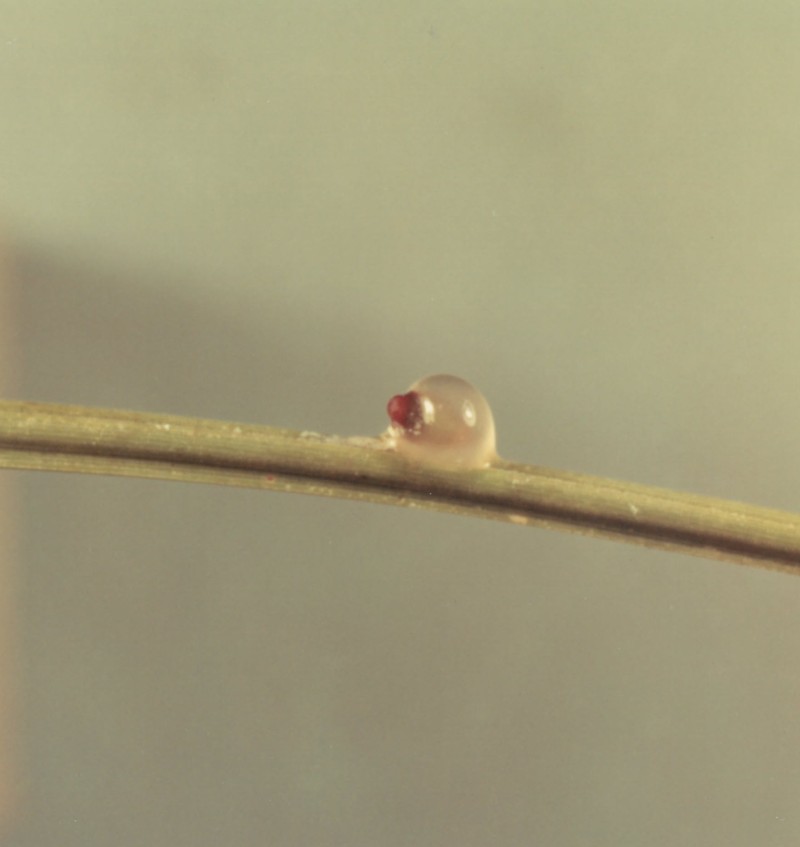
- Seeds are dispersed explosively; fire may reduce host vigor but does not directly stimulate germination.
Soil Requirements
- Soil Type:
- poor, sandy, well-drained
- pH:
- 5.0 - 7.0 (slightly acidic to neutral)
- Drainage:
- excellent drainage required
- Moisture:
- dry to moderate
- Notes:
- parasitic on conifer hosts, soil less critical