
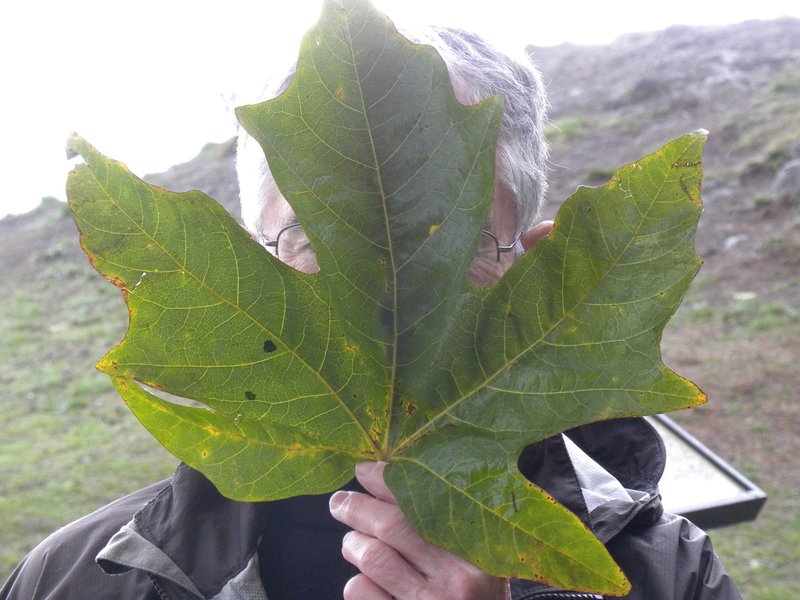
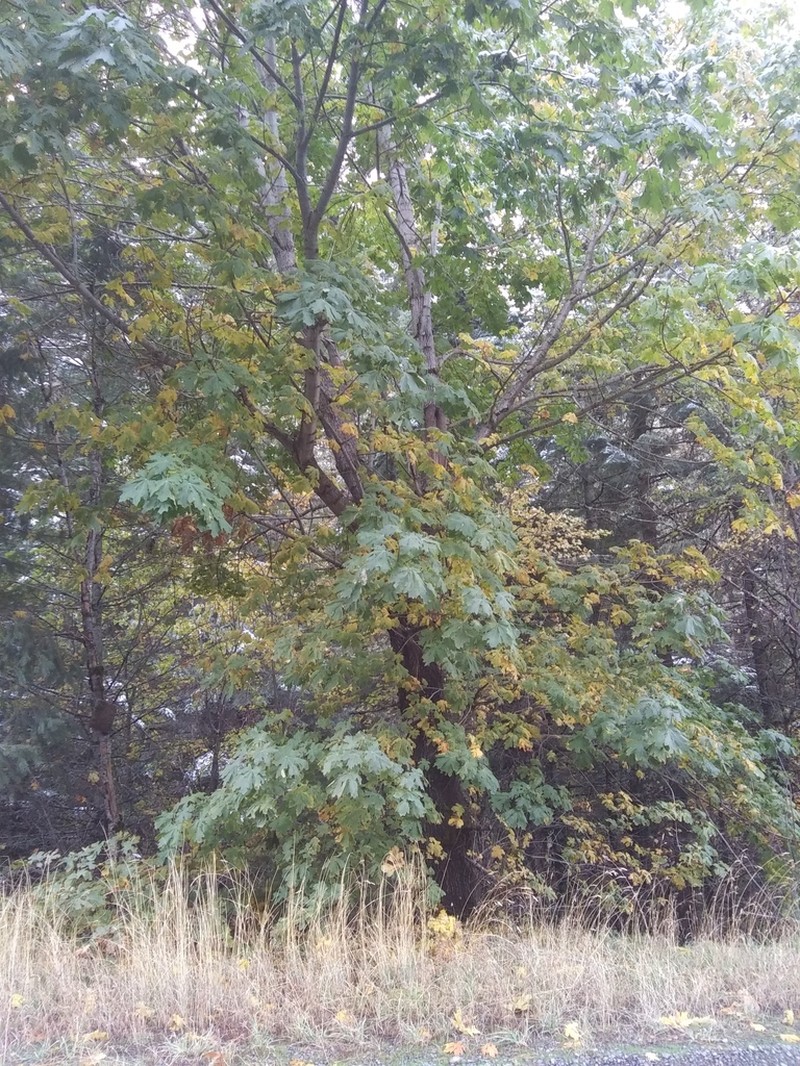
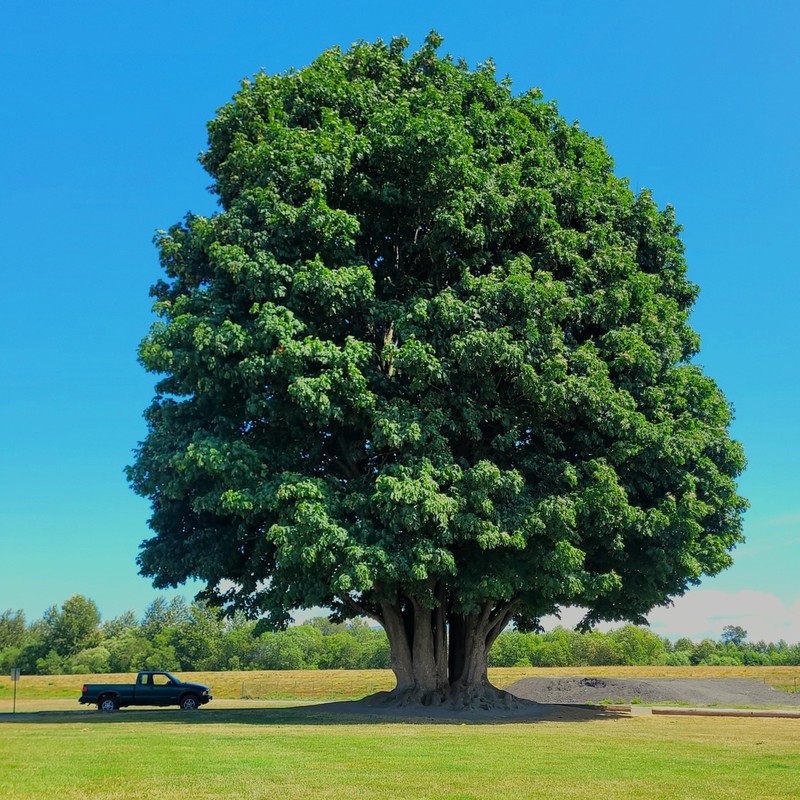
Bigleaf Maple
Acer macrophyllum
- Native to:
- Canada, United States
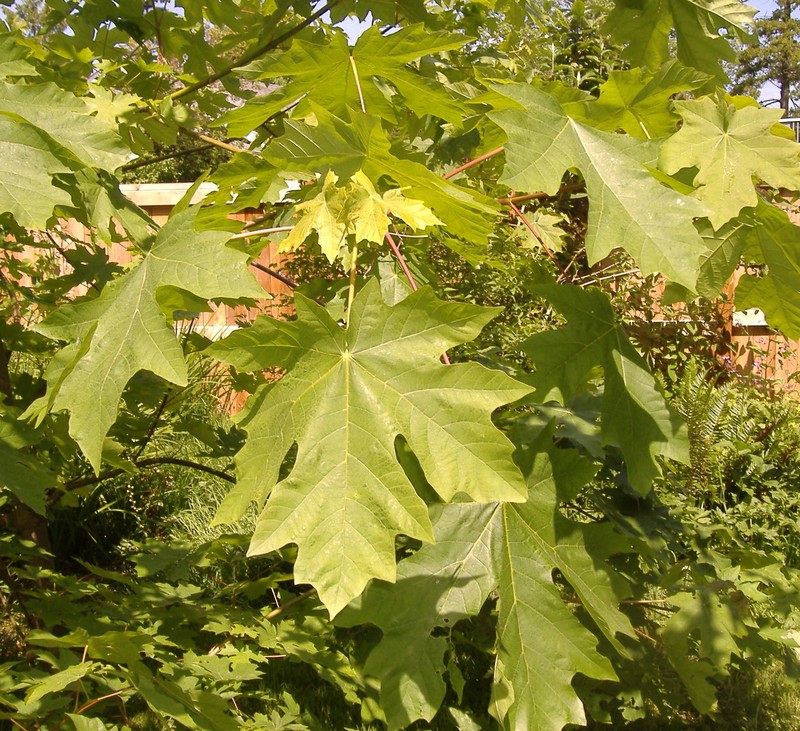
Angilbas (en.wikipedia.org) at English Wikipedia (en.wikipedia.org)
Taxonomy
- Division:
- Magnoliophyta | - Flowering plants
- Family:
- Sapindaceae
- Genus:
- Acer
- Species:
- Acer macrophyllum
- USDA Symbol:
- ACMA3
Growth Characteristics
- Life Cycle:
- Perennial
- Growth Habit:
- Tree
- Height:
- 3000 cm
- Light Requirements:
- Full Sun,Part Shade,Shade
- Drought Tolerance:
- Medium
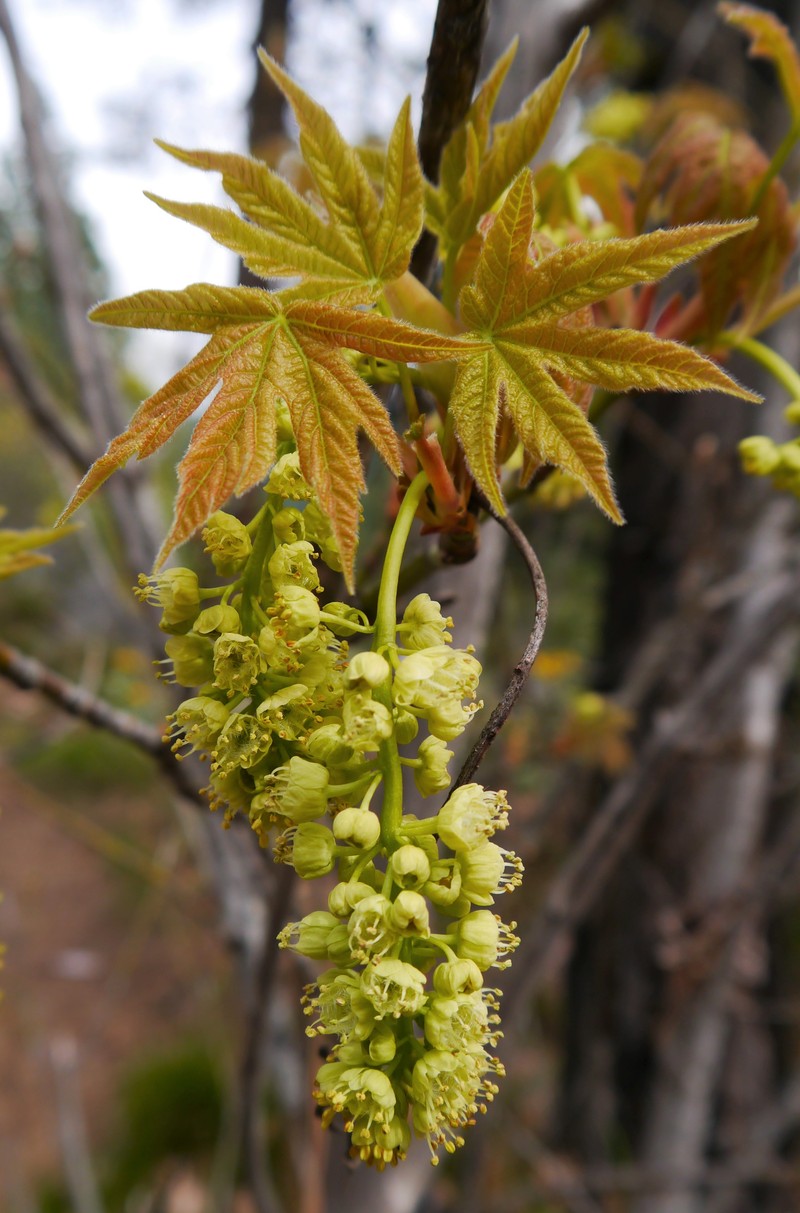
- Bloom Months:
- apr,may
- Bloom Colors:
- yellow-green
Wildlife Benefits
- Bees:
- ★☆☆☆☆ Documented bee visitation (GBIF)
- Butterflies & Moths:
- ★★★☆☆ Documented Lepidoptera association (GBIF)
- Caterpillars:
- ★★★☆☆ Recorded caterpillar host plant (HOSTS Database)
- Hummingbirds:
- ★☆☆☆☆ Documented hummingbird visits (GBIF)
Keystone Species Ranking
- Caterpillar Keystone:
- ★★★★★ Butterfly & moth species supported by this genus (NWF)
Host Plant for Caterpillars
Acerra normalis, American Swordgrass Moth (Xylena nupera), Annaphila arvalis, Bruce spanworm (Operophtera bruceata), Copper Underwing (Amphipyra pyramidoides), Fishia evelina, Io moth (Automeris io), Linden looper (Erannis tiliaria), maple twig borer (Proteoteras aesculana), Neoalcis californiaria, Pale Oligocentria (Oligocentria pallida), Peppered Moth (Biston betularia), Pseudorthodes irrorata, Red-washed Prominent (Oligocentria semirufescens), Spiramater lutra, Spotted Tussock Moth (Lophocampa maculata), Synaxis jubararia, western winter moth (Operophtera occidentalis), White-dotted Prominent (Nadata gibbosa), Xanthorhoe defensaria
Reported Fauna Sightings
Hummingbirds: Anna's Hummingbird (Calypte anna) Butterflies:Western Tiger Swallowtail (Papilio rutulus)
Garden & Ecology Notes
- Wildlife Value:
- birds, small mammals, pollinators
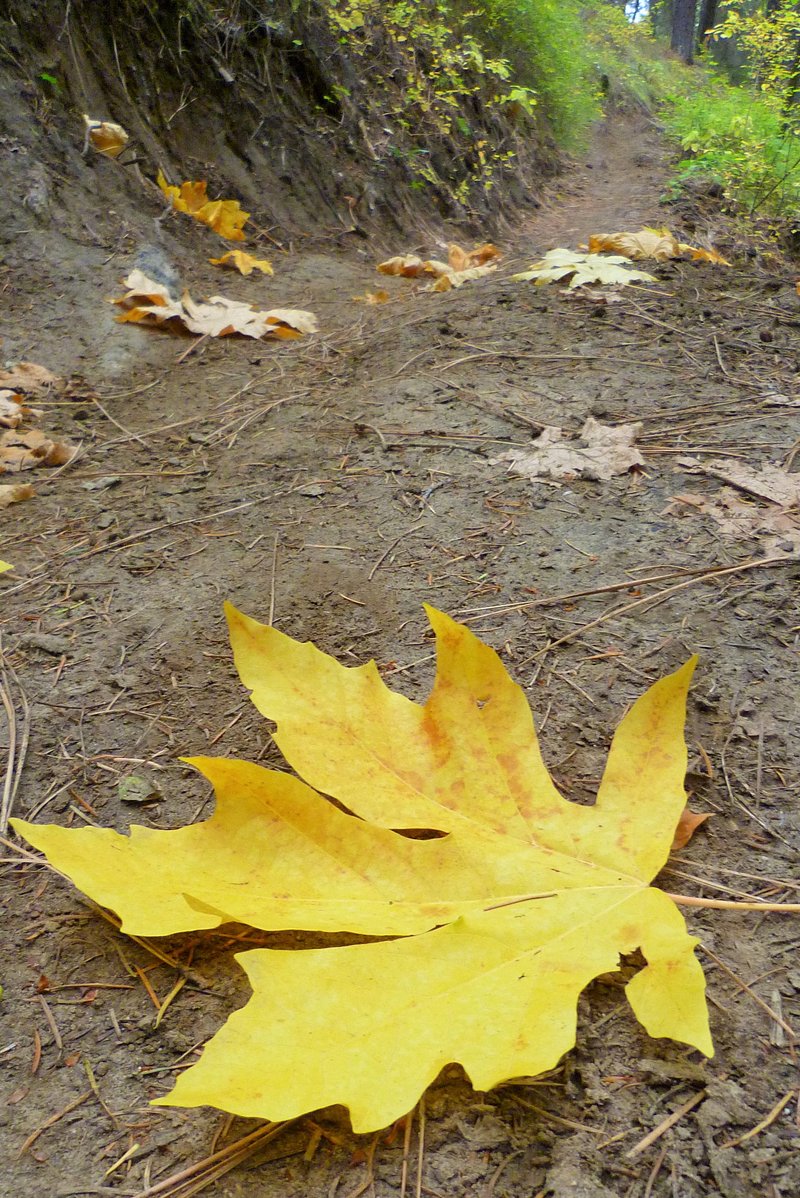
- Fall Color:
- yellow, orange
Soil Requirements
- Soil Type:
- rich, well-drained loamy soil
- pH:
- 5.5 - 7.5 (slightly acidic to neutral)
- Drainage:
- tolerates poor drainage
- Moisture:
- consistently moist
- Notes:
- prefers deep, fertile soils in forested areas
Propagation & Germination
- Stratification:
- Cold/moist stratification required — 60–90 days
- Germination Time:
- 30–60 days
- Notes:
- Seeds require cold stratification for 60-90 days to break dormancy; germination occurs in spring.
Pre-treatment: Seeds are soaked for 48 hours in water, then placed in open trays or plastic ziplock bags with moist perlite and stored in stratification rooms or refrigerator for 2 to 4 months. If the seed is dry, it is placed into cold running water for 48 hours prior to stratification.
Establishment: Seeds are collected between October 1st and December 1st. Samaras are brown at maturity. Seeds are collected from trees using a long pole pruner. Seeds can also be collected from the ground as a last resort. A. macrophyllum is found from Alaska to California, mostly west of the Cascade mountains. It is also found in west central Idaho.
Source: npn.rngr.net
Where to Buy
Nationwide Seller
- Sheffield's Seed (seeds)