
Lizard's Tail
Saururus cernuus
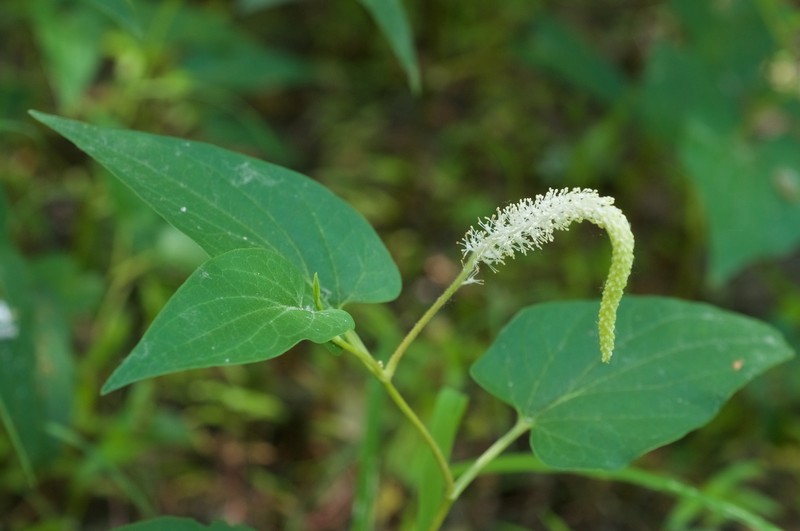
Taxonomy
- Division:
- Magnoliophyta | - Flowering plants
- Family:
- Saururaceae
- Genus:
- Saururus
- Species:
- Saururus cernuus
Growth Characteristics
- Life Cycle:
- Perennial
- Growth Habit:
- Forb/herb
- Height:
- 4-6 ft
- Light Requirements:
- Part Shade, Shade
- Drought Tolerance:
- Low
- Bloom Months:
- apr, may, jun, jul, aug
- Bloom Colors:
- White
Native Range
United States: Alabama, Arkansas, Connecticut, District of Columbia, Delaware, Florida, Georgia, Illinois, Indiana, Kansas, Kentucky, Louisiana, Massachusetts, Maryland, Michigan, Missouri, Mississippi, North Carolina, New Jersey, New York, Ohio, Oklahoma, Pennsylvania, Rhode Island, South Carolina, Tennessee, Texas, Virginia, Wisconsin, West Virginia, Canada: Ontario, Quebec
Host Plant for Caterpillars
Soil Requirements
- Soil Type:
- rich, moist, organic soil
- pH:
- 5.5 - 7.0 (slightly acidic to neutral)
- Drainage:
- tolerates poor drainage
- Moisture:
- consistently moist
- Notes:
- commonly found in wetlands and marshes
Germination Information
Pre-treatment: Seeds are stored cold and dry in sealed, airtight plastic bags in a refrigerator at 35°F. Four weeks prior to seeding, seeds are removed from cold storage and soaked in water for 2 weeks. Seeds are then mixed with damp, sterile sand, at a ratio of 1 part seed to 5 parts sand by volume, and subjected to cold, moist stratification (refrigeration at 35 to 40°F) for 2 weeks.
Establishment: Lizard's tail is commonly found in freshwater wetlands throughout much of the eastern US. It serves as habitat for juvenile smallmouth bass, and as a food source for herons and ducks. The plant also has ornamental appeal when in flower.
Source: npn.rngr.net