
Kidneyleaf Greenbrier
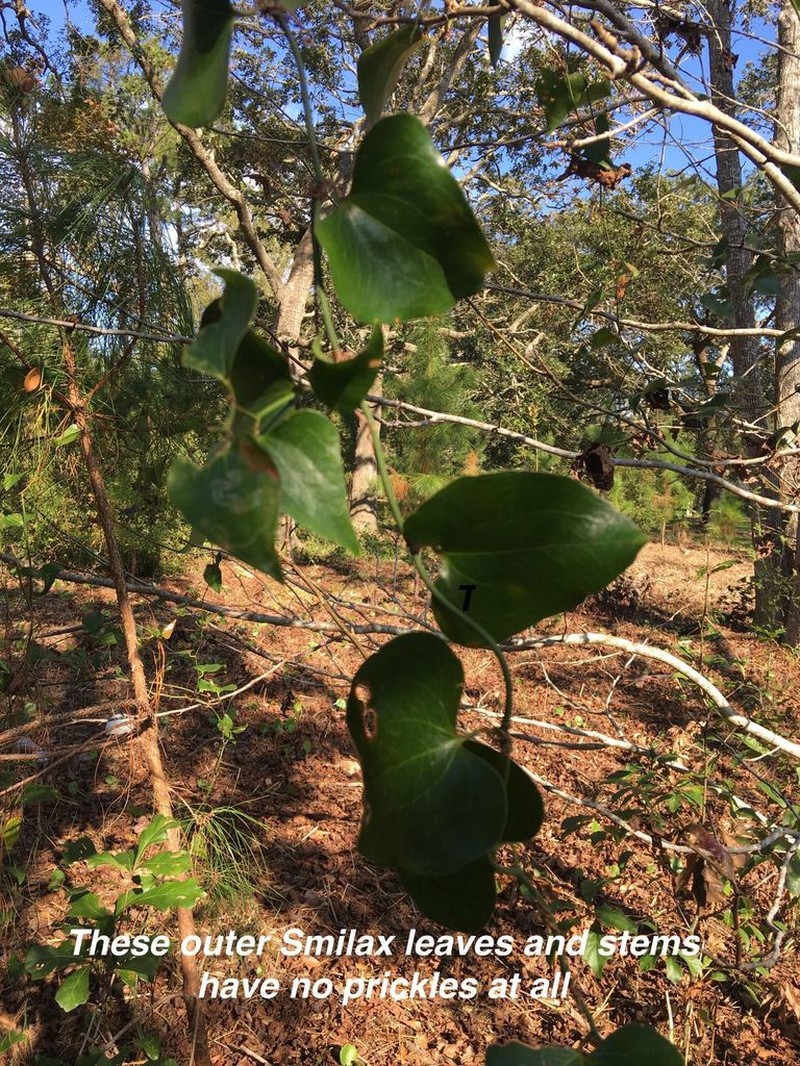
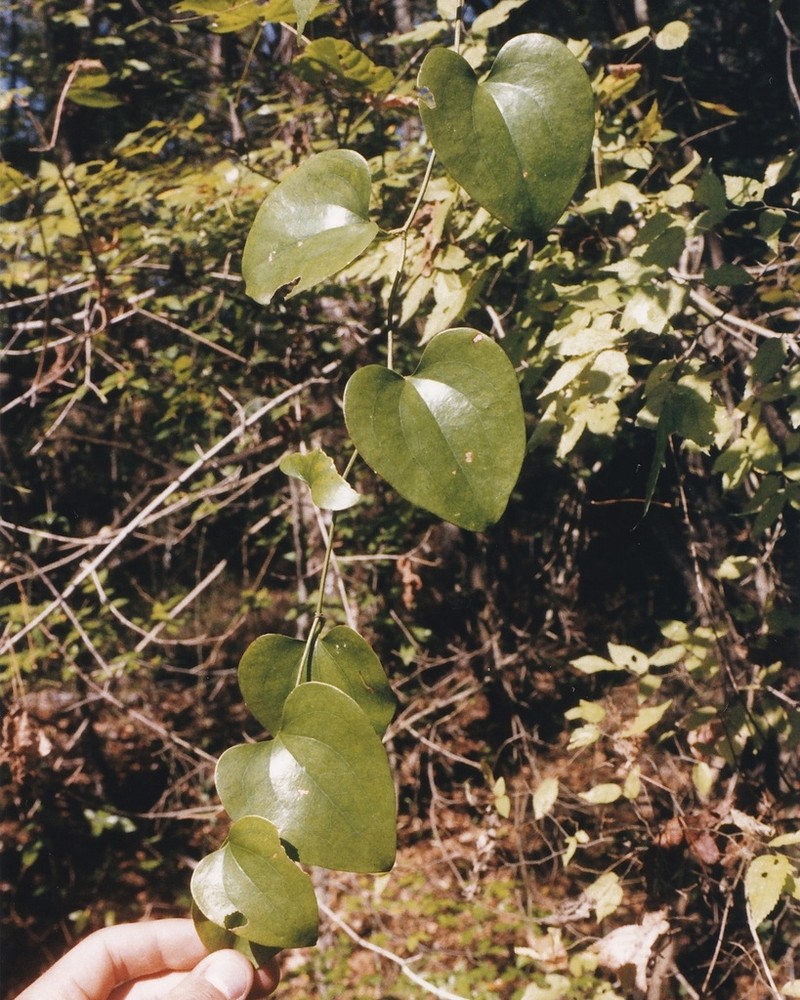
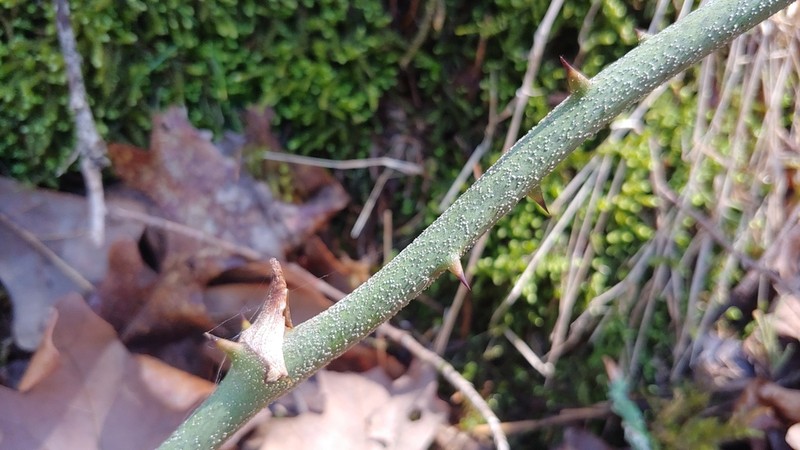
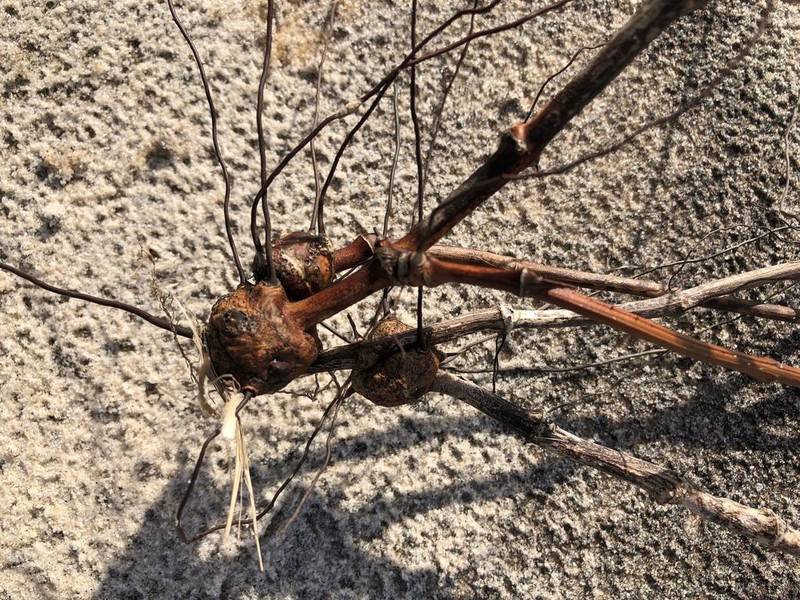
Smilax bona-nox
- Native to:
- Bermuda, Mexico, United States, Virgin Islands
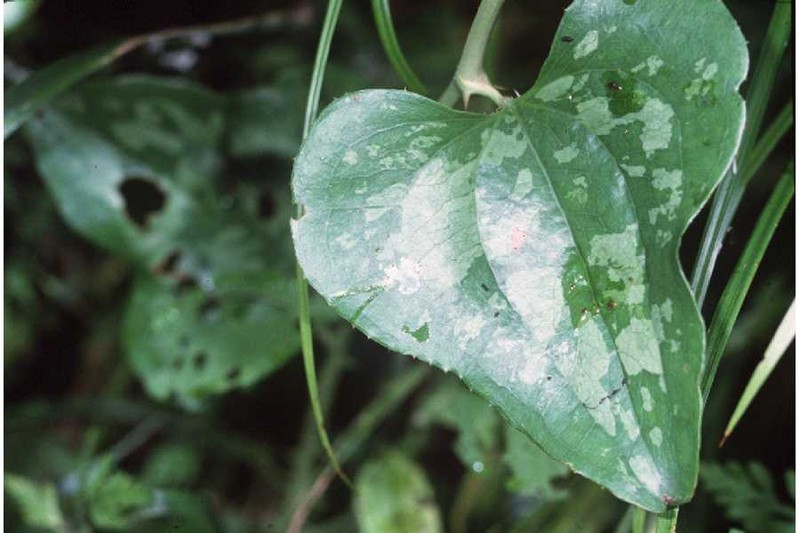
Judy Gallagher (www.flickr.com)
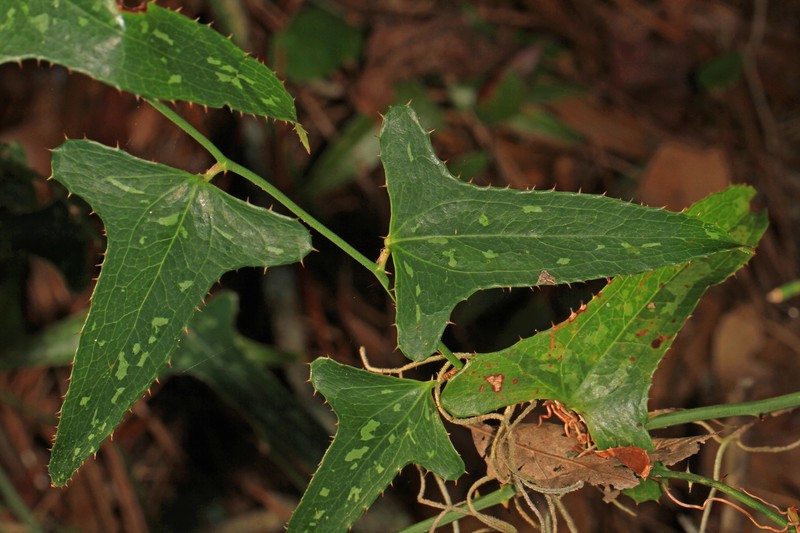
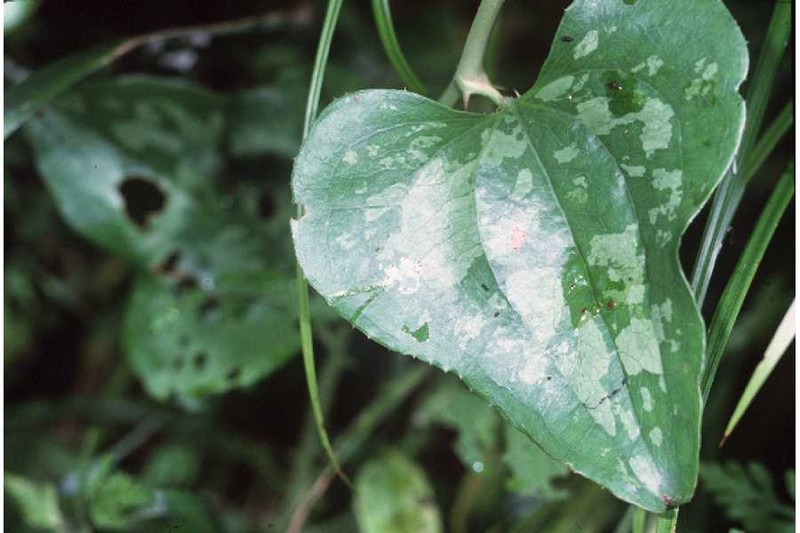
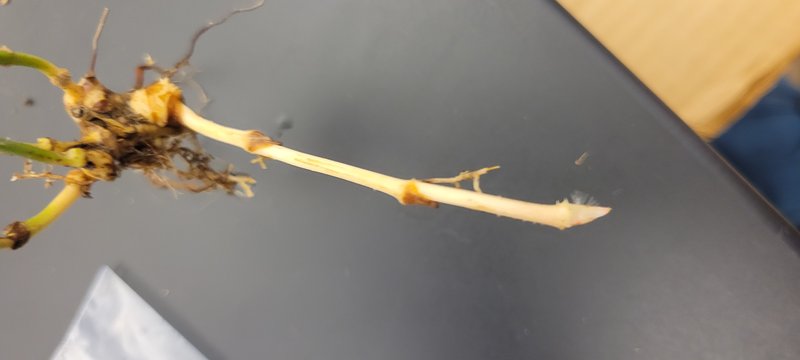
Taxonomy
- Division:
- Magnoliophyta | - Flowering plants
- Family:
- Smilacaceae
- Genus:
- Smilax
- Species:
- Smilax bona-nox
- USDA Symbol:
- SMRE
Growth Characteristics
- Life Cycle:
- Perennial
- Growth Habit:
- Shrub , Vine
- Height:
- 900 cm
- Light Requirements:
- Shade
- Drought Tolerance:
- High
- Bloom Months:
- apr,may,jun
- Bloom Colors:
- green, yellow
Wildlife Benefits
- Butterflies & Moths:
- ★★★☆☆ Documented Lepidoptera association (GBIF)
Reported Fauna Sightings
Moths:Marmara smilacisella, Spotted Phosphila (Phosphila miselioides)
Garden & Ecology Notes
- Wildlife Value:
- birds, small mammals
- Deer Resistant:
- Yes
- Salt Tolerant:
- Yes
- Fire Ecology:
- Fire adapted — tolerates or benefits from fire
- Fire Notes:
- Resprouts vigorously from extensive rhizome system following fire. Common in fire-maintained pine woodlands and savannas.
Propagation & Germination
- Stratification:
- Warm then cold/moist stratification (double dormancy) — 60–90 days
- Scarification:
- Seed coat scarification required before sowing
- Germination Time:
- 30–365 days
- Notes:
- Germination is often erratic and may take over a year. Seeds have hard coats requiring scarification and double dormancy.