
Water Jacket
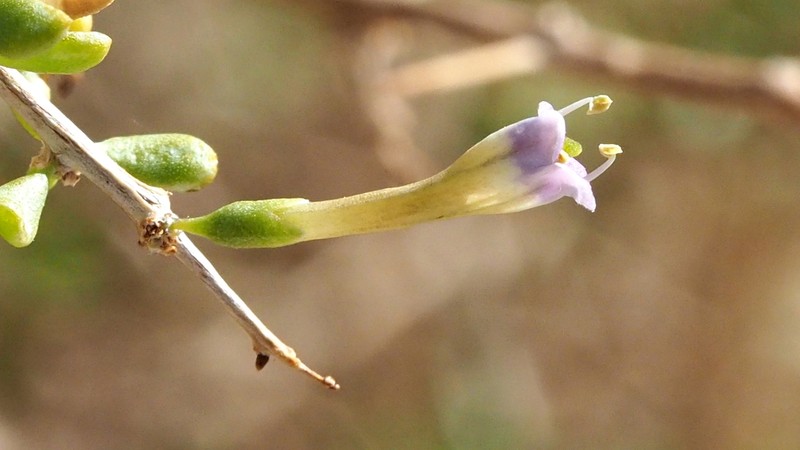
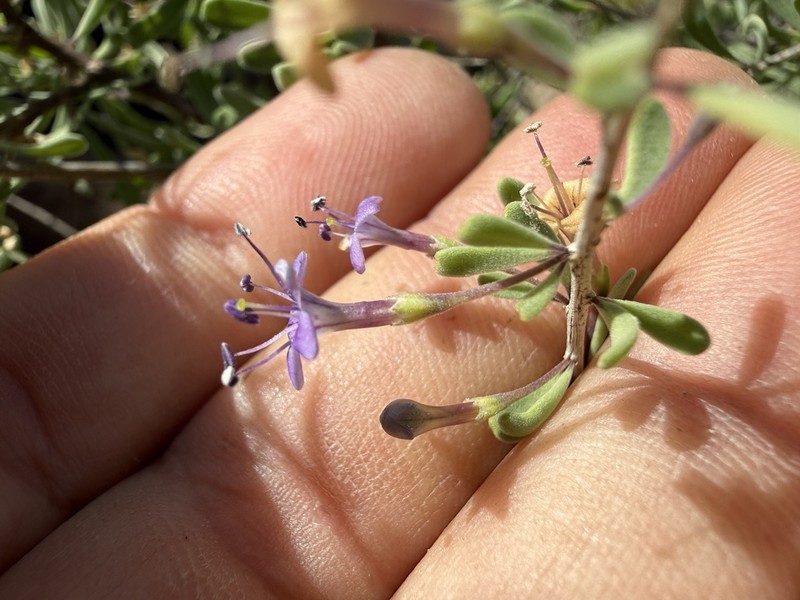
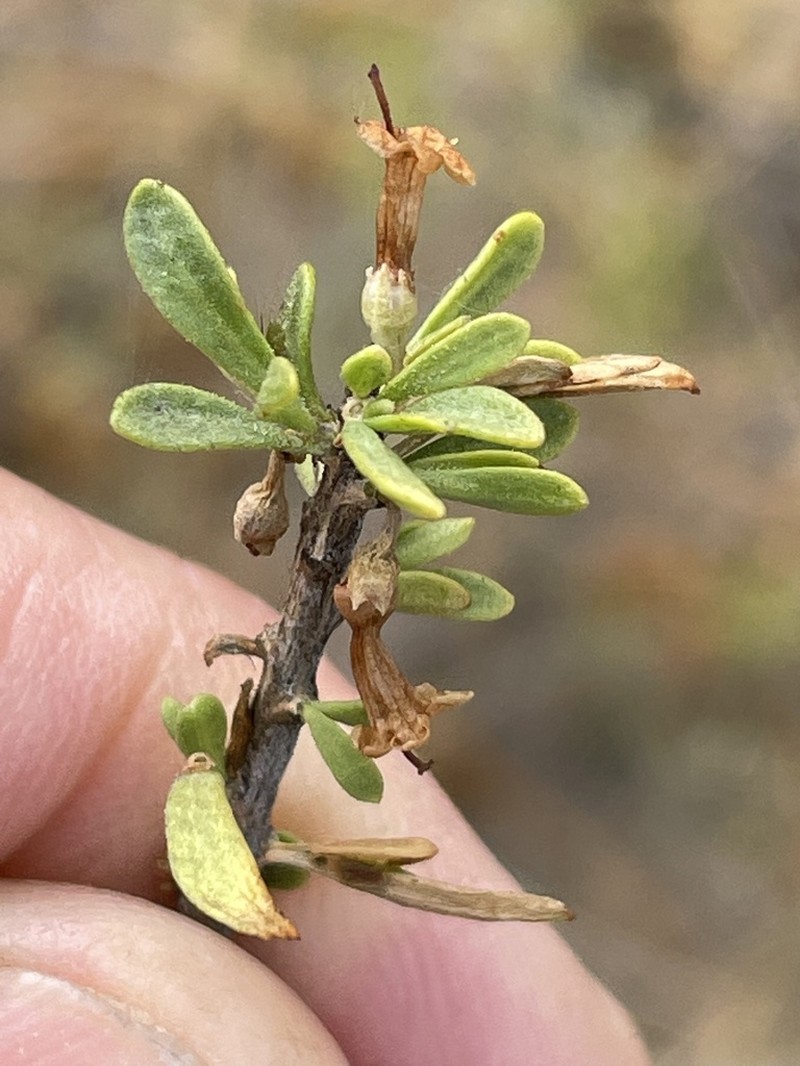
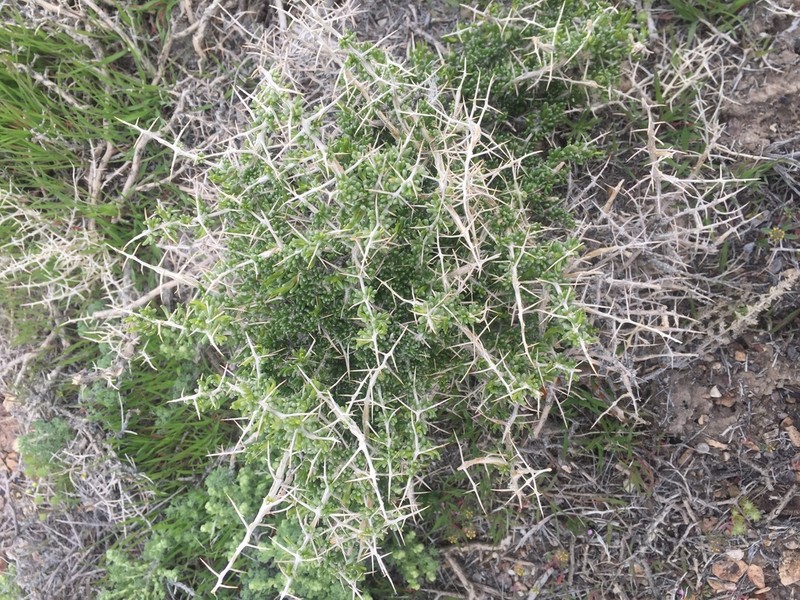
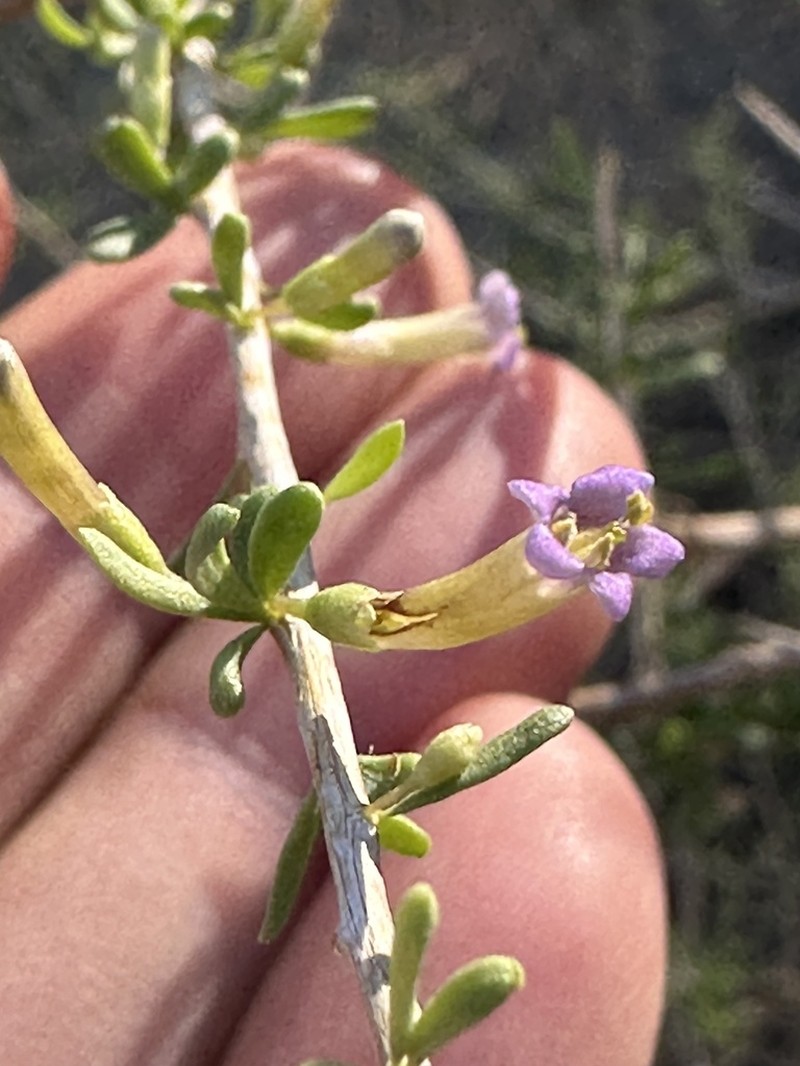
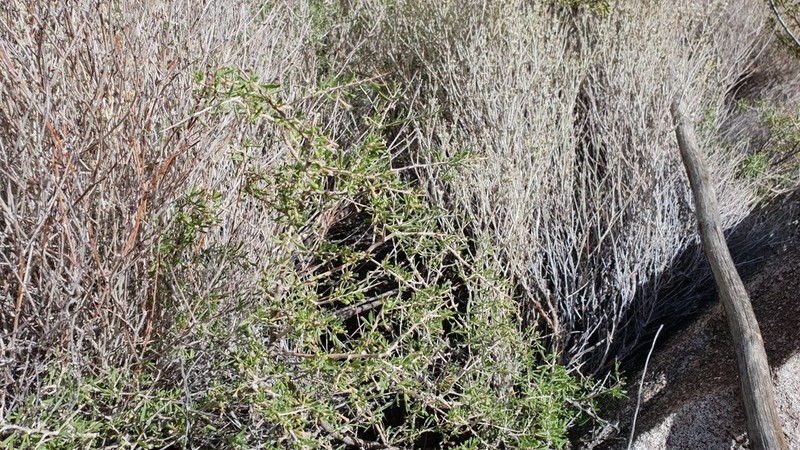
Lycium andersonii
- Native to:
- Mexico, United States
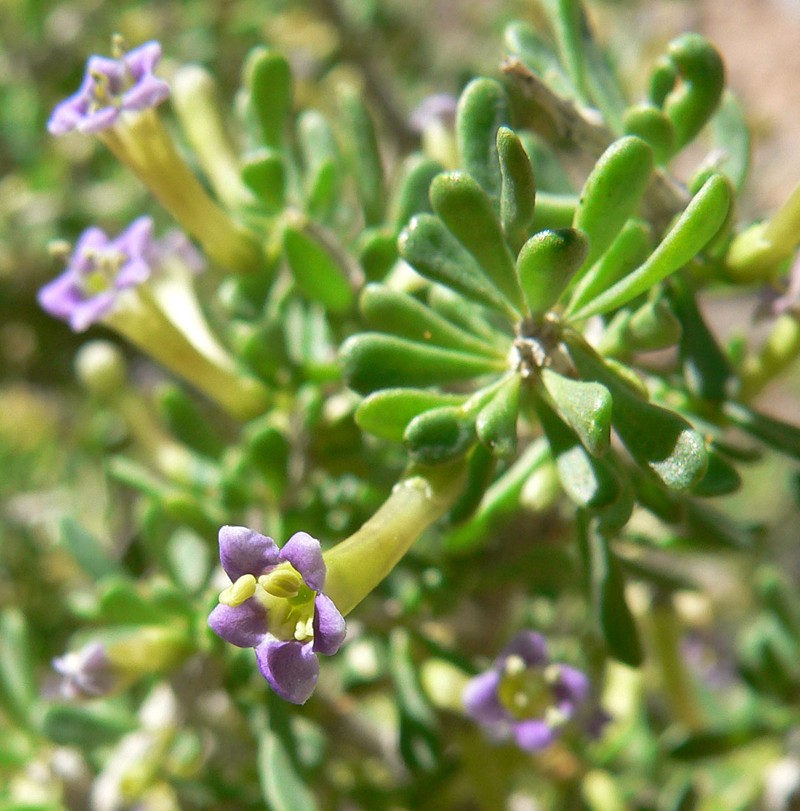
Stan Shebs
Taxonomy
- Division:
- Magnoliophyta | - Flowering plants
- Family:
- Solanaceae
- Genus:
- Lycium
- Species:
- Lycium andersonii
- USDA Symbol:
- LYAN
Growth Characteristics
- Life Cycle:
- Perennial
- Growth Habit:
- Shrub
- Height:
- 300 cm
- Light Requirements:
- Full Sun
- Drought Tolerance:
- High
- Bloom Months:
- mar,apr,may
- Bloom Colors:
- lavender, purple
- Landscaping Shrub:
- Yes
Wildlife Benefits
- Bees:
- ★☆☆☆☆ Documented bee visitation (GBIF)
- Butterflies & Moths:
- ★☆☆☆☆ Documented Lepidoptera association (GBIF)
- Hummingbirds:
- ★☆☆☆☆ Documented hummingbird visits (GBIF)
Garden & Ecology Notes
- Wildlife Value:
- birds, small mammals
- Deer Resistant:
- Yes
- Salt Tolerant:
- Yes
- Fire Ecology:
- Fire adapted — tolerates or benefits from fire
- Fire Notes:
- Resprouts from root crown after fire; adapted to frequent low-severity fires.
Soil Requirements
- Soil Type:
- sandy, well-drained, nutrient-poor soil
- pH:
- 6.0 - 8.0 (neutral to slightly alkaline)
- Drainage:
- excellent drainage required
- Moisture:
- dry to moderate
- Notes:
- Adapted to arid desert conditions
Propagation & Germination
- Stratification:
- Cold/moist stratification required — 30–60 days
- Germination Time:
- 14–30 days
- Notes:
- Seeds germinate readily after cold stratification; sow in well-drained soil.
Pre-treatment: Seeds are soaked in water for 10 to 24 hours to remove any inhibitors and to allow full imbibition of seeds prior to sowing. Seeds are then sown in open flats using a growing medium of 2 parts sand, 1 part mulch and 2 parts perlite.
Establishment: Seeds are hand collected in June when berries have fully matured. Lycium andersonii is common in the Mojave and Colorado deserts from southern California north to Mono County and east to Utah and New Mexico and south to Mexico.
Source: npn.rngr.net