
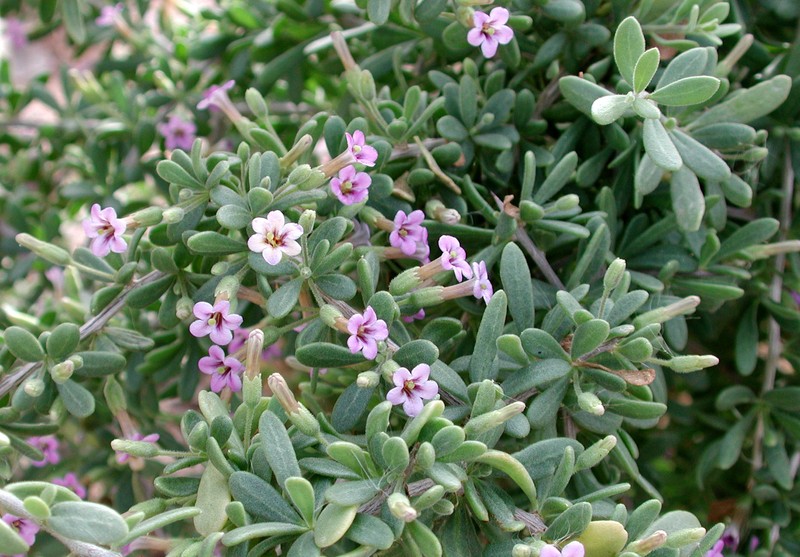
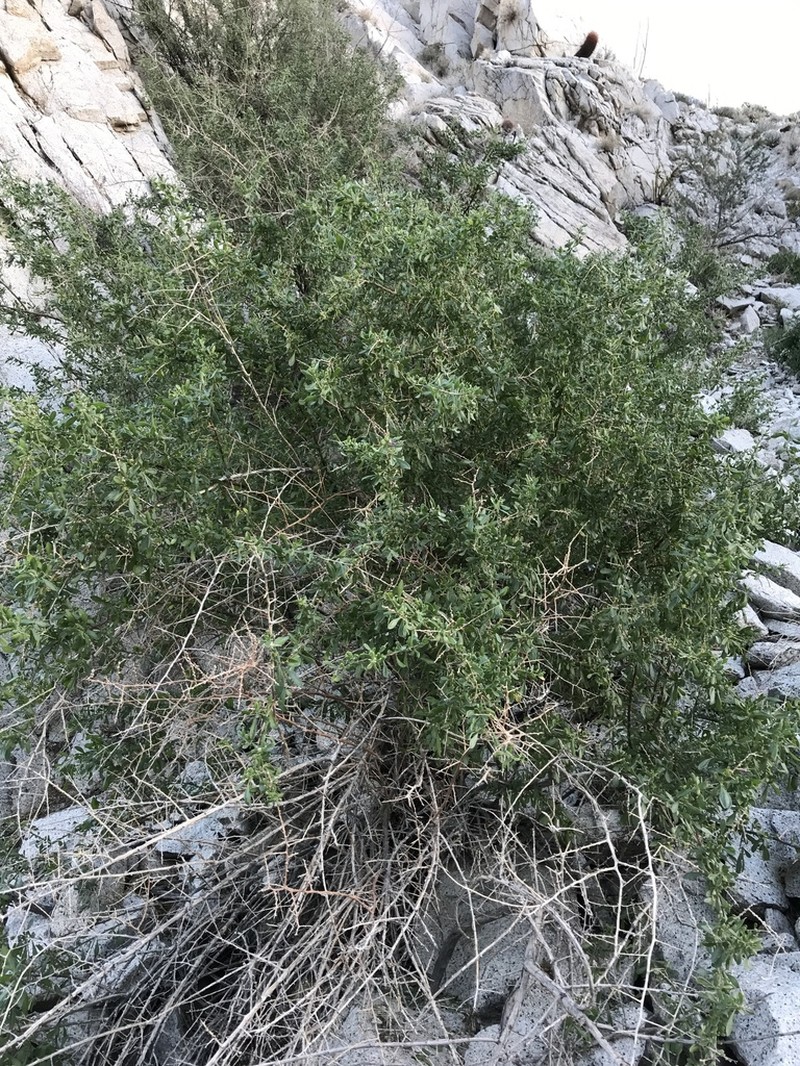
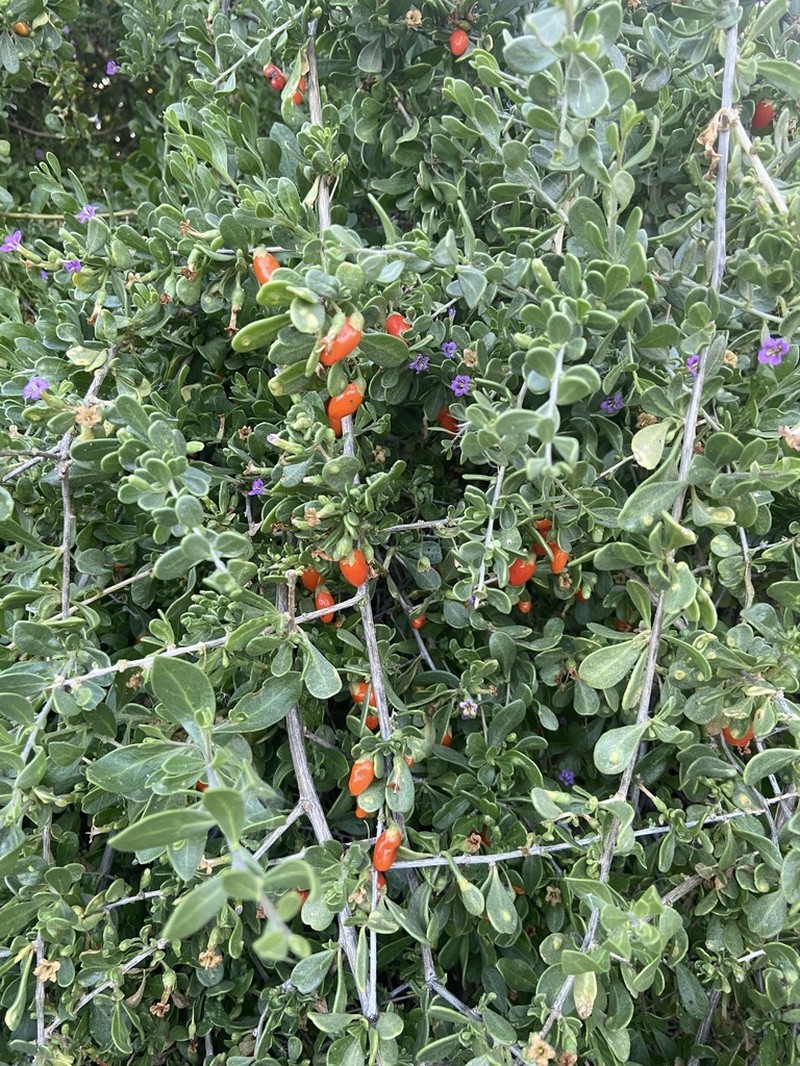
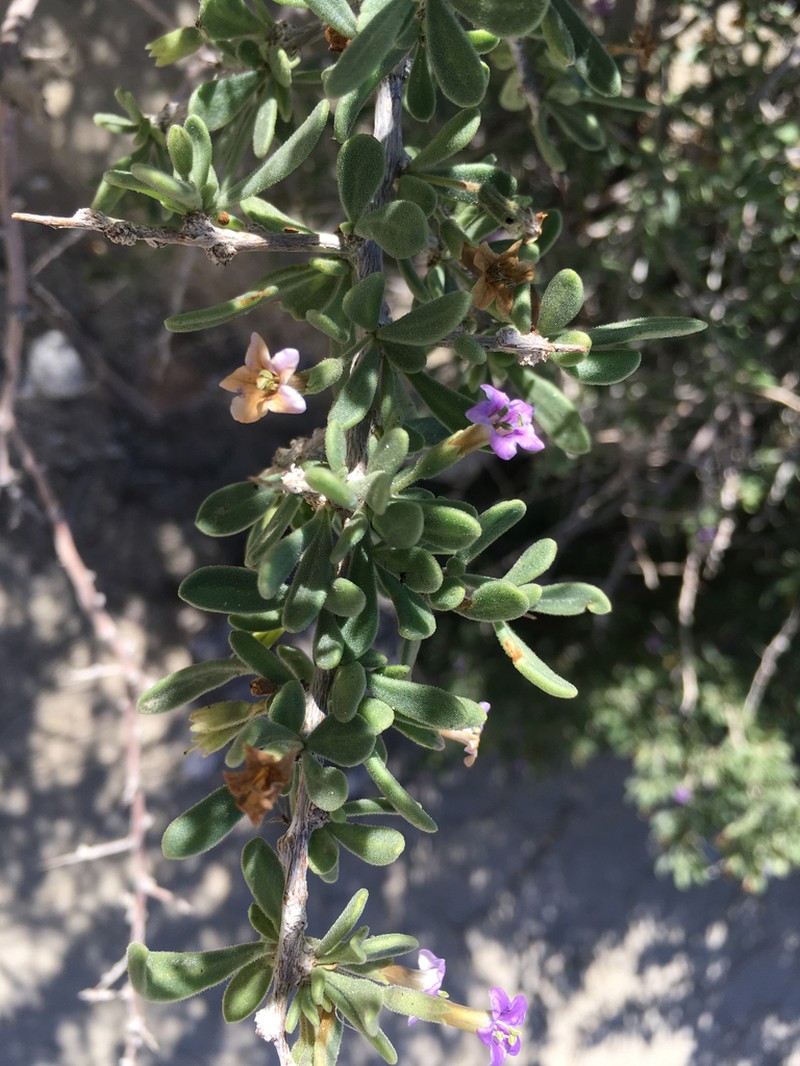
Fremont's Desert-Thorn
Lycium fremontii
- Native to:
- Mexican Pacific Is., Mexico, United States
Mike
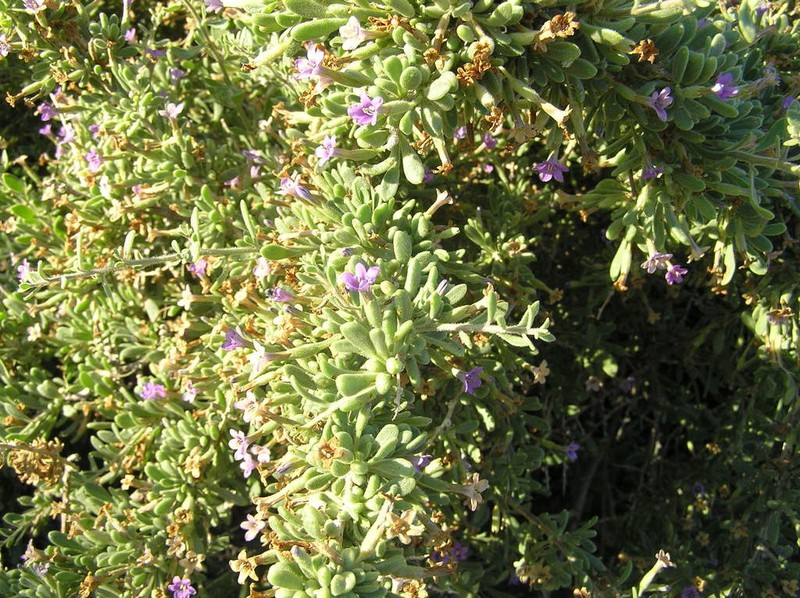
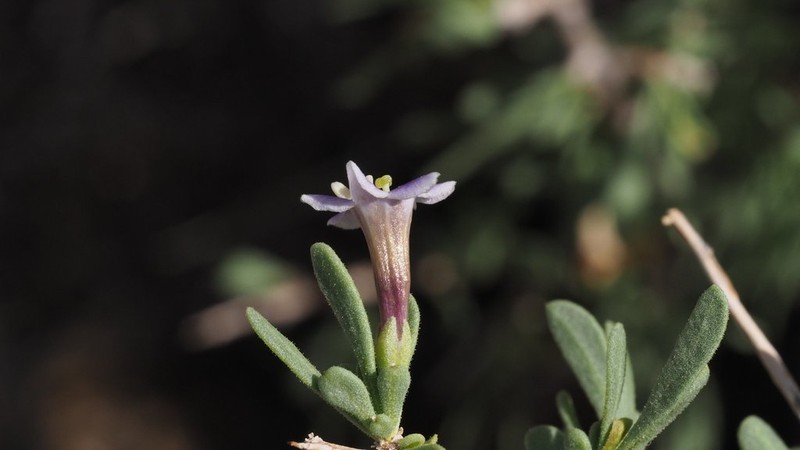
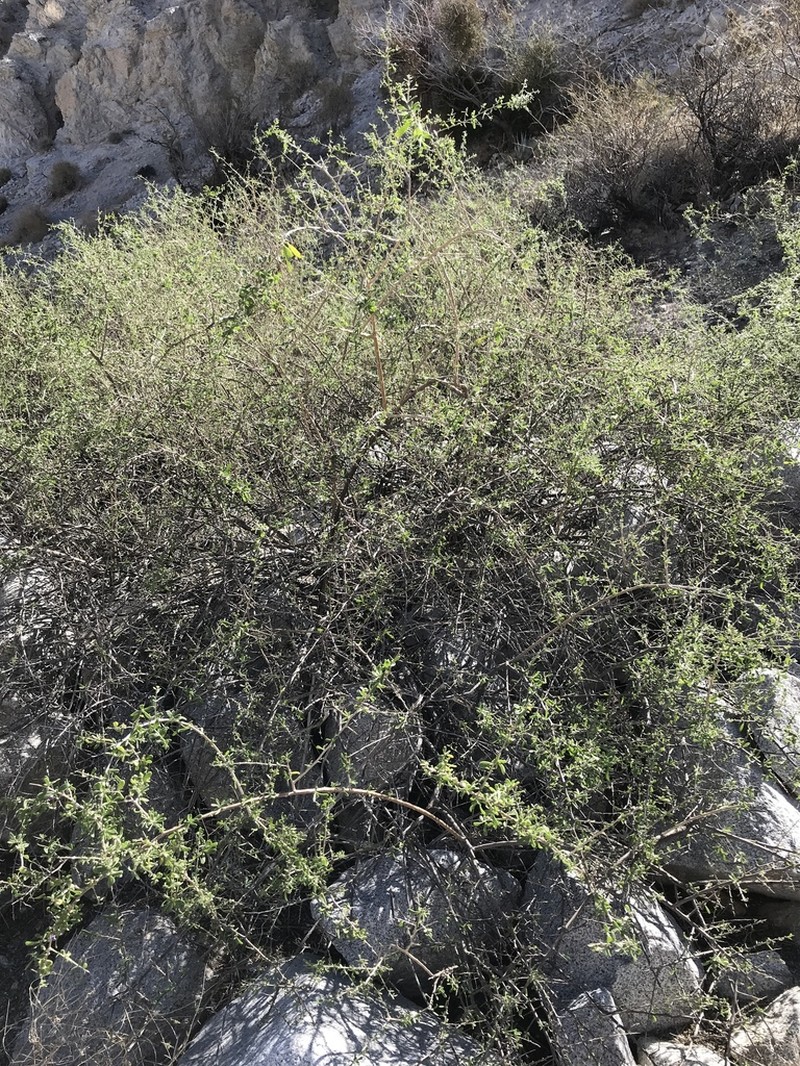
Taxonomy
- Division:
- Magnoliophyta | - Flowering plants
- Family:
- Solanaceae
- Genus:
- Lycium
- Species:
- Lycium fremontii
- USDA Symbol:
- LYFR
Growth Characteristics
- Life Cycle:
- Perennial
- Growth Habit:
- Shrub
- Height:
- 400 cm
- Light Requirements:
- Full Sun
- Drought Tolerance:
- High
- Bloom Months:
- mar,apr,may,jun
- Bloom Colors:
- purple, lavender
- Landscaping Shrub:
- Yes
Wildlife Benefits
- Bees:
- ★☆☆☆☆ Documented bee visitation (GBIF)
- Butterflies & Moths:
- ★☆☆☆☆ Documented Lepidoptera association (GBIF)
Garden & Ecology Notes
- Wildlife Value:
- birds, small mammals
- Deer Resistant:
- Yes
- Salt Tolerant:
- Yes
Soil Requirements
- Soil Type:
- sandy, well-drained, nutrient-poor soil
- pH:
- 6.0 - 8.0 (neutral to slightly alkaline)
- Drainage:
- excellent drainage required
- Moisture:
- dry to moderate
- Notes:
- native to arid desert regions
Propagation & Germination
- Stratification:
- Cold/moist stratification required — 30–60 days
- Germination Time:
- 14–30 days
- Notes:
- Seeds germinate readily after cold stratification; sow in well-drained soil.
Pre-treatment: Keep cuttings moist until ready to plant.
Establishment: Take cuttings in spring or fall, when plant looks healthy and has leaves. Lycium will drop leaves and look dead under drought/high heat conditions, only to resprout with precipitation or lower temperatures. There are actually three species that occur along the Lower Colorado River in SW Arizona. L. Andersonii, L. fremontii and L. torreyi. Protocol is for all, as they are similar and difficult to tell apart. Fremontii has the smallest distribution, occurring in arid regions of Southern California and Arizona.
Source: npn.rngr.net