
American Elm
Ulmus americana
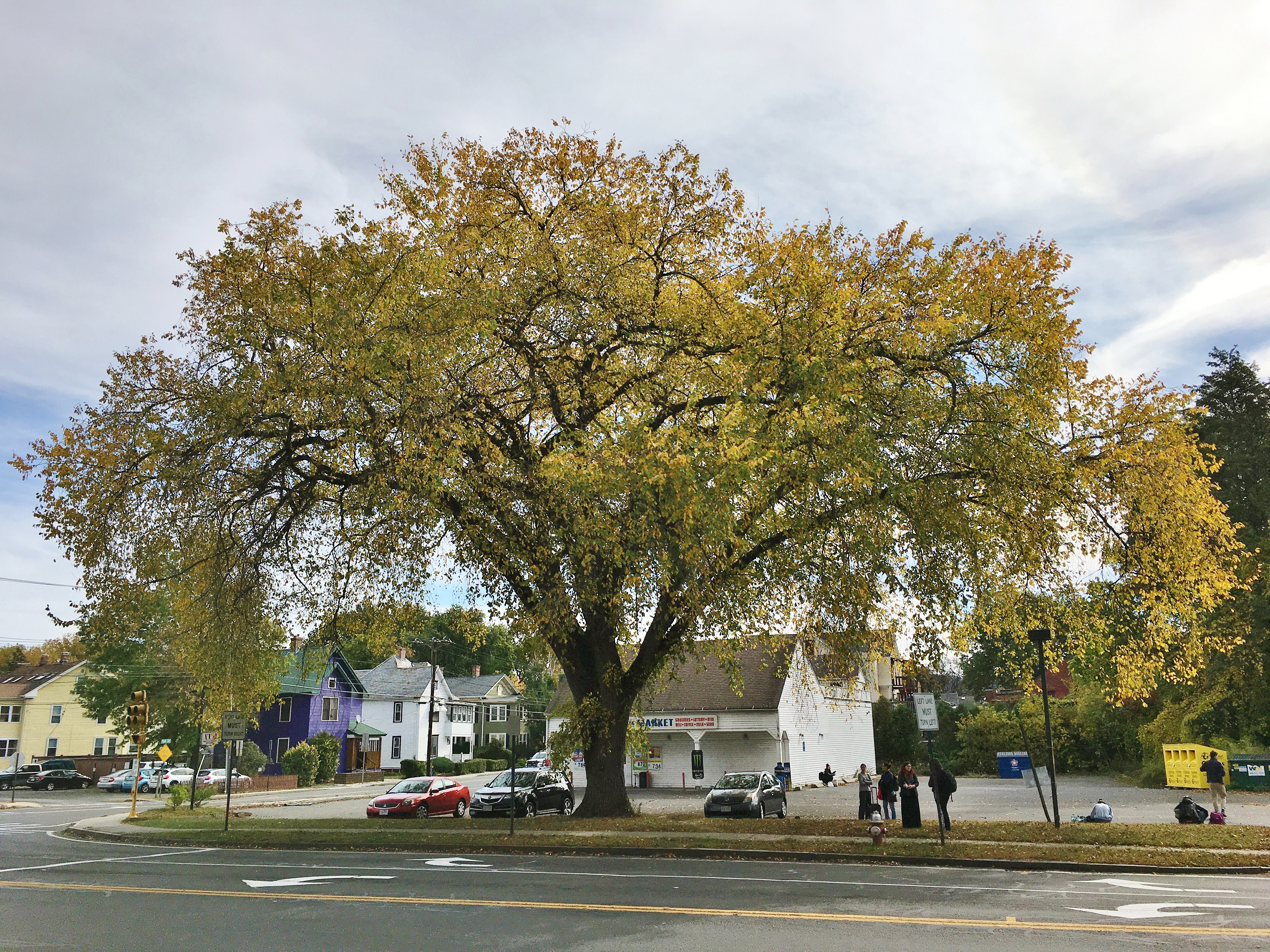
Taxonomy
- Division:
- Magnoliophyta | - Flowering plants
- Family:
- Ulmaceae
- Genus:
- Ulmus
- Species:
- Ulmus americana
Growth Characteristics
- Life Cycle:
- Perennial
- Growth Habit:
- Tree
- Height:
- More than 40 ft
- Light Requirements:
- Full Sun, Part Shade
- Drought Tolerance:
- Low
- Bloom Months:
- feb, mar, apr
- Bloom Colors:
- Red, Green
Native Range
United States: Alabama, Arkansas, Colorado, Connecticut, District of Columbia, Delaware, Florida, Georgia, Iowa, Illinois, Indiana, Kansas, Kentucky, Louisiana, Massachusetts, Maryland, Maine, Michigan, Minnesota, Missouri, Mississippi, Montana, North Carolina, North Dakota, Nebraska, New Hampshire, New Jersey, New York, Ohio, Oklahoma, Pennsylvania, Rhode Island, South Carolina, South Dakota, Tennessee, Texas, Virginia, Vermont, Wisconsin, West Virginia, Wyoming, Canada: Manitoba, New Brunswick, Nova Scotia, Ontario, Prince Edward Island, Quebec, Saskatchewan
Keystone Species Ranking
- Caterpillar Keystone:
- ★☆☆☆☆ Based on number of butterfly and moth species using this genus as host plant (Source: National Wildlife Federation)
Host Plant for Caterpillars
Acronicta impleta, American Dagger Moth (Acronicta americana), Banded Tussock Moth (Halysidota tessellaris), Bethune's Pinion (Lithophane bethunei), broken-banded leafroller (Choristoneura fractivittana), Bruce spanworm (Operophtera bruceata), Cameraria ulmella, Canadian Melanolophia (Melanolophia canadaria), Carpenterworm Moth (Prionoxystus robiniae), Cecropia moth (Hyalophora cecropia), Confused Haploa (Haploa confusa), Confused Morrisonia (Morrisonia confusa), Copper Underwing (Amphipyra pyramidoides), Crocus Geometer (Xanthotype sospeta), Delightful Dagger Moth (Acronicta vinnula), Double-lined Prominent (Lochmaeus bilineata), Double-toothed prominent (Nerice bidentata), elm spanworm moth (Ennomos subsignaria), Elm Sphinx (Ceratomia amyntor), fall cankerworm (Alsophila pometaria), Fall webworm (Hyphantria cunea), Forest Tent Caterpillar (Malacosoma disstria), Garman Quaker (Orthosia garmani), Gypsy moth (Lymantria dispar), hibiscus Quaker (Orthosia hibisci), Hickory Tussock Moth (Lophocampa caryae), Hitched Arch (Melanchra adjuncta), Hyperstrotia pervertens, Hyperstrotia villificans, Imperial Moth (Eacles imperialis), Interrupted Dagger Moth (Acronicta interrupta), Io moth (Automeris io), Isabella tiger moth (Pyrrharctia isabella), Itame exauspicata, Johnson's euchlaena moth (Euchlaena johnsonaria), Lace-winged zale (Zale minerea), Linden looper (Erannis tiliaria), Lithophane disposita, Lycia rachelae, Malana balsa moth (Balsa malana), maple leafcutter moth (Paraclemensia acerifoliella), Maple spanworm (Ennomos magnaria), maple-basswood leafroller (Sparganothis pettitana), marble dagger moth (Acronicta morula), Morning-glory prominent moth (Schizura ipomoeae), Morrison's sallow (Eupsilia morrisoni), Morrisonia latex, Mournful Thorn (Lambdina fiscellaria), nondescript dagger moth (Acronicta spinigera), Norman's Quaker (Crocigrapha normani), Obliquebanded leafroller (Choristoneura rosaceana), Ochre Euchlaena (Euchlaena marginaria), Olethreutes mysteriana, One-spotted variant moth (Hypagyrtis unipunctata), Orthosia revicta, Pale beauty (Campaea perlata), Peppered Moth (Biston betularia), Peridea basitriens, Phyllonorycter argentinotella, Polyphemus moth (Antheraea polyphemus), Porcelain Gray (Protoboarmia porcelaria), Red-humped caterpillar moth (Schizura concinna), Saddled Prominent (Heterocampa guttivitta), signate melanolophia moth (Melanolophia signataria), Sparganothis acerivorana, spiny looper moth (Phigalia titea), Spotted Tussock Moth (Lophocampa maculata), Spring cankerworm (Paleacrita vernata), Strigate Phigalia (Phigalia strigataria), Symmerista leucitys, Theisoa constrictella, three-lined leafroller (Pandemis limitata), Twin-spotted sphinx (Smerinthus jamaicensis), Two-lined Hooktip Moth (Drepana bilineata), Unicorn caterpillar moth (Schizura unicornis), Variable Tussock Moth (Dasychira vagans), Variegated cutworm (Peridroma saucia), White-headed Symmerista (Symmerista albifrons), white-lined hypena (Hypena abalienalis), White-marked Tussock Moth (Orgyia leucostigma), Winter moth (Operophtera brumata), woodland leafroller (Pandemis lamprosana), woolly gray (Lycia ursaria), Yellownecked caterpillar (Datana ministra), Compton Tortoiseshell (Nymphalis vau-album), Eastern Comma (Polygonia comma), Gray Comma (Polygonia progne), Green Comma (Polygonia faunus), Question Mark (Polygonia interrogationis), Red-spotted Purple (Basilarchia arthemis)
Soil Requirements
- Soil Type:
- rich, well-drained loamy soil
- pH:
- 6.0 - 8.0 (slightly acidic to neutral)
- Drainage:
- tolerates poor drainage
- Moisture:
- consistently moist
- Notes:
- Thrives in floodplain areas with periodic flooding
Germination Information
Pre-treatment: None required
Source: npn.rngr.net