
Nannyberry
Viburnum lentago
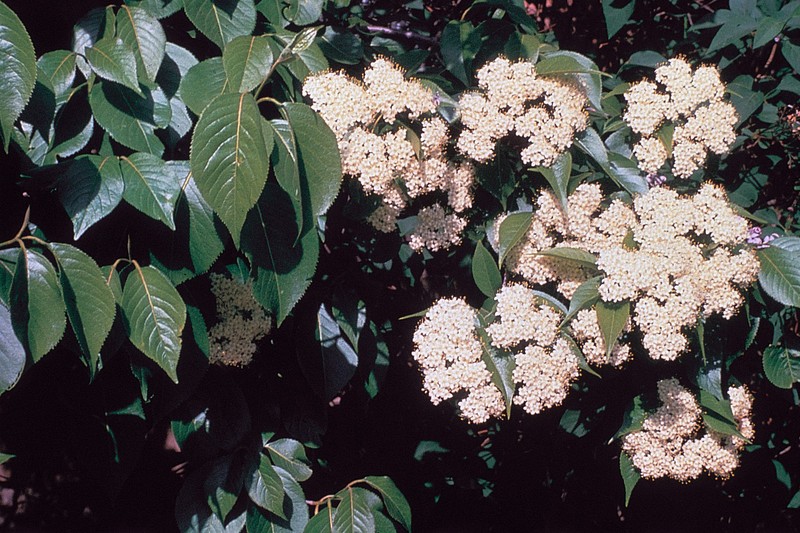
Taxonomy
- Division:
- Magnoliophyta | - Flowering plants
- Family:
- Viburnaceae
- Genus:
- Viburnum
- Species:
- Viburnum lentago
Growth Characteristics
- Life Cycle:
- Perennial
- Growth Habit:
- Shrub , Tree
- Height:
- 20-40 ft
- Light Requirements:
- Full Sun, Part Shade, Shade
- Drought Tolerance:
- Low
- Bloom Months:
- apr, may, jun
- Bloom Colors:
- White
Native Range
United States: Alabama, Colorado, Connecticut, Georgia, Iowa, Illinois, Indiana, Kentucky, Massachusetts, Maryland, Maine, Michigan, Minnesota, Missouri, Montana, North Dakota, Nebraska, New Hampshire, New Jersey, New York, Ohio, Pennsylvania, Rhode Island, South Dakota, Virginia, Vermont, Wisconsin, West Virginia, Wyoming, Canada: Manitoba, New Brunswick, Ontario, Quebec, Saskatchewan
Keystone Species Ranking
- Caterpillar Keystone:
- ★☆☆☆☆ Based on number of butterfly and moth species using this genus as host plant (Source: National Wildlife Federation)
Host Plant for Caterpillars
Soil Requirements
- Soil Type:
- rich, well-drained loamy soil
- pH:
- 5.5 - 7.5 (slightly acidic to neutral)
- Drainage:
- tolerates poor drainage
- Moisture:
- consistently moist
- Notes:
- Prefers fertile soils in native habitats
Germination Information
Pre-treatment: None required
Establishment: Fruit should be collected from multiple plants within the boundaries of the Monongahela National Forest from existing populations. The fruit should be allowed to mature on the plant before harvesting as indicated by the bluish black color of the fruit. Care should be taken to ensure the fruits do not overheat after collection because this could damage the embryo.
Source: npn.rngr.net