
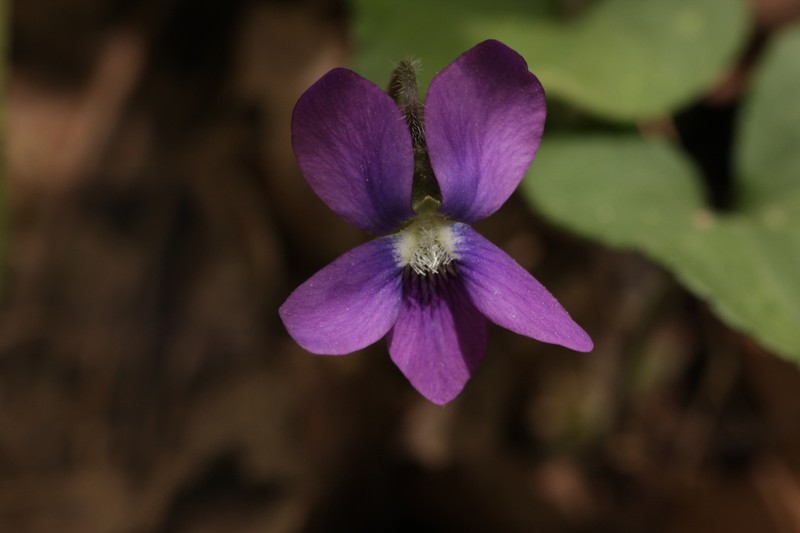
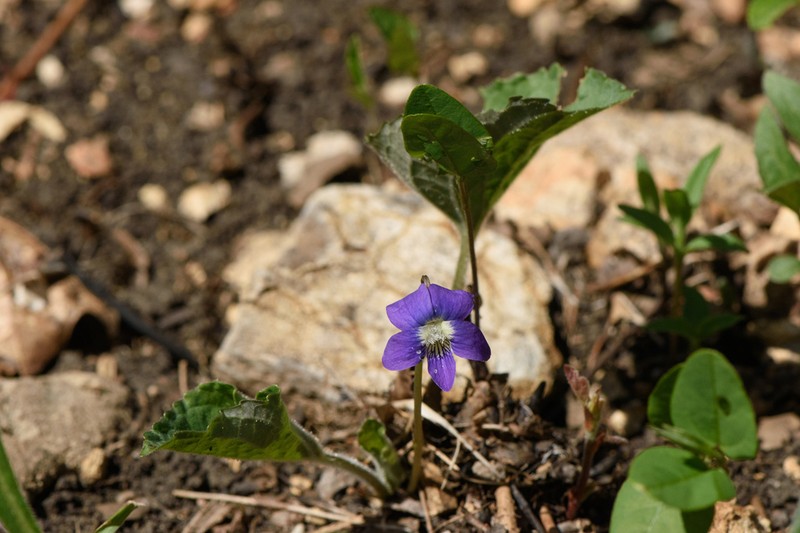
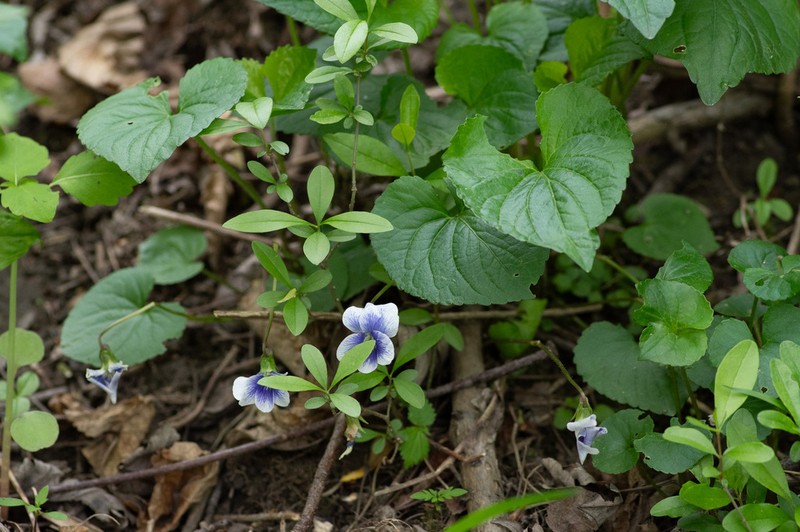
Common Blue Violet
Viola sororia
- Native to:
- Canada, Mexico, Prince Edward I., United States, Virgin Islands
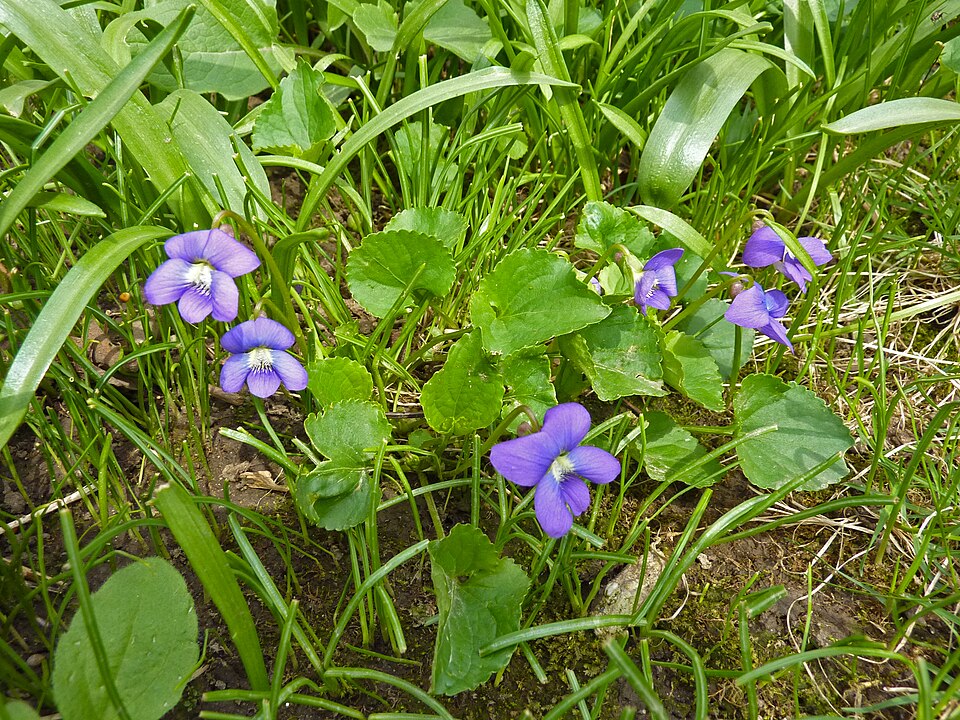
Jay Sturner (www.flickr.com) from USA
Taxonomy
- Division:
- Magnoliophyta | - Flowering plants
- Family:
- Violaceae
- Genus:
- Viola
- Species:
- Viola sororia
- USDA Symbol:
- VISO
Growth Characteristics
- Life Cycle:
- Annual | Perennial
- Growth Habit:
- Forb/herb
- Height:
- 20 cm
- Light Requirements:
- Full Sun,Part Shade
- Drought Tolerance:
- Low
- Bloom Months:
- mar,apr,may,jun
- Bloom Colors:
- purple, white, blue
- Ground Cover:
- Yes
- Lawn Substitute:
- Yes
Wildlife Benefits
- Bees:
- ★★☆☆☆ Documented bee visitation (GBIF)
- Butterflies & Moths:
- ★☆☆☆☆ Documented Lepidoptera association (GBIF)
- Caterpillars:
- ★★☆☆☆ Recorded caterpillar host plant (HOSTS Database)
Keystone Species Ranking
- Caterpillar Keystone:
- ★★★☆☆ Butterfly & moth species supported by this genus (NWF)
- Pollen Specialist Bee Keystone:
- ★★★★★ Native pollen specialist bee species supported by this genus (NWF)
Host Plant for Caterpillars
Aphrodite Fritillary (Speyeria aphrodite), Atlantis fritillary (Speyeria atlantis), Clossiana epithore, ⚠️Diana fritillary (Speyeria diana), Great Spangled Fritillary (Speyeria cybele), Meadow Fritillary (Clossiana bellona), Mormon fritillary (Speyeria mormonia), nokomis fritillary (Speyeria nokomis), 🛑Regal Fritillary (Speyeria idalia), ⚠️Small Pearl-bordered Fritillary (Clossiana selene)
Reported Fauna Sightings
Bees: Brown-belted bumble (Bombus griseocollis), Two-spotted bumble (Bombus bimaculatus) Butterflies:Variegated Fritillary (Euptoieta claudia)
Garden & Ecology Notes
- Wildlife Value:
- butterflies, bees, small mammals
Soil Requirements
- Soil Type:
- rich, well-drained loamy soil
- pH:
- 5.5 - 7.0 (slightly acidic to neutral)
- Drainage:
- tolerates poor drainage
- Moisture:
- consistently moist
- Notes:
- prefers shaded or semi-shaded areas
Propagation & Germination
- Stratification:
- Cold/moist stratification required — 60–90 days
- Germination Time:
- 14–30 days
- Notes:
- Seeds require cold stratification for 60-90 days to break dormancy; germination occurs in spring.
Pre-treatment: Cold-moist stratification for 30 days at 1–5°C (34–41°F).; then Light required for germination; do not cover seed.
Notes: Light required for germination; do not cover seed.
Source: Claude AI
ORGHPS Germination Guide: Sow immediately, Either the viability of these seeds is short or the species propagates best with fresh seed. Stored seed might be coaxed into germination with temperature cycling and patience. Sow @ 4°C for 3 weeks, then place at 20°C. * dry storage is fatal
Where to Buy
Nationwide Seller
- Native Plants Nursery (nursery)
- Pizzo Native Plant Nursery (wholesale nursery)
- Vermont Wildflower Farm (nursery and seeds)
- Prairie Moon Nursery (nursery and seeds)
- Prairie Moon Nursery (nursery and seeds)
- Prairie Moon Nursery (nursery and seeds)
- Sheffield's Seed (seeds)