
Summer Grape
Vitis aestivalis
- Native to:
- Canada, United States, Virgin Islands
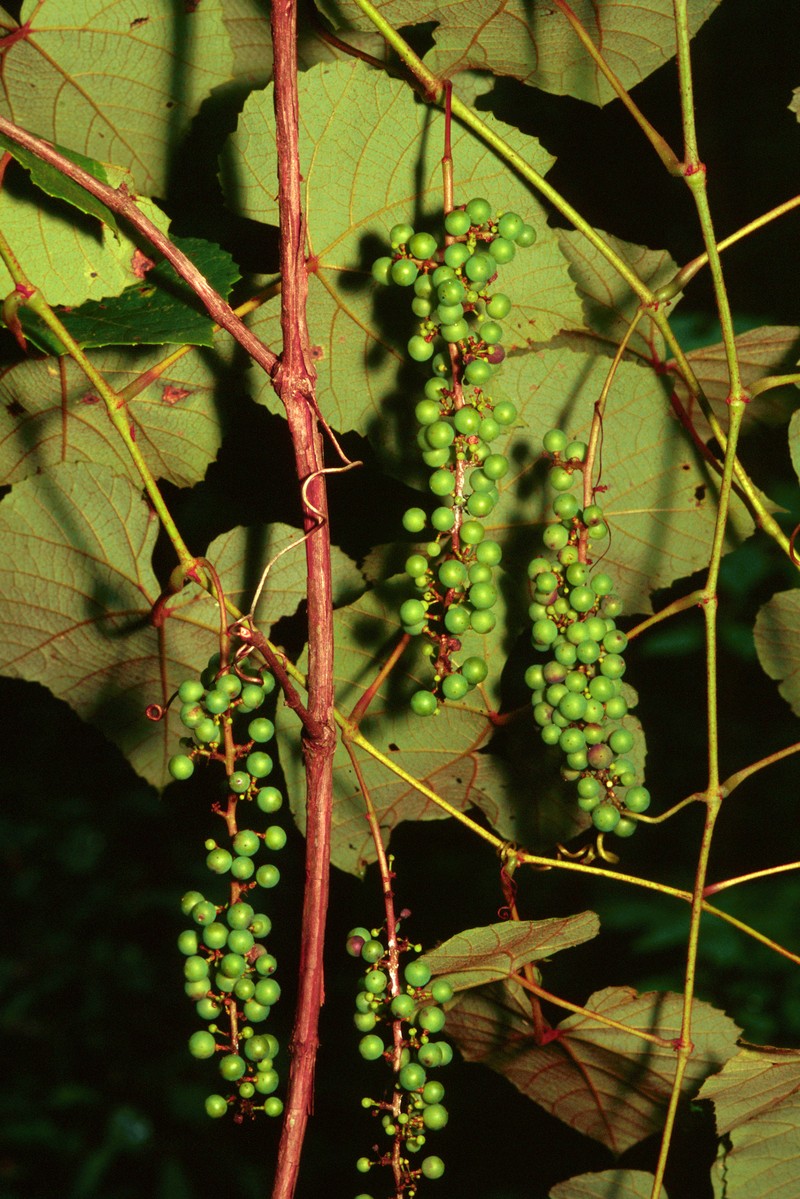
James H. Miller & Ted Bodner, Southern Weed Science Society, Bugwood.org
Taxonomy
- Division:
- Magnoliophyta | - Flowering plants
- Family:
- Vitaceae
- Genus:
- Vitis
- Species:
- Vitis aestivalis
- USDA Symbol:
- VIAE
Growth Characteristics
- Life Cycle:
- Perennial
- Growth Habit:
- Vine
- Height:
- 1500 cm
- Light Requirements:
- Full Sun
- Drought Tolerance:
- Medium
- Bloom Months:
- may,jun
- Bloom Colors:
- greenish
Wildlife Benefits
- Butterflies & Moths:
- ★☆☆☆☆ Documented Lepidoptera association (GBIF)
Keystone Species Ranking
- Caterpillar Keystone:
- ★★★★☆ Butterfly & moth species supported by this genus (NWF)
Reported Fauna Sightings
Moths:grapevine leafminer (Phyllocnistis vitegenella), Phyllocnistis vitifoliella
Garden & Ecology Notes
- Wildlife Value:
- birds, small mammals, butterflies
- Fall Color:
- red, purple
Soil Requirements
- Soil Type:
- well-drained, sandy or rocky soil
- pH:
- 5.5 - 6.5 (slightly acidic to neutral)
- Drainage:
- excellent drainage required
- Moisture:
- dry to moderate
- Notes:
- prefers nutrient-poor soils typical of its native range
Propagation & Germination
- Stratification:
- Cold/moist stratification required — 60–90 days
- Germination Time:
- 30–60 days
- Notes:
- Seeds require cold stratification for 60-90 days to break dormancy; germination is often slow and erratic.
Pre-treatment: Fungicide (CaptanNitavax), Hormodin #3 (indolebutyric acid) rooting hormone
Establishment: Attempts to root vine cuttings in a cold frame and directly in the field were unsuccessful. The most successful method was greenhouse propagation. Collections made in the winter of 1993 will be rooted in the greenhouse and planted to a raised bed in the field.
Source: npn.rngr.net