
Riverbank Grape
Vitis riparia
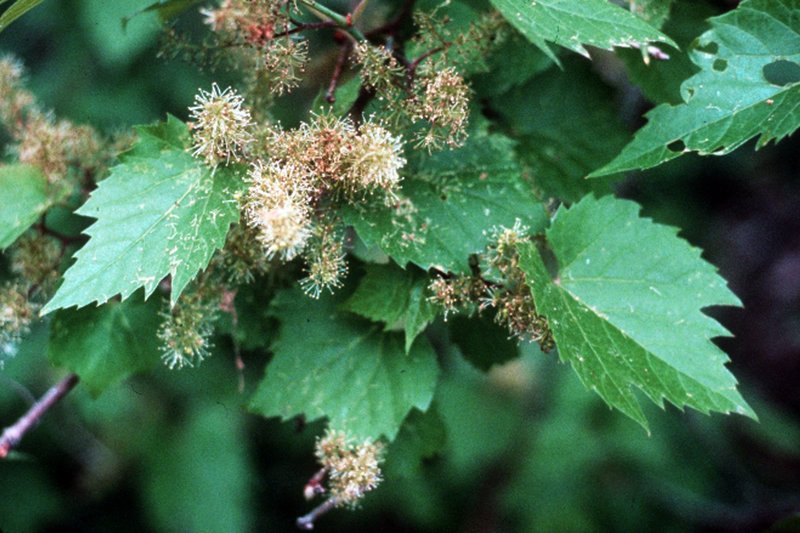
Bill Summers. USDA SCS. 1991. Southern wetland flora: Field office guide to plant species. South National Technical Center, Fort Worth. Courtesy of USDA NRCS Wetland Science Institute.
Taxonomy
- Division:
- Magnoliophyta | - Flowering plants
- Family:
- Vitaceae
- Genus:
- Vitis
- Species:
- Vitis riparia
Growth Characteristics
- Life Cycle:
- Perennial
- Growth Habit:
- Vine
- Height:
- 20-40 ft
- Light Requirements:
- Full Sun, Part Shade, Shade
- Drought Tolerance:
- Low
- Bloom Months:
- may, jun
- Bloom Colors:
- White, Yellow, Green, Brown
- Food Forest:
- Plant contains edible parts
Native Range
United States: Arkansas, Colorado, Connecticut, District of Columbia, Iowa, Illinois, Indiana, Kansas, Kentucky, Louisiana, Massachusetts, Maryland, Maine, Michigan, Minnesota, Missouri, Montana, North Carolina, North Dakota, Nebraska, New Hampshire, New Jersey, New York, Ohio, Oklahoma, Oregon, Pennsylvania, Rhode Island, South Dakota, Tennessee, Texas, Virginia, Vermont, Washington, Wisconsin, West Virginia, Wyoming, Canada: Manitoba, New Brunswick, Nova Scotia, Ontario, Quebec
Keystone Species Ranking
- Caterpillar Keystone:
- ★★☆☆☆ Based on number of butterfly and moth species using this genus as host plant (Source: National Wildlife Federation)
Host Plant for Caterpillars
Reported Fauna Sightings
Soil Requirements
- Soil Type:
- moist, fertile, well-drained loamy soil
- pH:
- 5.5 - 7.5 (slightly acidic to neutral)
- Drainage:
- excellent drainage required
- Moisture:
- consistently moist
- Notes:
- Thrives near riverbanks and floodplains
Germination Information
Pre-treatment: Cold-moist stratification for 30 days at 1–5°C (34–41°F).; then Cold-moist stratification for 60 days.
Source: OpenAI GPT-4o