
Common Ladyfern
Athyrium filix-femina
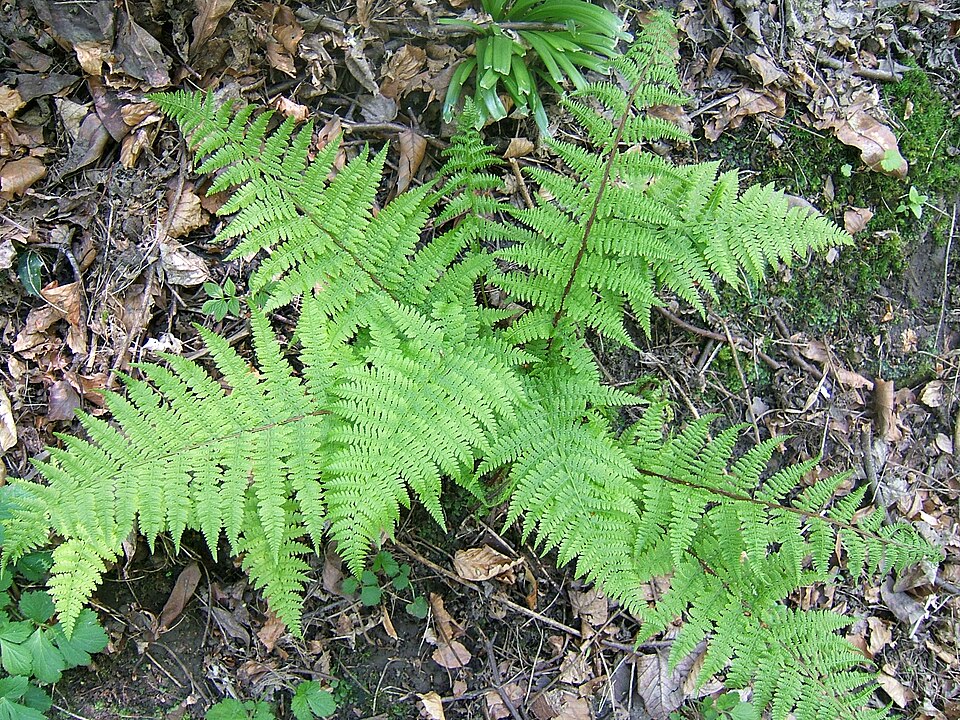
No machine-readable author provided. MPF assumed (based on copyright claims).
Taxonomy
- Division:
- Pteridophyta | - Ferns
- Family:
- Aspleniaceae
- Genus:
- Athyrium
- Species:
- Athyrium filix-femina
Growth Characteristics
- Life Cycle:
- Perennial
- Growth Habit:
- Forb/herb
- Height:
- 3-4 ft
- Light Requirements:
- Part Shade, Shade
- Drought Tolerance:
- High
- Bloom Colors:
- Not Applicable
Native Range
United States: Alaska, Alabama, Arkansas, Arizona, California, Colorado, Connecticut, District of Columbia, Delaware, Florida, Georgia, Iowa, Idaho, Illinois, Indiana, Kansas, Kentucky, Louisiana, Massachusetts, Maryland, Maine, Michigan, Minnesota, Missouri, Mississippi, Montana, North Carolina, North Dakota, Nebraska, New Hampshire, New Jersey, New Mexico, Nevada, New York, Ohio, Oklahoma, Oregon, Pennsylvania, Rhode Island, South Carolina, South Dakota, Tennessee, Texas, Utah, Virginia, Vermont, Washington, Wisconsin, West Virginia, Wyoming, Canada: Alberta, British Columbia, Manitoba, New Brunswick, Nova Scotia, Northwest Territories, Ontario, Prince Edward Island, Quebec, Saskatchewan, Yukon
Keystone Species Ranking
- Caterpillar Keystone:
- ★★★★★ Based on number of butterfly and moth species using this genus as host plant (Source: National Wildlife Federation)
Host Plant for Caterpillars
Soil Requirements
- Soil Type:
- rich, well-drained loamy soil
- pH:
- 5.0 - 7.0 (slightly acidic to neutral)
- Drainage:
- tolerates poor drainage
- Moisture:
- consistently moist
- Notes:
- prefers shaded, damp woodland environments
Germination Information
Pre-treatment: Water spores with distilled water and seal flats with clear plastic wrap to seal in moisture and prevent fungal contamination. Place flats under 60 watt soft incandescent lights set at 12 hour per day illumination. A constant temperature of 20 C to 25C should be maintained throughout the growth of the prothalli.
Establishment: The protocols suggest different establishment phase lengths (2 to 3 months vs 1 month). Also, the protocols suggest different light cycles (12 hours vs 16 hours).
Source: npn.rngr.net