
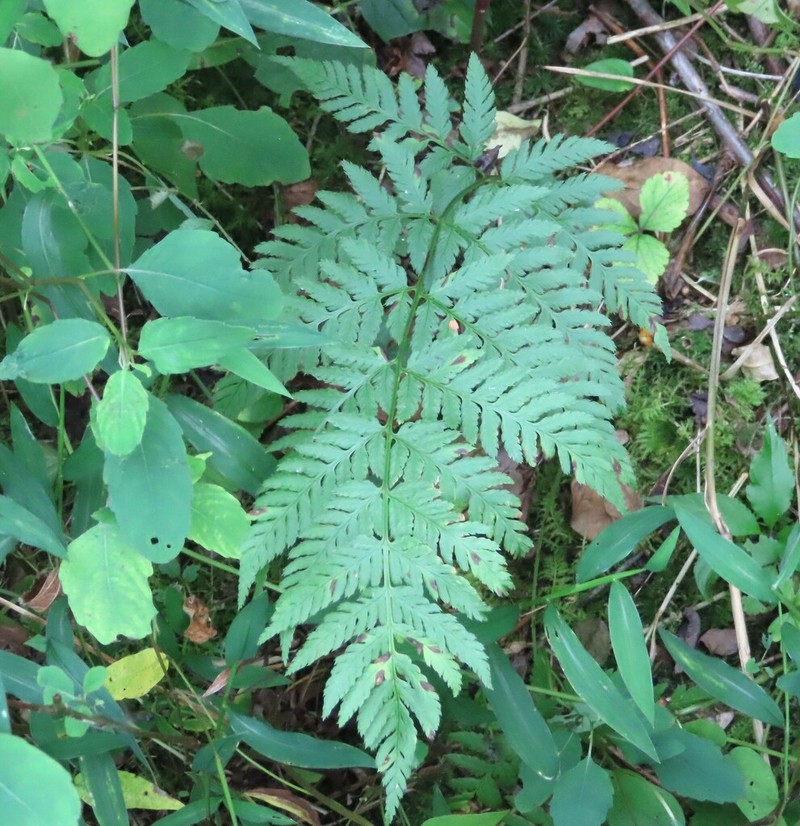
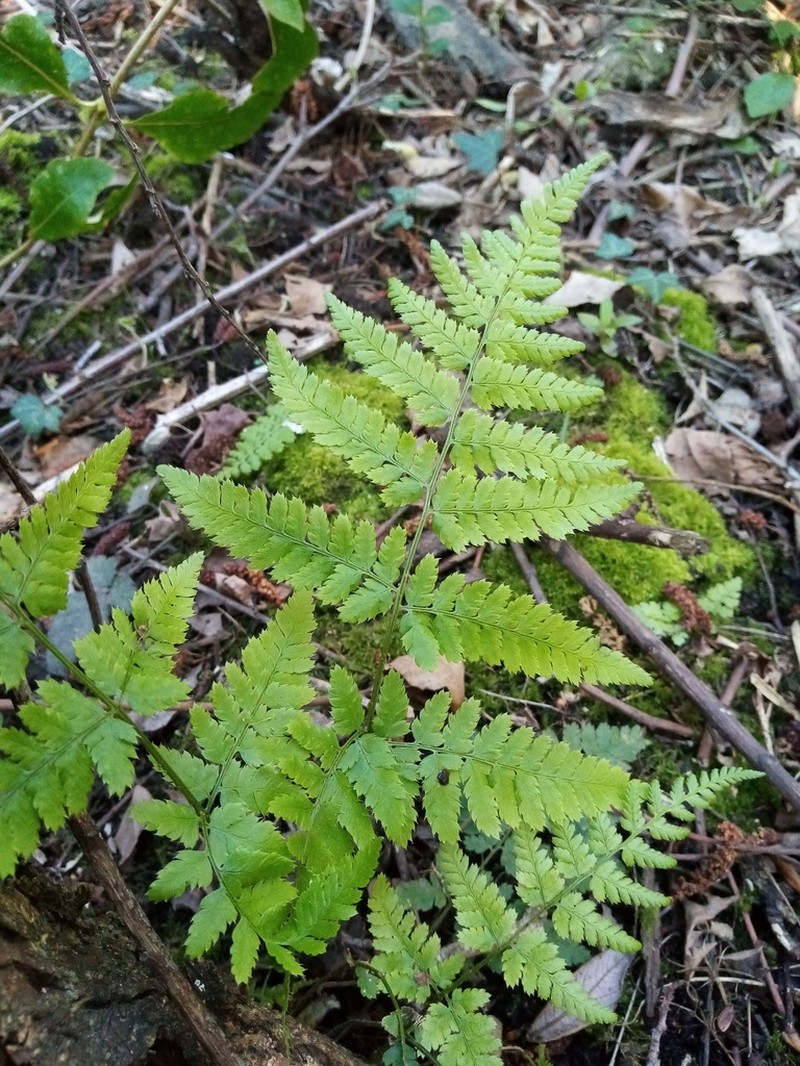
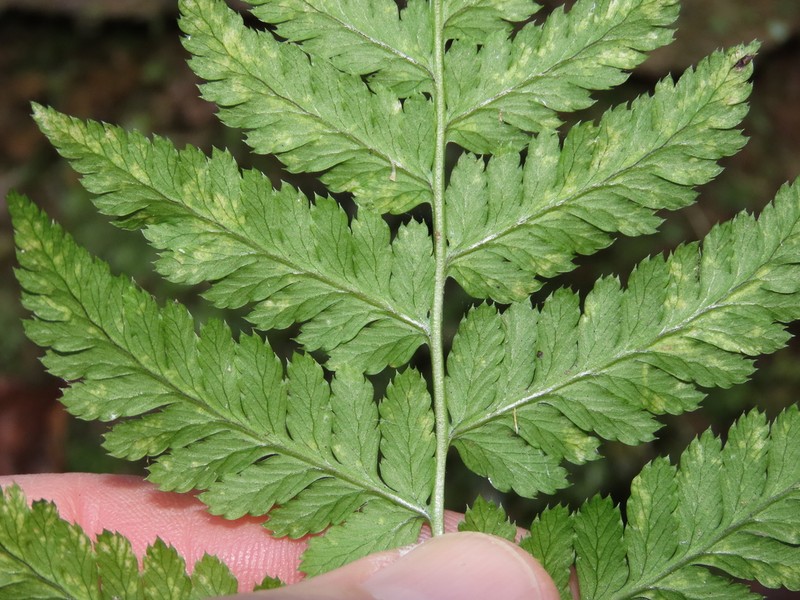
Spinulose Woodfern
Dryopteris carthusiana
- Native to:
- Albania, Austria, Baltic States, Belarus, Belgium, Bulgaria, Canada, China, Corse, Czechia-Slovakia, Denmark, Finland, France, Germany, Great Britain, Greece, Hungary, Ireland, Italy, Krym, Labrador, Netherlands, North Caucasus, Norway, NW. Balkan Pen., Poland, Prince Edward I., Romania, Russia, Spain, Sweden, Switzerland, Transcaucasus, Türkiye, Ukraine, United States, Virgin Islands
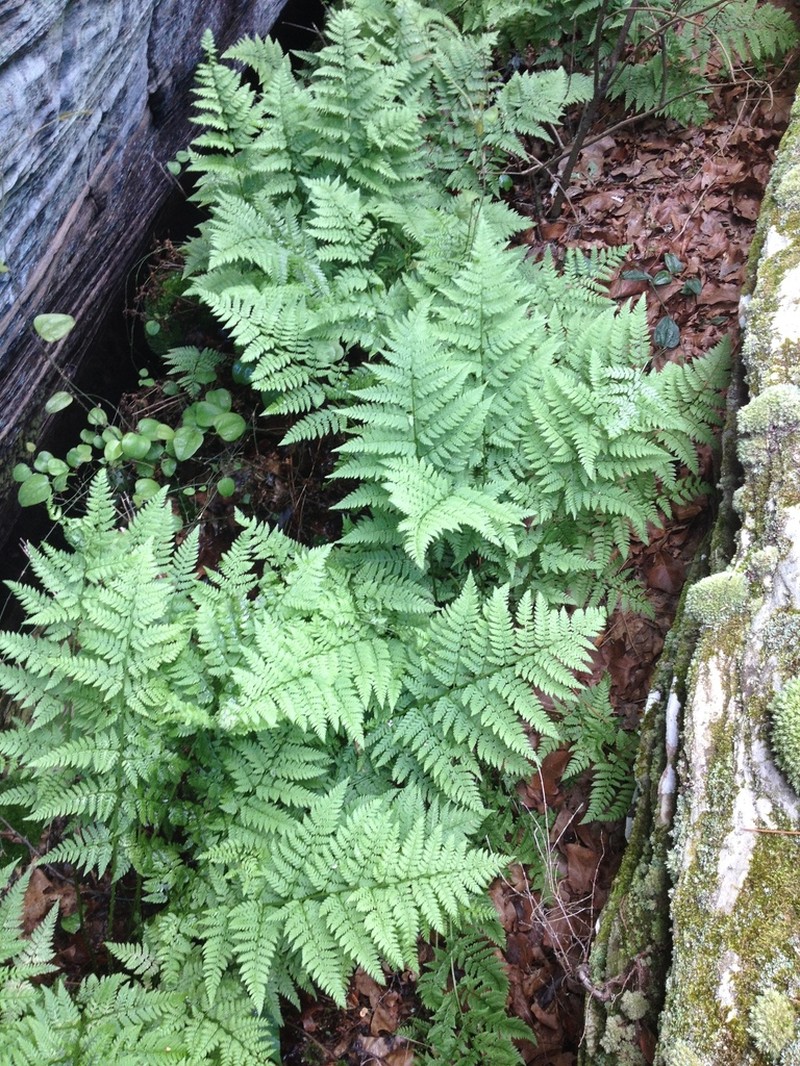
iNaturalist: © theo_witsell (iNaturalist #38497572)
Taxonomy
- Division:
- Pteridophyta | - Ferns
- Family:
- Polypodiaceae
- Genus:
- Dryopteris
- Species:
- Dryopteris carthusiana
- USDA Symbol:
- DRCA11
Growth Characteristics
- Life Cycle:
- Perennial
- Growth Habit:
- Forb/herb
- Height:
- 90 cm
- Light Requirements:
- Part Shade,Shade
- Drought Tolerance:
- Low
Keystone Species Ranking
- Caterpillar Keystone:
- ★☆☆☆☆ Butterfly & moth species supported by this genus (NWF)
Soil Requirements
- Soil Type:
- rich, well-drained loamy soil
- pH:
- 5.0 - 7.0 (slightly acidic to neutral)
- Drainage:
- tolerates poor drainage
- Moisture:
- consistently moist
- Notes:
- prefers shaded woodland areas
Propagation & Germination
Pre-treatment: Surface sow spores on sterilized milled sphagnum peat moss in sterilized flats with drainage holes. Water with distilled water and seal flats with clear plastic wrap. Place under 60 watt soft incandescent lights for 12 hours per day. Maintain a constant temperature of 20 to 25C.
Establishment: Fronds are collected by hand in July and August when the indusium begins to lift and spore color is black. The species is common in moist forests and streambanks, from lowland to mid-montane elevations. It is found across Canada, the upper Mid-Western states and Washington, Idaho and northwestern Montana.
Source: npn.rngr.net