
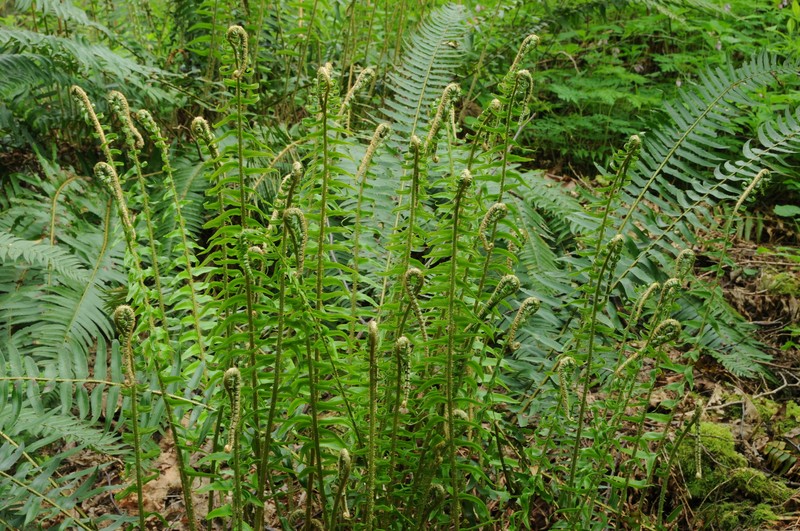
Western Swordfern
Polystichum munitum
- Native to:
- Canada, Mexican Pacific Is., Mexico, United States
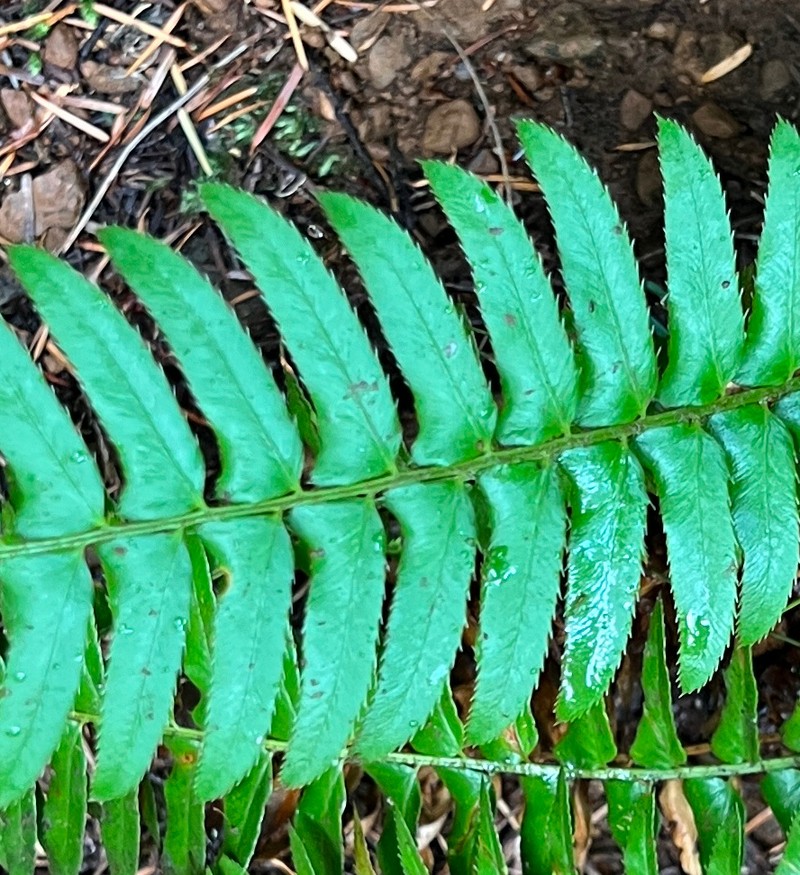
Source: Wikimedia; Credit: Jhorthos https://commons.wikimedia.org/w/index.php?title=User:Jhorthos&action=edit&redlink=1
Taxonomy
- Division:
- Pteridophyta | - Ferns
- Family:
- Polypodiaceae
- Genus:
- Polystichum
- Species:
- Polystichum munitum
- USDA Symbol:
- POMU
Growth Characteristics
- Life Cycle:
- Perennial
- Growth Habit:
- Forb/herb
- Height:
- 150 cm
- Drought Tolerance:
- Medium
Wildlife Benefits
- Butterflies & Moths:
- ★★★☆☆ Documented Lepidoptera association (GBIF)
- Caterpillars:
- ★☆☆☆☆ Recorded caterpillar host plant (HOSTS Database)
Keystone Species Ranking
- Caterpillar Keystone:
- ★☆☆☆☆ Butterfly & moth species supported by this genus (NWF)
Host Plant for Caterpillars
Brown angle shades (Phlogophora periculosa), Thallophaga taylorata
Garden & Ecology Notes
- Wildlife Value:
- birds, small mammals
- Deer Resistant:
- Yes
Propagation & Germination
- Stratification:
- None required
- Notes:
- Spores germinate readily on moist, sterile soil; no pretreatment needed.
Pre-treatment: Carefully sterilize growing media, flats and flat coverings before sowing spores.
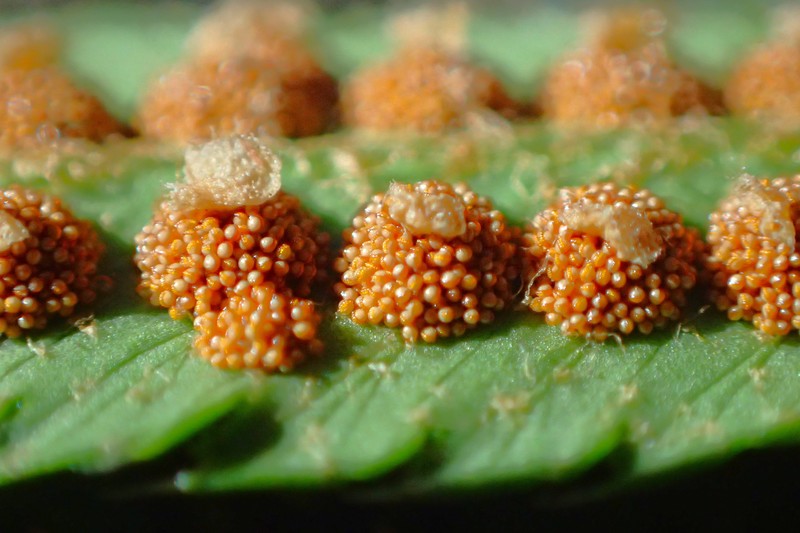
Establishment: Spores are collected between June 1st and August 30th. Mature spores are brown and are collected when the indusium folds back. Careful observation of phenology of the fern lifecycle is imperative to collecting viable spores. The fern is found in moist forests, mostly below 2500 feet elevation; from Monterery County north to Alaska and east to western Montana.
Source: npn.rngr.net