
Fraser Fir
Abies fraseri
- Native to:
- United States, Virgin Islands
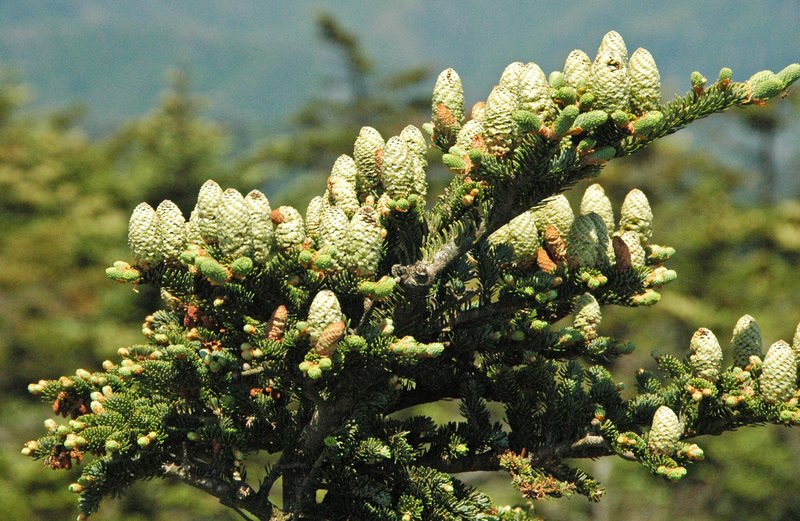
James St. John (www.flickr.com)
Taxonomy
- Division:
- Coniferophyta | - Conifers
- Family:
- Pinaceae
- Genus:
- Abies
- Species:
- Abies fraseri
- USDA Symbol:
- ABFR
Growth Characteristics
- Life Cycle:
- Perennial
- Growth Habit:
- Tree
- Height:
- 1500 cm
- Light Requirements:
- Shade
- Drought Tolerance:
- Low
Wildlife Benefits
- Caterpillars:
- ★☆☆☆☆ Recorded caterpillar host plant (HOSTS Database)
Keystone Species Ranking
- Caterpillar Keystone:
- ★★★★★ Butterfly & moth species supported by this genus (NWF)
Host Plant for Caterpillars
Garden & Ecology Notes
- Wildlife Value:
- birds, small mammals
- Fragrant:
- Yes
Soil Requirements
- Soil Type:
- moist, well-drained, organic-rich soil
- pH:
- 4.5 - 6.0 (acidic to slightly acidic)
- Drainage:
- excellent drainage required
- Moisture:
- consistently moist
- Notes:
- Native to high elevations in the Appalachian Mountains
Propagation & Germination
- Stratification:
- Cold/moist stratification required — 30–60 days
- Germination Time:
- 21–60 days
- Notes:
- Seeds require cold stratification for 30-60 days to break dormancy; sow in moist, well-drained seedbed.
Pre-treatment: Seeds are placed in fine mesh bags into a 1% hydrogen peroxide soak for 24 hours, rinsed, and placed in water for an additional 24 hours. Then, the seeds are stratified for 112 days under refrigeration at 1 to 3 °C. Regular checks for mold are necessary, with treatment using 1% hydrogen peroxide if mold is evident.
Establishment: Abies fraseri is native to the southern Appalachian Mountains and grows best in full sun or partial shade in rich, slightly acidic, moist, well-drained soils. It is found at high elevations in a cold, moist climate. There is a discrepancy in the stratification period between the two protocols, with one suggesting 45 days and the other 112 days.
Source: npn.rngr.net
Where to Buy
Nationwide Seller
- Sheffield's Seed (seeds)