
Grand Fir
Abies grandis
- Native to:
- Canada, United States
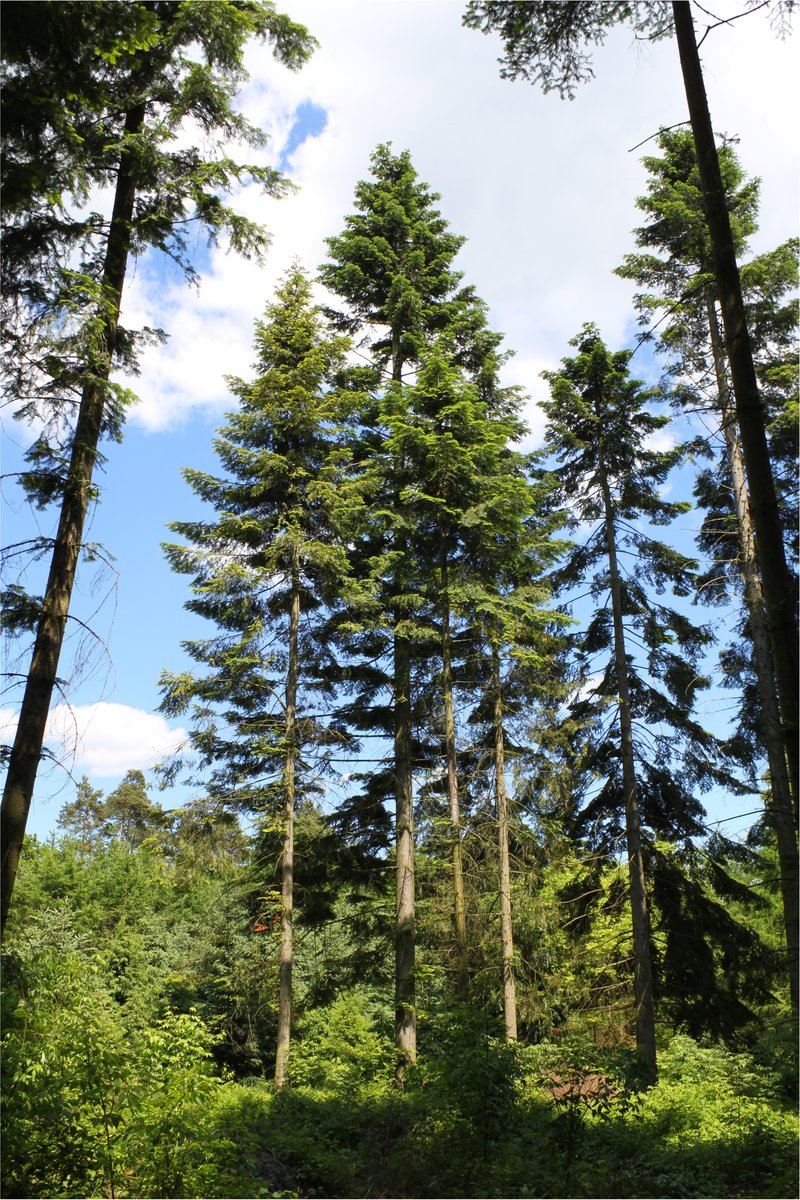
Walter Siegmund (talk)
Taxonomy
- Division:
- Coniferophyta | - Conifers
- Family:
- Pinaceae
- Genus:
- Abies
- Species:
- Abies grandis
- USDA Symbol:
- ABGR
Growth Characteristics
- Life Cycle:
- Perennial
- Growth Habit:
- Tree
- Height:
- 7500 cm
- Light Requirements:
- Part Shade,Shade
- Drought Tolerance:
- Low
Wildlife Benefits
- Butterflies & Moths:
- ★☆☆☆☆ Documented Lepidoptera association (GBIF)
- Caterpillars:
- ★★★☆☆ Recorded caterpillar host plant (HOSTS Database)
Keystone Species Ranking
- Caterpillar Keystone:
- ★★★★★ Butterfly & moth species supported by this genus (NWF)
Host Plant for Caterpillars
Choristoneura sp., Coleotechnites granti, Douglas-fir tussock moth (Orgyia pseudotsugata), Eastern blackheaded budworm (Acleris variana), Eupithecia annulata, Eupithecia longipalpata, Eupithecia palpata, Eupithecia unicolor, green spruce coneworm (Choristoneura viridis), Imitated Melanolophia (Melanolophia imitata), Imperial Moth (Eacles imperialis), Marmara oregonensis, Mournful Thorn (Lambdina fiscellaria), Neoalcis californiaria, Petrova picicolana, Silver-spotted Tiger Moth (Lophocampa argentata), Spiramater lutra, Syngrapha celsa, Syngrapha rectangula, Variegated cutworm (Peridroma saucia), Western spruce budworm (Choristoneura occidentalis), Menapia White (Neophasia menapia)
Garden & Ecology Notes
- Wildlife Value:
- birds, small mammals
- Fragrant:
- Yes
Soil Requirements
- Soil Type:
- rich, well-drained loamy soil
- pH:
- 5.0 - 6.5 (acidic to slightly acidic)
- Drainage:
- good drainage preferred
- Moisture:
- consistently moist
- Notes:
- thrives in deep, fertile soils
Propagation & Germination
- Stratification:
- Cold/moist stratification required — 30–60 days
- Germination Time:
- 21–60 days
- Notes:
- Seeds require cold stratification for 30-60 days to break dormancy; sow in spring after treatment.
Pre-treatment: Seeds are placed in fine mesh bags and soaked in a 1% hydrogen peroxide solution for 24 hours, then rinsed and placed in water for an additional 24 hours. Seeds are then placed in cold moist stratification for 20 to 45 days at 1 to 3 °C. Seeds are checked weekly for mold and rinsed if necessary.
Establishment: Germination is typically non-uniform but usually complete in 4 weeks. Germinants shed the seed coats 15 days after emergence. Seedlings are thinned at this stage. Some protocols suggest an 8-week establishment phase with specific fertilization and irrigation practices.
Source: npn.rngr.net
Where to Buy
Nationwide Seller
- Sheffield's Seed (seeds)