
Serpentine Aster
Symphyotrichum depauperatum
- Native to:
- United States
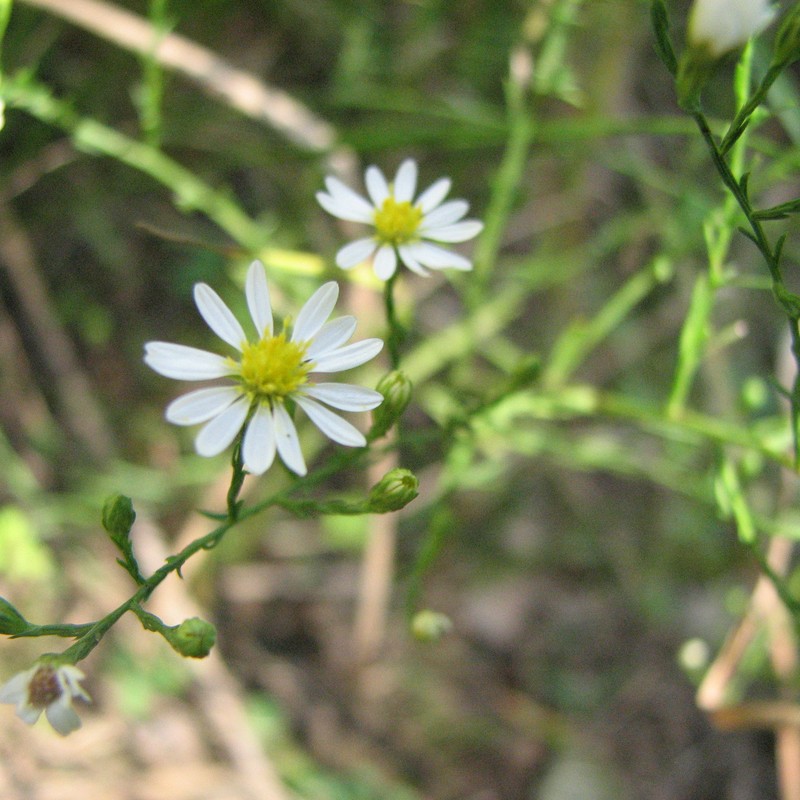
Craig Martin (www.inaturalist.org)
Taxonomy
- Division:
- Magnoliophyta | - Flowering plants
- Family:
- Asteraceae
- Genus:
- Symphyotrichum
- Species:
- Symphyotrichum depauperatum
- USDA Symbol:
- SYDE2
Growth Characteristics
- Life Cycle:
- Perennial
- Growth Habit:
- Forb/herb
- Height:
- 60 cm
- Light Requirements:
- Full Sun
- Drought Tolerance:
- Low
- Bloom Months:
- sep,oct
- Bloom Colors:
- violet, purple
Wildlife Benefits
- Bees:
- ★☆☆☆☆ Documented bee visitation (GBIF)
- Butterflies & Moths:
- ★☆☆☆☆ Documented Lepidoptera association (GBIF)
- Caterpillars:
- ★★★☆☆ Recorded caterpillar host plant (HOSTS Database)
Keystone Species Ranking
- Caterpillar Keystone:
- ★★★★☆ Butterfly & moth species supported by this genus (NWF)
- Pollen Specialist Bee Keystone:
- ★★★★☆ Native pollen specialist bee species supported by this genus (NWF)
Host Plant for Caterpillars
Arcigera Flower Moth (Schinia arcigera), clover cutworm (Agrotis gladiaria), Coleophora astericola, Coleophora ericoides, Coleophora polemoniella, Cucullia alfarata, dingy cutworm (Feltia jaculifera), Gnorimoschema subterranea, kidney-spotted minor (Lacinipolia renigera), Lacinipolia meditata, Orthodes crenulata, Pale-banded Dart (Agnorisma badinodis), Peppered Moth (Biston betularia), Pseudorthodes vecors, Wavy-lined Emerald (Synchlora aerata), Meadow Crescent (Phyciodes pratensis), Pearl Crescent (Phyciodes tharos)
Garden & Ecology Notes
- Wildlife Value:
- bees, butterflies
Soil Requirements
- Soil Type:
- sandy, acidic, nutrient-poor soil
- pH:
- 5.5 - 6.5 (slightly acidic to neutral)
- Drainage:
- excellent drainage required
- Moisture:
- dry to moderate
- Notes:
- native to rocky, open areas with sparse vegetation
Propagation & Germination
- Stratification:
- Cold/moist stratification required — 60–90 days
- Germination Time:
- 14–30 days
- Notes:
- Seeds require cold stratification for 60-90 days; surface sow on moist medium and keep at 20-25°C after stratification.
Pre-treatment: Mix the seeds with an equal amount of either perlite or vermiculite in a sealable plastic bag or container. Store in a cold environment (35-42°F) for 1-2 months. Seed germinates in light, so it should be surface-sown.
Establishment: Seeds are collected by hand from locally native plants within the eastern central Upper Peninsula or in Great Smoky Mountains National Park. Seed is small and difficult to sow evenly. If pappus is left on the seed, sow in clumps. If pappus has been removed, cleaned seed can be mixed with talc and sown using a salt shaker.
Source: npn.rngr.net