
Hazel Alder
Alnus serrulata
- Native to:
- Canada, United States, Virgin Islands
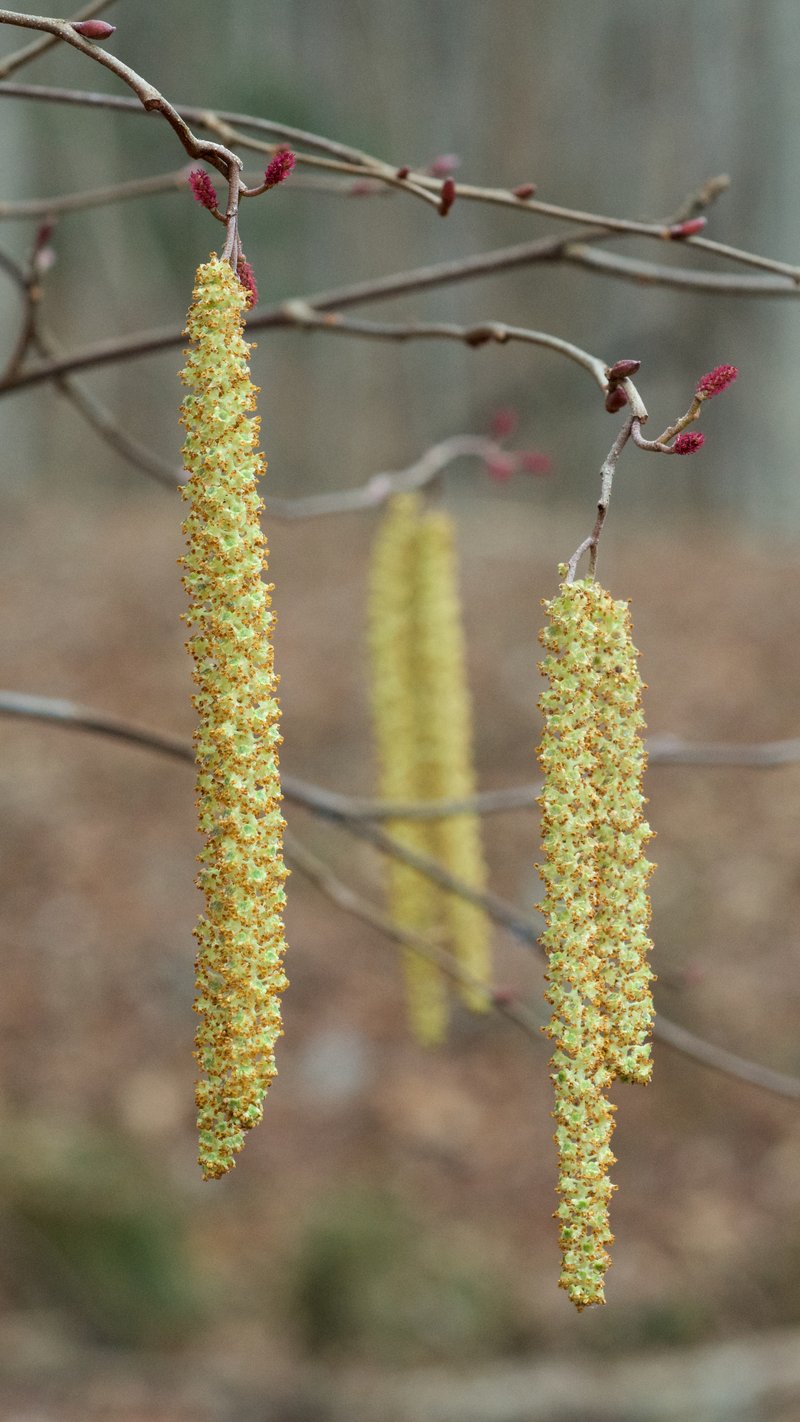
Eric Hunt


Taxonomy
- Division:
- Magnoliophyta | - Flowering plants
- Family:
- Betulaceae
- Genus:
- Alnus
- Species:
- Alnus serrulata
- USDA Symbol:
- ALSE2
Growth Characteristics
- Life Cycle:
- Perennial
- Growth Habit:
- Shrub , Tree
- Height:
- 1200 cm
- Light Requirements:
- Full Sun,Part Shade,Shade
- Drought Tolerance:
- Low
- Bloom Months:
- feb,mar,apr
- Bloom Colors:
- brown, yellow
Wildlife Benefits
- Butterflies & Moths:
- ★★★★☆ Documented Lepidoptera association (GBIF)
- Caterpillars:
- ★★☆☆☆ Recorded caterpillar host plant (HOSTS Database)
Keystone Species Ranking
- Caterpillar Keystone:
- ★★★★★ Butterfly & moth species supported by this genus (NWF)
Host Plant for Caterpillars
Bucculatrix locuples, Cecropia moth (Hyalophora cecropia), elm spanworm moth (Ennomos subsignaria), Eurois astricta, Gypsy moth (Lymantria dispar), Hickory Tussock Moth (Lophocampa caryae), Imperial Moth (Eacles imperialis), July highflyer (Hydriomena furcata), pawpaw sphinx (Dolba hyloeus), Phyllonorycter auronitens, red-banded leafroller (Acrobasis rubrifasciella), Smeared Dagger Moth (Acronicta oblinita), Spotted Apatelodes (Apatelodes torrefacta)
Reported Fauna Sightings
Moths:Frosted Dagger Moth (Acronicta hastulifera), Stigmella corylifoliella
Garden & Ecology Notes
- Wildlife Value:
- birds, small mammals, butterflies
Soil Requirements
- Soil Type:
- moist, fertile, well-drained loamy soil
- pH:
- 5.0 - 7.0 (slightly acidic to neutral)
- Drainage:
- tolerates poor drainage
- Moisture:
- consistently moist
- Notes:
- Commonly found along streams and wetlands
Propagation & Germination
- Stratification:
- Cold/moist stratification required — 30–60 days
- Germination Time:
- 14–30 days
- Notes:
- Seeds require cold stratification for 30-60 days; surface sow on moist medium.
Pre-treatment: Sow seed in nursery beds within one month of harvest as it does not maintain its germination in storage.
Establishment: Smooth alder is native to the eastern United States in USDA plant hardiness zones 5 through 8. It grows best in wet bottomlands and stream margins as well as in moist, well drained upland areas. It is moderately shade tolerant, but is weak-wooded and susceptible to wind and ice damage. It is not adapted to alkaline, saline, droughty, or extremely acid soils. Use of 'Panbowl' is recommended only in specific USDA Major Land Resource Areas where it was tested.
Source: npn.rngr.net
Where to Buy
Nationwide Seller
- Native Plants Nursery (nursery)
- Sheffield's Seed (seeds)