
Russet Buffaloberry
Shepherdia canadensis
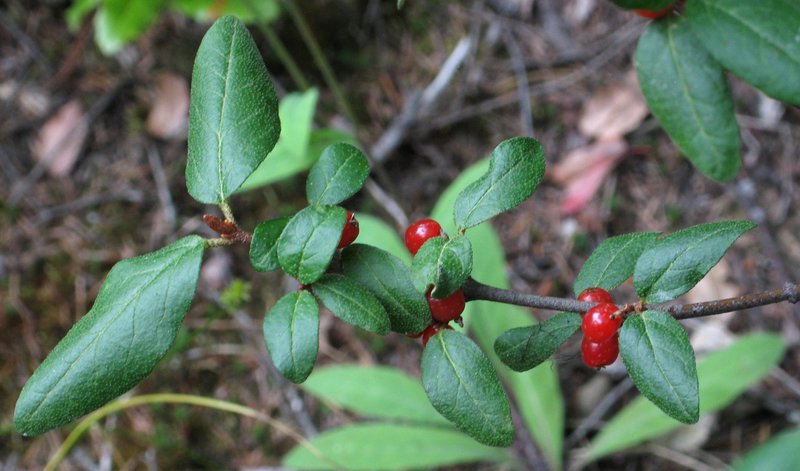
Taxonomy
- Division:
- Magnoliophyta | - Flowering plants
- Family:
- Elaeagnaceae
- Genus:
- Shepherdia
- Species:
- Shepherdia canadensis
Growth Characteristics
- Life Cycle:
- Perennial
- Growth Habit:
- Shrub
- Height:
- 8-12 ft
- Light Requirements:
- Full Sun, Part Shade, Shade
- Drought Tolerance:
- High
- Bloom Months:
- apr, may
- Bloom Colors:
- Yellow
- Landscaping Shrub:
- Yes
Native Range
United States: Alaska, Arizona, California, Colorado, Idaho, Illinois, Indiana, Maine, Michigan, Minnesota, Montana, North Dakota, New Mexico, Nevada, New York, Ohio, Oregon, Pennsylvania, South Dakota, Utah, Vermont, Washington, Wisconsin, Wyoming, Canada: Alberta, British Columbia, Manitoba, New Brunswick, Nova Scotia, Northwest Territories, Nunavut, Ontario, Quebec, Saskatchewan, Yukon
Host Plant for Caterpillars
Soil Requirements
- Soil Type:
- rocky, well-drained, nutrient-poor soil
- pH:
- 5.5 - 7.5 (slightly acidic to neutral)
- Drainage:
- excellent drainage required
- Moisture:
- dry to moderate
- Notes:
- commonly found in open woods and rocky slopes
Germination Information
Pre-treatment: Seeds are either placed in cold moist stratification for 60 to 90 days or scarified in concentrated sulfuric acid for 5 minutes and then stratified for 14 weeks at 2 to 5 C or by wet tumbling scarification treatment for 5 days followed by a 90 day cold, moist stratification at 1 to 3C. Cuttings are cut into 20 to 30 cm lengths, with the base recut and 1/3 of leaves or buds removed, treated with 8000 ppm IBA rooting hormone, and placed in a mist bed.
Establishment: The protocols vary in terms of pre-treatment and germination rates. The highest germination rate is achieved with semi-softwood cuttings treated with 8000 ppm IBA. Germination occurs during stratification, especially in the later stages of the treatment.
Source: npn.rngr.net