
Salal
Gaultheria shallon
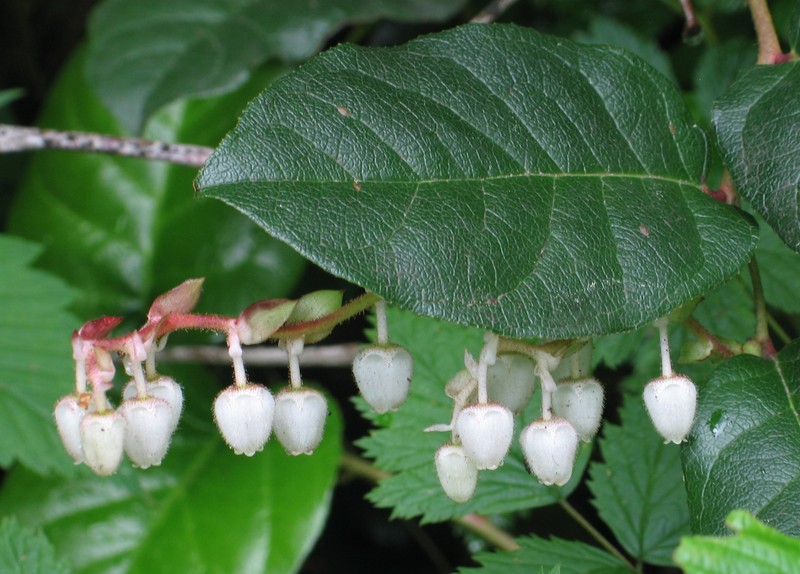
Taxonomy
- Division:
- Magnoliophyta | - Flowering plants
- Family:
- Ericaceae
- Genus:
- Gaultheria
- Species:
- Gaultheria shallon
Growth Characteristics
- Life Cycle:
- Perennial
- Growth Habit:
- Shrub , Subshrub
- Height:
- 6-8 ft
- Light Requirements:
- Full Sun, Part Shade, Shade
- Drought Tolerance:
- High
- Bloom Months:
- apr, may, jun, jul
- Bloom Colors:
- White, Pink
- Food Forest:
- Plant contains edible parts
- Evergreen Shrub:
- Yes
- Landscaping Shrub:
- Yes
Native Range
United States: Alaska, California, Oregon, Washington, Canada: British Columbia
Host Plant for Caterpillars
Reported Fauna Sightings
Soil Requirements
- Soil Type:
- rich, well-drained loamy soil
- pH:
- 5.0 - 7.0 (slightly acidic to neutral)
- Drainage:
- excellent drainage required
- Moisture:
- consistently moist
- Notes:
- thrives in forest understory with organic matter
Germination Information
Pre-treatment: For seeds: Sow into trays filled with stabilized medium plugs (Q-plugs), seal trays in plastic bags and refrigerate at 1 to 3 °C for 25 days. For cuttings: Cut the base of the stem at a 45° angle and dip in IBA (1000 ppm for dormant cuttings, 500 ppm for green cuttings), then insert into a pre-dibbled hole in well-drained rooting medium (30:20:30:20 peat:composted fir bark:perlite:pumice).
Establishment: Collection times vary: late summer or fall for seeds, mid winter or late spring/early summer for cuttings. Native to coastal areas from Santa Barbara County, CA to British Columbia, typically in coastal woods or brushy places below 760 m (2500 ft).
Source: npn.rngr.net