
Black Huckleberry
Gaylussacia baccata
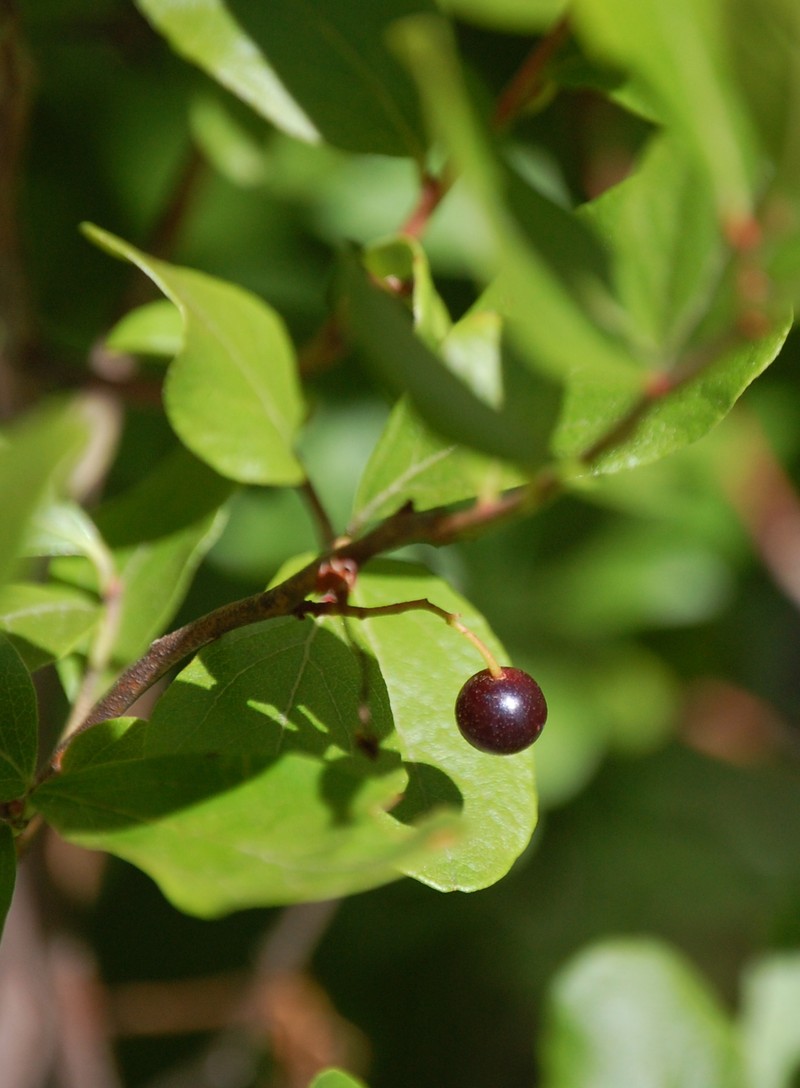
Taxonomy
- Division:
- Magnoliophyta | - Flowering plants
- Family:
- Ericaceae
- Genus:
- Gaylussacia
- Species:
- Gaylussacia baccata
Growth Characteristics
- Life Cycle:
- Perennial
- Growth Habit:
- Shrub
- Height:
- 4-6 ft
- Light Requirements:
- Full Sun, Part Shade, Shade
- Drought Tolerance:
- High
- Bloom Months:
- may, jun, jul
- Bloom Colors:
- White, Pink
- Evergreen Shrub:
- Yes
- Landscaping Shrub:
- Yes
Native Range
United States: Alabama, Arkansas, Connecticut, District of Columbia, Delaware, Georgia, Iowa, Illinois, Indiana, Kentucky, Massachusetts, Maryland, Maine, Michigan, Minnesota, Missouri, Mississippi, North Carolina, New Hampshire, New Jersey, New York, Ohio, Pennsylvania, Rhode Island, South Carolina, Tennessee, Virginia, Vermont, Wisconsin, West Virginia, Canada: New Brunswick, Nova Scotia, Ontario, Prince Edward Island, Quebec
Keystone Species Ranking
- Caterpillar Keystone:
- ★★★☆☆ Based on number of butterfly and moth species using this genus as host plant (Source: National Wildlife Federation)
Host Plant for Caterpillars
Reported Fauna Sightings
Soil Requirements
- Soil Type:
- sandy, acidic, nutrient-poor soil
- pH:
- 4.0 - 5.5 (strongly acidic to acidic)
- Drainage:
- excellent drainage required
- Moisture:
- dry to moderate
- Notes:
- prefers open, sunny locations in native habitats
Germination Information
Pre-treatment: After sowing, seed trays are given a 1 month period of warm moist stratification with alternating day-night temperatures (optimum is 86/68°F though our greenhouse averaged about 75/65°F), followed by two months cool moist stratification at approximately 45-50°F.
Establishment: Seedlings are very slow growing. During establishment, it is important to keep the soil surface evenly moist. Do not allow media to remain saturated, dry out or develop a surface crust. Fungus gnats can become a problem and larval feeding may damage seedling roots, therefore treatment may be necessary.
Source: npn.rngr.net