
Dwarf Bilberry
Vaccinium cespitosum
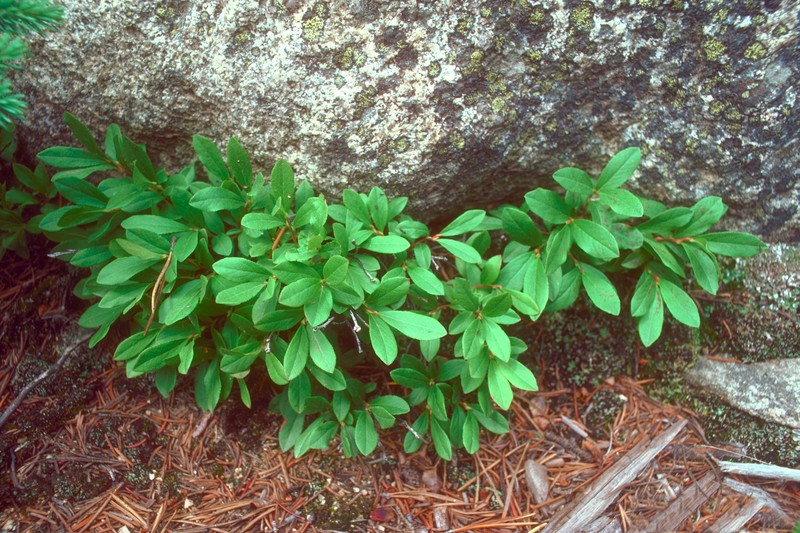
Dave Powell, USDA Forest Service, Bugwood.org
Taxonomy
- Division:
- Magnoliophyta | - Flowering plants
- Family:
- Ericaceae
- Genus:
- Vaccinium
- Species:
- Vaccinium cespitosum
Growth Characteristics
- Life Cycle:
- Perennial
- Growth Habit:
- Shrub , Subshrub
- Height:
- 1-2 ft
- Light Requirements:
- Full Sun
- Drought Tolerance:
- Medium
- Bloom Months:
- may, jun, jul, aug
- Bloom Colors:
- White, Pink
- Ground Cover:
- Yes
- Evergreen Shrub:
- Yes
Native Range
United States: Alaska, California, Colorado, Idaho, Maine, Michigan, Minnesota, Montana, New Hampshire, New Mexico, Nevada, New York, Oregon, Utah, Vermont, Washington, Wisconsin, Wyoming, Canada: Alberta, British Columbia, Manitoba, New Brunswick, Nova Scotia, Northwest Territories, Ontario, Quebec, Saskatchewan, Yukon
Keystone Species Ranking
- Caterpillar Keystone:
- ★☆☆☆☆ Based on number of butterfly and moth species using this genus as host plant (Source: National Wildlife Federation)
- Bee Keystone:
- ★★★★☆ Based on number of native bee species using this genus for pollen and nectar (Source: National Wildlife Federation)
Host Plant for Caterpillars
Reported Fauna Sightings
Soil Requirements
- Soil Type:
- sandy, acidic, nutrient-poor soil
- pH:
- 4.5 - 6.0 (acidic to slightly acidic)
- Drainage:
- excellent drainage required
- Moisture:
- consistently moist
- Notes:
- thrives in open, sunny locations
Germination Information
Pre-treatment: Cuttings were re-cut and terminal buds were removed. Cuttings were treated with 2,000 ppm liquid IBA and placed in a mist bed with bottom heat. Cuttings were 4 cm in length and 5 mm cm in diameter.
Establishment: Softwood cuttings had significantly higher number and quality of roots compared to semi-softwood cuttings taken one month earlier. The plant is found from Alaska to California and east through the Rocky Mountains from B.C. to Alberta, south to New Mexico. and east across Canada to the Atlantic coast.
Source: npn.rngr.net