
Highbush Blueberry
Vaccinium corymbosum
Also known as: Upland Highbush Blueberry
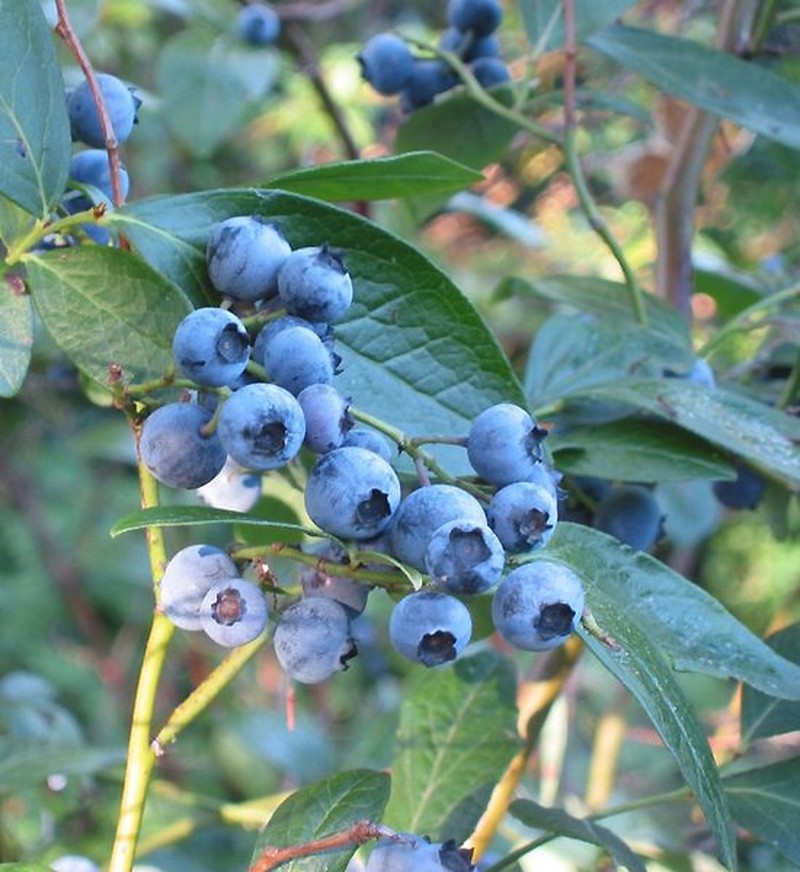
Taxonomy
- Division:
- Magnoliophyta | - Flowering plants
- Family:
- Ericaceae
- Genus:
- Vaccinium
- Species:
- Vaccinium corymbosum
Growth Characteristics
- Life Cycle:
- Perennial
- Growth Habit:
- Shrub
- Height:
- 12-20 ft
- Light Requirements:
- Full Sun, Part Shade, Shade
- Drought Tolerance:
- High
- Bloom Months:
- may, jun
- Bloom Colors:
- White, Pink
- Evergreen Shrub:
- Yes
- Landscaping Shrub:
- Yes
Native Range
United States: Alabama, Arkansas, Connecticut, District of Columbia, Delaware, Florida, Georgia, Illinois, Indiana, Kentucky, Louisiana, Massachusetts, Maryland, Maine, Michigan, Mississippi, North Carolina, New Hampshire, New Jersey, New York, Ohio, Oklahoma, Pennsylvania, Rhode Island, South Carolina, Tennessee, Texas, Virginia, Vermont, Washington, Wisconsin, West Virginia, Canada: British Columbia, New Brunswick, Nova Scotia, Ontario, Quebec
Keystone Species Ranking
- Caterpillar Keystone:
- ★☆☆☆☆ Based on number of butterfly and moth species using this genus as host plant (Source: National Wildlife Federation)
- Bee Keystone:
- ★★★★☆ Based on number of native bee species using this genus for pollen and nectar (Source: National Wildlife Federation)
Host Plant for Caterpillars
Reported Fauna Sightings
Soil Requirements
- Soil Type:
- moist, well-drained, acidic peaty soil
- pH:
- 4.5 - 5.5 (strongly acidic to moderately acidic)
- Drainage:
- excellent drainage required
- Moisture:
- consistently moist
- Notes:
- prefers high organic matter content
Germination Information
Pre-treatment: Softwood blueberry cuttings are taken in late June or early July. Cuttings are trimmed to a size that has a node at the bottom of the cutting and several pairs of leaves at the top (each cutting is about 6 inches). They are dipped in a 1:10 solution of Dip n Grow, and stuck in flats of perlite under mist in the greenhouse.
Establishment: The protocols vary in the propagation source, with one using seeds and another using cuttings. The protocol using cuttings did not specify a germination rate.
Source: npn.rngr.net