
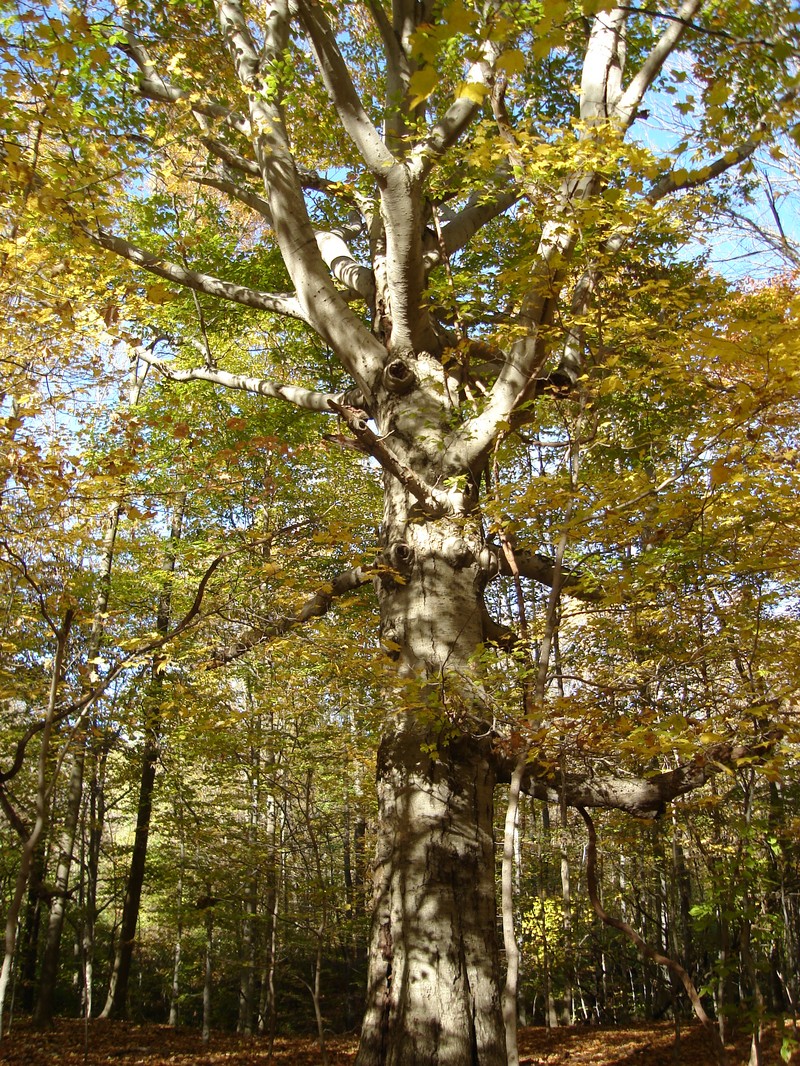
American Beech
Fagus grandifolia
Taxonomy
- Division:
- Magnoliophyta | - Flowering plants
- Family:
- Fagaceae
- Genus:
- Fagus
- Species:
- Fagus grandifolia
Growth Characteristics
- Life Cycle:
- Perennial
- Growth Habit:
- Tree
- Height:
- More than 40 ft
- Light Requirements:
- Part Shade, Shade
- Drought Tolerance:
- Medium
- Bloom Months:
- apr, may
- Bloom Colors:
- Yellow, Green, Brown
Native Range
United States: Alabama, Arkansas, Connecticut, District of Columbia, Delaware, Florida, Georgia, Illinois, Indiana, Kentucky, Louisiana, Massachusetts, Maryland, Maine, Michigan, Minnesota, Missouri, Mississippi, North Carolina, New Hampshire, New Jersey, New York, Ohio, Oklahoma, Pennsylvania, Rhode Island, South Carolina, Tennessee, Texas, Utah, Virginia, Vermont, Wisconsin, West Virginia, Canada: New Brunswick, Nova Scotia, Ontario, Prince Edward Island, Quebec
Keystone Species Ranking
- Caterpillar Keystone:
- ★☆☆☆☆ Based on number of butterfly and moth species using this genus as host plant (Source: National Wildlife Federation)
Host Plant for Caterpillars
Acronicta tristis, American Dagger Moth (Acronicta americana), Banded Tussock Moth (Halysidota tessellaris), Bethune's Pinion (Lithophane bethunei), black-dotted leaftier moth (Psilocorsis cryptolechiella), broken-banded leafroller (Choristoneura fractivittana), Brown-tail moth (Euproctis chrysorrhoea), Bruce spanworm (Operophtera bruceata), Bucculatrix packardella, clear dagger moth (Acronicta clarescens), Colocasia flavicornis, Colocasia propinquilinea, Dasychira obliquata, Eastern spruce budworm (Choristoneura fumiferana), Eastern Tent Caterpillar (Malacosoma americana), elm spanworm moth (Ennomos subsignaria), fall cankerworm (Alsophila pometaria), Fall webworm (Hyphantria cunea), false prominent (Schizura leptinoides), gray-patched prominent (Dasylophia thyatiroides), Gypsy moth (Lymantria dispar), hibiscus Quaker (Orthosia hibisci), Hickory Tussock Moth (Lophocampa caryae), Imperial Moth (Eacles imperialis), impressed dagger moth (Acronicta impressa), Io moth (Automeris io), Laugher (Charadra deridens), maple leafcutter moth (Paraclemensia acerifoliella), Maple spanworm (Ennomos magnaria), maple trumpet skeletonizer (Catastega aceriella), maple-basswood leafroller (Sparganothis pettitana), Morrisonia latex, Mottled Prominent (Macrurocampa marthesia), Neurobathra strigifinitella, Norman's Quaker (Crocigrapha normani), oak leaftier moth (Psilocorsis quercicella), Olethreutes fagigemmeana, Orthosia revicta, ovate dagger moth (Acronicta ovata), Phyllonorycter restrictella, red-humped oakworm moth (Symmerista canicosta), Red-lined Panopoda (Panopoda rufimargo), Red-washed Prominent (Oligocentria semirufescens), Rosy Maple Moth (Dryocampa rubicunda), Saddled Prominent (Heterocampa guttivitta), sharp-lined tussock moth (Dasychira dorsipennata), Spotted Tussock Moth (Lophocampa maculata), Symmerista leucitys, Variable Oakleaf Caterpillar Moth (Lochmaeus manteo), Walnut Sphinx (Amorpha juglandis), white triangle tortrix (Clepsis persicana), White-dotted Prominent (Nadata gibbosa), White-headed Symmerista (Symmerista albifrons), White-marked Tussock Moth (Orgyia leucostigma), woodland leafroller (Pandemis lamprosana), Yellownecked caterpillar (Datana ministra), Yellownecked caterpillar (Datana integerrima), Early Hairstreak (Erora laeta), Red-spotted Purple (Basilarchia arthemis)
Soil Requirements
- Soil Type:
- rich, well-drained loamy soil
- pH:
- 5.0 - 6.5 (slightly acidic to neutral)
- Drainage:
- good drainage preferred
- Moisture:
- consistently moist
- Notes:
- prefers undisturbed, mature forest soils
Germination Information
Pre-treatment: Seeds are cold stratified for 90 days
Source: npn.rngr.net