
Southern Red Oak
Quercus falcata
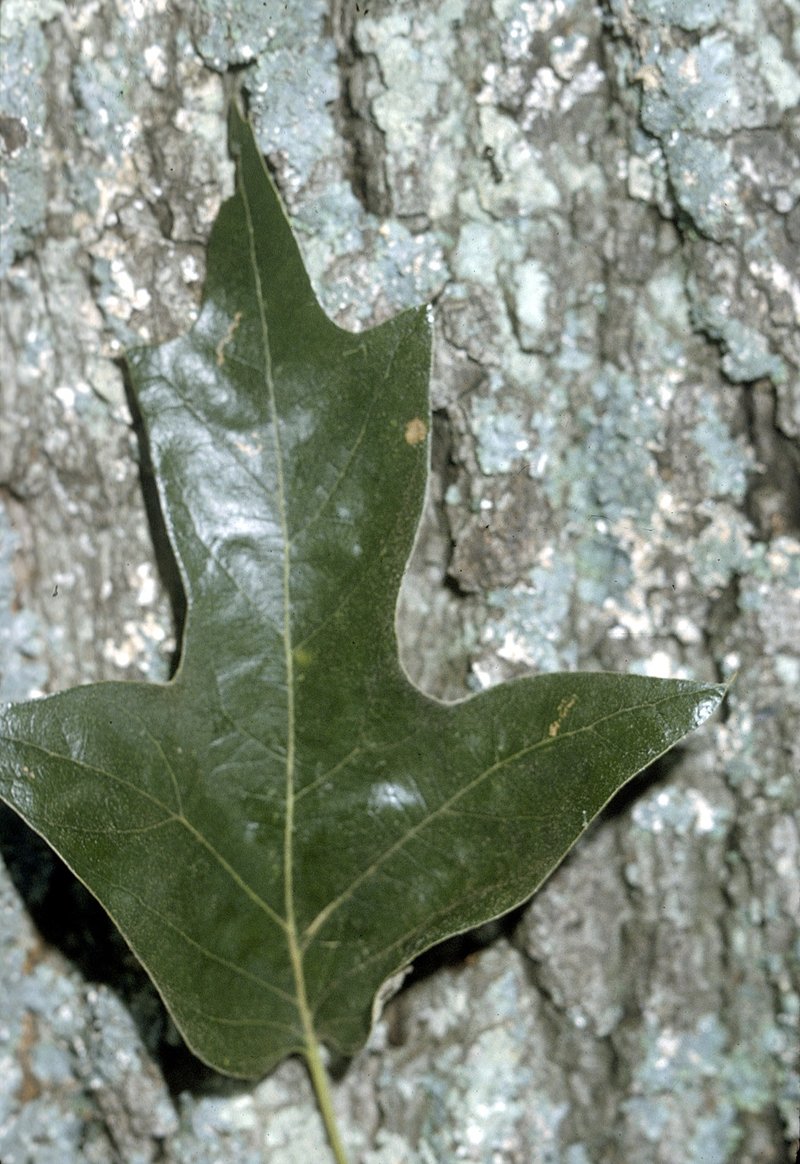
Taxonomy
- Division:
- Magnoliophyta | - Flowering plants
- Family:
- Fagaceae
- Genus:
- Quercus
- Species:
- Quercus falcata
Growth Characteristics
- Life Cycle:
- Perennial
- Growth Habit:
- Tree
- Height:
- More than 40 ft
- Light Requirements:
- Part Shade
- Drought Tolerance:
- Low
- Bloom Months:
- mar, apr, may
- Bloom Colors:
- Yellow
Keystone Species Ranking
- Caterpillar Keystone:
- ★☆☆☆☆ Based on number of butterfly and moth species using this genus as host plant (Source: National Wildlife Federation)
Host Plant for Caterpillars
almond bud moth (Acrobasis minimella), Buck Moth (Hemileuca maia), consular oakworm moth (Anisota consularis), Eriocraniella mediabulla, Pink-striped oakworm moth (Anisota virginiensis), Polyphemus moth (Antheraea polyphemus), spotted oakworm moth (Anisota stigma), Yellowstriped oakworm moth (Anisota peigleri), Banded Hairstreak (Satyrium calanus), Fixsenia favonius
Soil Requirements
- Soil Type:
- well-drained, sandy loam or clay
- pH:
- 4.5 - 6.5 (acidic to slightly acidic)
- Drainage:
- good drainage preferred
- Moisture:
- dry to moderate
- Notes:
- thrives in upland areas with acidic soils
Germination Information
Pre-treatment: Seeds are cold stratified for 32-60 days or in damp sphagnum peat moss for three or four months in a refrigerator at 36-40°F. Do not let acorns dry.
Establishment: Q. falcata is found within temperate deciduous forests of eastern North America, from Coastal New Jersey, south to Florida, west to eastern Texas, northward in Mississippi Valley to southern Indiana. No germination rate or time range provided in the protocols.
Source: npn.rngr.net