
European Plum
Prunus domestica
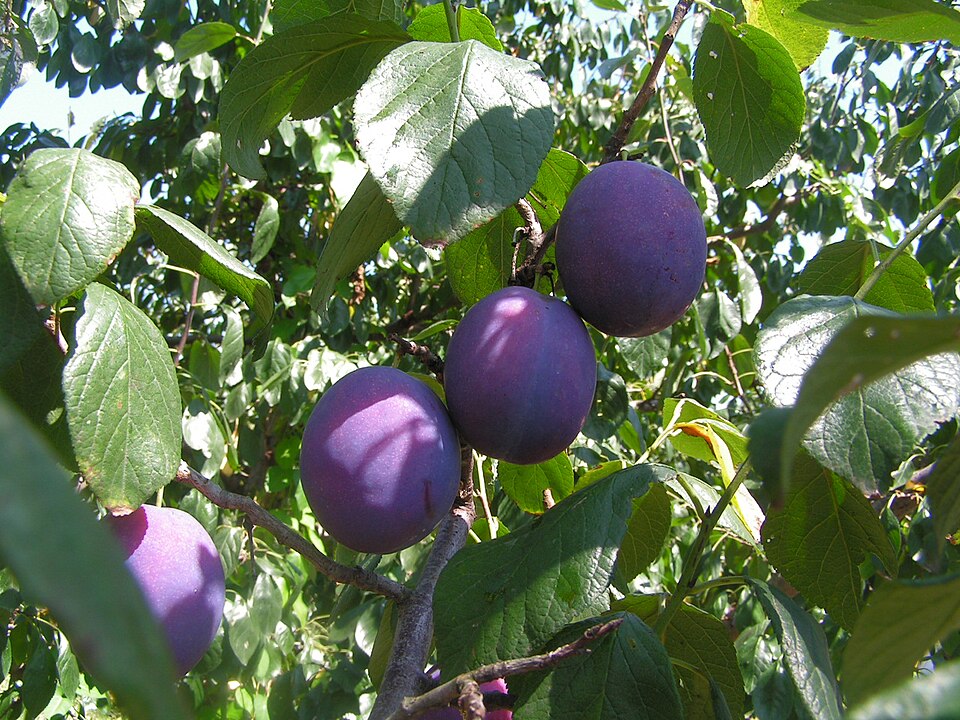
YAMAMAYA
Taxonomy
- Division:
- Magnoliophyta | - Flowering plants
- Family:
- Rosaceae
- Genus:
- Prunus
- Species:
- Prunus domestica
Growth Characteristics
- Life Cycle:
- Perennial
- Growth Habit:
- Tree
- Height:
- 12-20 ft
- Light Requirements:
- Full Sun
- Drought Tolerance:
- High
- Bloom Months:
- mar, apr, may
- Bloom Colors:
- white
- Food Forest:
- Plant contains edible parts
Native Range
United States: California, Connecticut, Delaware, Idaho, Kansas, Louisiana, Massachusetts, Maryland, Maine, Michigan, Minnesota, New Hampshire, New Jersey, New York, Ohio, Oregon, Pennsylvania, Rhode Island, Texas, Utah, Virginia, Vermont, Washington, Canada: Nova Scotia, Ontario, Quebec
Keystone Species Ranking
- Caterpillar Keystone:
- ★☆☆☆☆ Based on number of butterfly and moth species using this genus as host plant (Source: National Wildlife Federation)
Host Plant for Caterpillars
Acrobasis tricolorella, Acronicta brumosa, Acronicta superans, Ailanthus silkmoth (Samia cynthia), Ambesa walsinghami, American lappet moth (Phyllodesma americana), American plum borer (Euzophera semifuneralis), Army cutworm (Euxoa auxiliaris), Ashen Pinion (Lithophane antennata), blackthorn dagger (Acronicta pruni), Bondia comonana, Brown-tail moth (Euproctis chrysorrhoea), Calleta silkmoth (Eupackardia calleta), Ceanothus Silkmoth (Hyalophora euryalus), Cecropia moth (Hyalophora cecropia), Ceranemota improvisa, Cerma cerintha, Chain-lined geometer moth (Cingilia catenaria), Cherry fruitworm (Grapholita packardi), Cinnamon Tussock Moth (Dasychira cinnamomea), clear dagger moth (Acronicta clarescens), Coleophora sacramenta, Columbia silk moth (Hyalophora columbia), Copper Underwing (Amphipyra pyramidoides), cymatophoroides false owlet moth (Pseudothyatira cymatophoroides), dowdy pinion (Lithophane unimoda), Eastern Tent Caterpillar (Malacosoma americana), Elegant Sheep Moth (Hemileuca eglanterina), Elegant sphinx (Sphinx perelegans), Engrailed (Ectropis crepuscularia), Eumacaria latiferrugata, Euxoa atomaris, Euxoa tessellata, fall cankerworm (Alsophila pometaria), Fall webworm (Hyphantria cunea), Forest Tent Caterpillar (Malacosoma disstria), four-barred gray (Aethalura intertexta), fragile dagger moth (Acronicta fragilis), funeral dagger moth (Acronicta funeralis), Greater Red Dart (Abagrotis alternata), Hedya dimidioalba, Imperial Moth (Eacles imperialis), impressed dagger moth (Acronicta impressa), Indian meal moth (Plodia interpunctella), Interrupted Dagger Moth (Acronicta interrupta), Io moth (Automeris io), Large Tolype (Tolype velleda), leaf crumpler moth (Acrobasis indigenella), Lesser Peachtree Borer (Grapholita prunivora), Linden looper (Erannis tiliaria), Luna moth (Actias luna), Lunate zale (Zale lunata), Malana balsa moth (Balsa malana), Neumoegen's buckmoth (Hemileuca neumoegeni), Nevada buck moth (Hemileuca nevadensis), Notarctia proxima, Olethreutes ferrugineanum, Olethreutes malana, One-eyed sphinx (Smerinthus cerisyi), orange tortrix moth (Argyrotaenia citrana), Oriental fruit moth (Cydia molesta), Peach tree borer (Synanthedon exitiosa), Peach Twig Borer (Anarsia lineatella), Peppered Moth (Biston betularia), Phyllonorycter crataegella, Polyphemus moth (Antheraea polyphemus), Promethea silkmoth (Callosamia promethea), Protorthodes rufula, Radcliffe's dagger moth (Acronicta radcliffei), Red-bordered Emerald (Nemoria bistriaria), Red-humped caterpillar moth (Schizura concinna), Regal Moth (Citheronia regalis), Rusty Tussock Moth (Orgyia antiqua), Salt Marsh Moth (Estigmene acrea), sharp-lined tussock moth (Dasychira dorsipennata), short-lined chocolate (Argyrostrotis anilis), Small-eyed Sphinx (Paonias myops), southern tussock moth (Dasychira meridionalis), Spotted Apatelodes (Apatelodes torrefacta), Spring cankerworm (Paleacrita vernata), stalk borer moth (Papaipema nebris), Tawny Phosphor (Triphosa haesitata), tentoriferella (Machimia tentoriferella), Twin-spotted sphinx (Smerinthus jamaicensis), ugly-nest caterpillar moth (Archips cerasivorana), Ultronia underwing (Catocala ultronia), Unicorn caterpillar moth (Schizura unicornis), Variegated cutworm (Peridroma saucia), Virginia Tiger Moth (Spilosoma virginica), Vitula serratilineella, Walker’s Atlas Moth (Samia walkeri), walnut spanworm moth (Phigalia plumogeraria), Western tussock moth (Orgyia vetusta), White-dotted Prominent (Nadata gibbosa), White-lined sphinx moth (Hyles lineata), White-marked Tussock Moth (Orgyia leucostigma), Wild Cherry Sphinx (Sphinx drupiferarum), Woody Underwing (Catocala grynea), Xylesthia pruniramiella, Yellownecked caterpillar (Datana ministra), zebra caterpillar moth (Melanchra picta), Eastern Tiger Swallowtail (Papilio glaucus), Harkenclenus titus, Lorquin's admiral (Basilarchia lorquini), Pale Swallowtail (Papilio eurymedon), Striped Hairstreak (Satyrium liparops), Western Tiger Swallowtail (Papilio rutulus)
Reported Fauna Sightings
Bees: Bombus ternarius (Bombus ternarius), Bombus ternarius (Bombus ternarius), Bombus terricola (Bombus terricola), Bombus terricola (Bombus terricola)
Soil Requirements
- Soil Type:
- fertile, well-drained loamy soil
- pH:
- 6.0 - 7.5 (slightly acidic to neutral)
- Drainage:
- excellent drainage required
- Moisture:
- moderate moisture
- Notes:
- Prefers soils rich in organic matter