
Bitter Cherry
Prunus emarginata
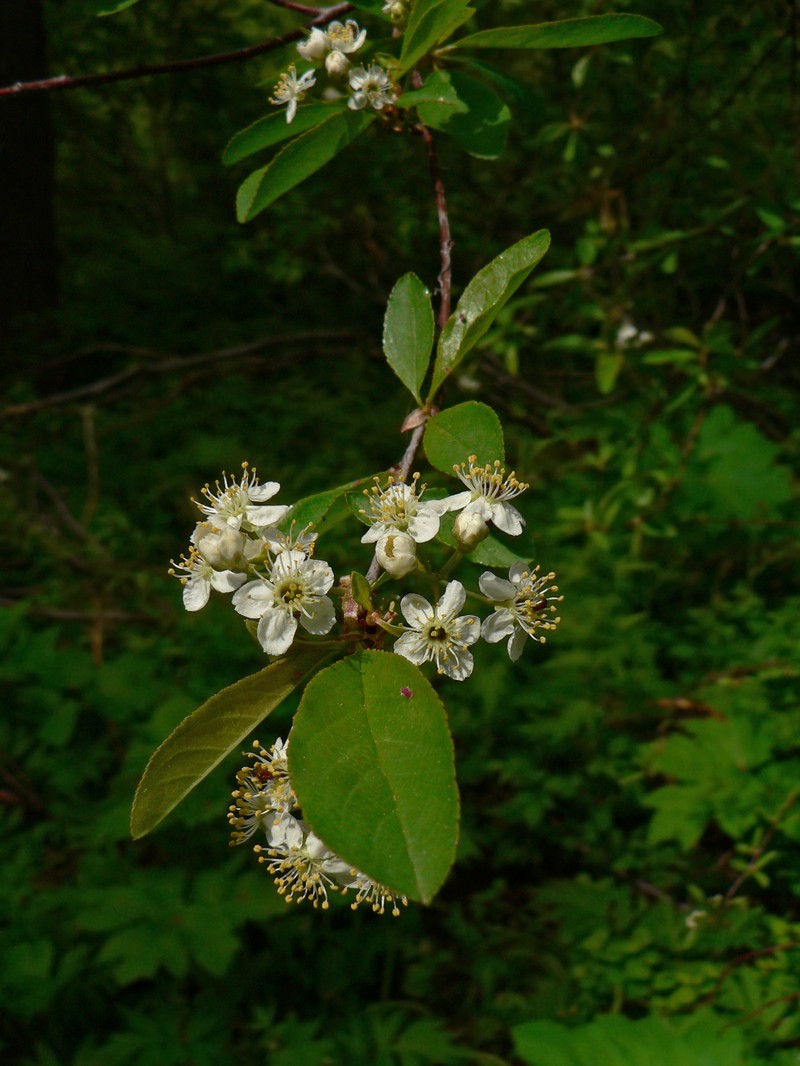
Taxonomy
- Division:
- Magnoliophyta | - Flowering plants
- Family:
- Rosaceae
- Genus:
- Prunus
- Species:
- Prunus emarginata
Growth Characteristics
- Life Cycle:
- Perennial
- Growth Habit:
- Shrub , Tree
- Height:
- More than 40 ft
- Light Requirements:
- Full Sun, Part Shade, Shade
- Drought Tolerance:
- High
- Bloom Months:
- apr, may
- Bloom Colors:
- White, Pink
Native Range
United States: Arizona, California, Idaho, Montana, New Mexico, Nevada, Oregon, Utah, Washington, Wyoming, Canada: British Columbia
Keystone Species Ranking
- Caterpillar Keystone:
- ★☆☆☆☆ Based on number of butterfly and moth species using this genus as host plant (Source: National Wildlife Federation)
Host Plant for Caterpillars
Reported Fauna Sightings
Soil Requirements
- Soil Type:
- well-drained, sandy or loamy soil
- pH:
- 5.5 - 7.5 (slightly acidic to neutral)
- Drainage:
- excellent drainage required
- Moisture:
- dry to moderate
- Notes:
- prefers open, sunny areas; tolerates poor soil
Germination Information
Pre-treatment: Seeds are placed into fine mesh bags and soaked in a 1% hydrogen peroxide (3:1 water/3% hydrogen peroxide) for 24 hours, rinsed, and placed in water for an additional 48 hours. Seeds are then layered in peat and placed into cold stratification (33.8 to 37.4 °F) for 120 days, checking weekly for mold.
Establishment: Bitter cherry often forms extensive thickets on moist slopes and along stream banks in the transition and Canadian life zones in the coast ranges, the mountains of southern California and in the Sierra Nevada. It extends northward to Idaho and British Columbia and eastward to Nevada and Arizona.
Source: npn.rngr.net