
California Blackberry
Rubus ursinus
Also known as: Pacific Dewberry
- Native to:
- Canada, Mexico, United States
Dominic
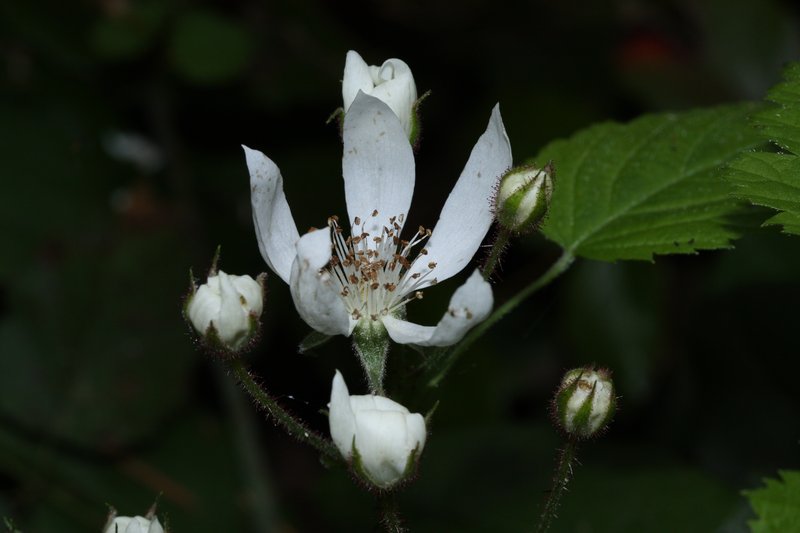
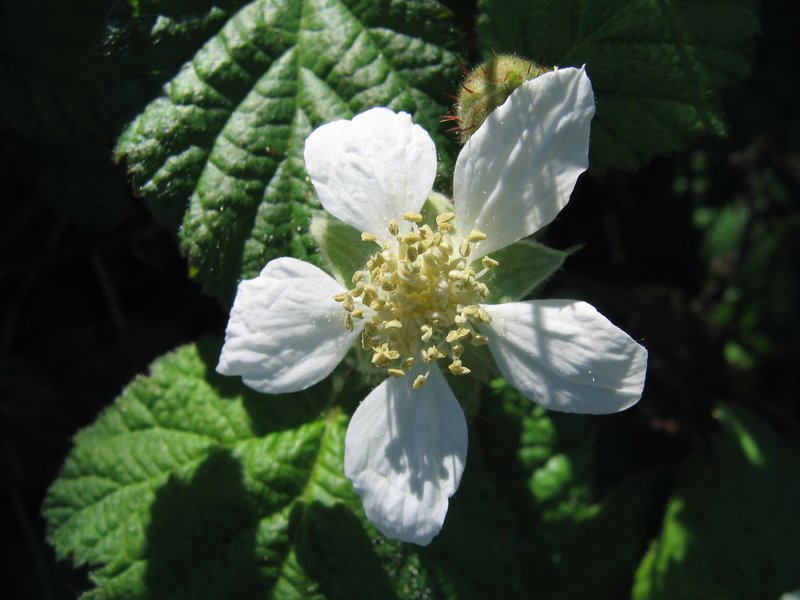
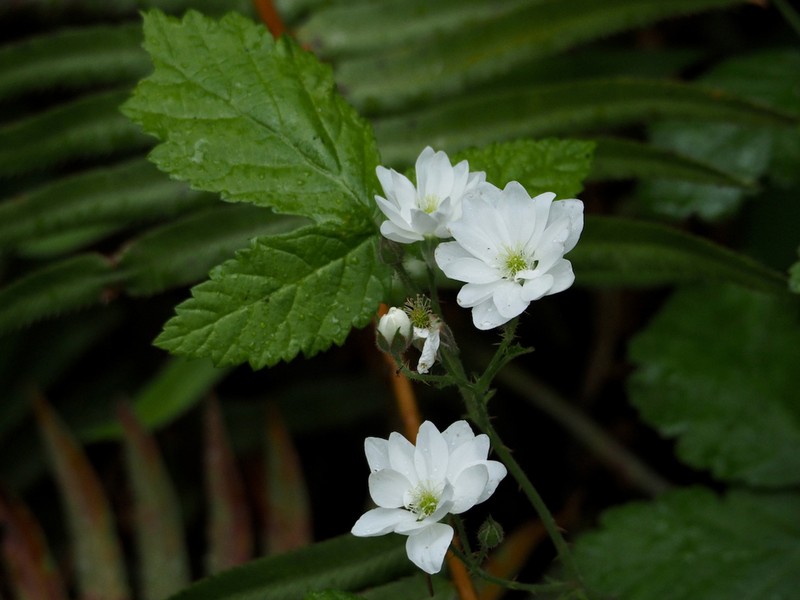
Taxonomy
- Division:
- Magnoliophyta | - Flowering plants
- Family:
- Rosaceae
- Genus:
- Rubus
- Species:
- Rubus ursinus
- USDA Symbol:
- RUUR
Growth Characteristics
- Life Cycle:
- Perennial
- Growth Habit:
- Subshrub
- Height:
- 300 cm
- Light Requirements:
- Full Sun,Part Shade,Shade
- Drought Tolerance:
- Medium
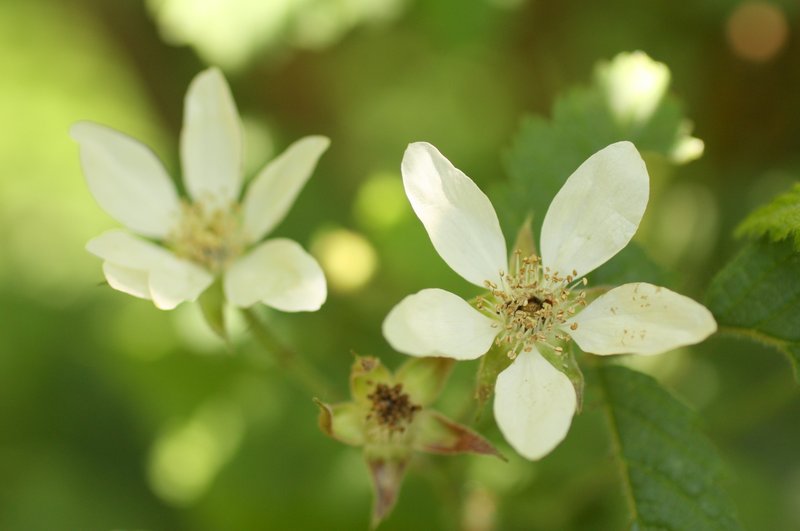
- Bloom Months:
- apr,may,jun
- Bloom Colors:
- white
- Food Forest:
- Contains edible parts
Wildlife Benefits
- Bees:
- ★☆☆☆☆ Documented bee visitation (GBIF)
- Butterflies & Moths:
- ★★★★☆ Documented Lepidoptera association (GBIF)
- Caterpillars:
- ★★☆☆☆ Recorded caterpillar host plant (HOSTS Database)
Keystone Species Ranking
- Caterpillar Keystone:
- ★★★★★ Butterfly & moth species supported by this genus (NWF)
Host Plant for Caterpillars
Acleris keiferi, blackberry skeletonizer (Schreckensteinia festaliella), Britannia Acleris Moth (Acleris britannia), Marmara sp., orange tortrix moth (Argyrotaenia citrana), orange tortrix moth (Argyrotaenia franciscana), Tischeria splendida
Reported Fauna Sightings
Bees: Black-tailed bumble bee (Bombus melanopygus), Obscure bumble bee (Bombus caliginosus), Sitka bumble bee (Bombus sitkensis), Yellow head bumble bee (Bombus flavifrons), Yellow-faced bumble bee (Bombus vosnesenskii) Moths:Coptotriche splendida Butterflies:Margined White (Pieris marginalis), Painted Lady (Vanessa cardui)
Garden & Ecology Notes
- Wildlife Value:
- birds, butterflies, small mammals
- Fall Color:
- red, purple
- Fire Ecology:
- Fire adapted — tolerates or benefits from fire
- Fire Notes:
- Resprouts vigorously from root crowns after fire; benefits from post-fire conditions.
Soil Requirements
- Soil Type:
- rich, well-drained loamy soil
- pH:
- 5.5 - 7.0 (slightly acidic to neutral)
- Drainage:
- excellent drainage required
- Moisture:
- consistently moist
- Notes:
- thrives in forest edges and clearings
Propagation & Germination
- Stratification:
- Cold/moist stratification required — 60–90 days
- Germination Time:
- 30–90 days
- Notes:
- Seeds benefit from cold stratification for 60-90 days to break dormancy.
Pre-treatment: For seeds, sow into trays filled with stabilized medium plugs (Q-plugs) and refrigerate at 1 to 3 °C for 120 days. For cuttings, dip in a mild bleach solution for 30 seconds, recut to 5 inch lengths of 4 nodes each, and treat with Hormex (3000 ppm IBA) rooting powder.
Establishment: R. ursinus is found mostly below 3,000 feet elevation in canyons and waste places; from Oregon to Lower California. Seeds are collected between June and August. Hardwood cuttings are collected between December 15th and January 31st. There are variations in the pre-treatment and establishment protocols between seeds and cuttings.
Source: npn.rngr.net
Where to Buy
Nationwide Seller
- Sheffield's Seed (seeds)