
Narrowleaf Cottonwood
Populus angustifolia
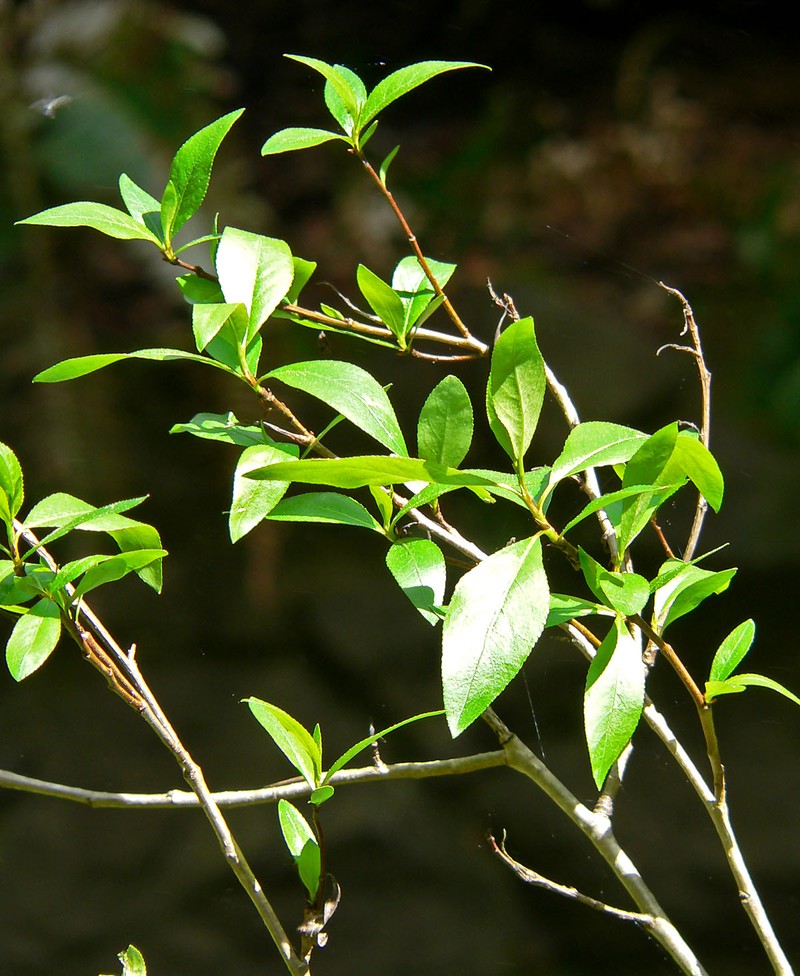
Taxonomy
- Division:
- Magnoliophyta | - Flowering plants
- Family:
- Salicaceae
- Genus:
- Populus
- Species:
- Populus angustifolia
Growth Characteristics
- Life Cycle:
- Perennial
- Growth Habit:
- Tree
- Height:
- More than 40 ft
- Light Requirements:
- Full Sun
- Drought Tolerance:
- Low
- Bloom Months:
- mar, apr, may
- Bloom Colors:
- White
Native Range
United States: Arizona, California, Colorado, Idaho, Montana, Nebraska, New Mexico, Nevada, Oregon, South Dakota, Texas, Utah, Wyoming, Canada: Alberta, Saskatchewan
Keystone Species Ranking
- Caterpillar Keystone:
- ★☆☆☆☆ Based on number of butterfly and moth species using this genus as host plant (Source: National Wildlife Federation)
Host Plant for Caterpillars
Soil Requirements
- Soil Type:
- moist, well-drained sandy loam
- pH:
- 6.0 - 8.0 (slightly acidic to neutral)
- Drainage:
- tolerates poor drainage
- Moisture:
- consistently moist
- Notes:
- Commonly found along riverbanks and floodplains
Germination Information
Pre-treatment: For seeds, no stratification is required and they should be sown immediately after cleaning. For cuttings, they should be stuck to a depth of 10 cm in a 2:1:1 peat:perlite:vermiculite mixture with a controlled release fertilizer 14-14-14 (N-P-K) 3 - 4 month incorporated at the rate of 4 kg/m3.
Establishment: The most critical factor in the collection of viable Populus seed is frequent observation of catkin development. It's preferable to wait until the capsules are almost fully open, but spring winds can disperse the seed very quickly once the capsules reach this stage and much seed can be lost instantly. For cuttings, the earlier they are taken (late February through March) the longer they can be stored before bud burst occurs during storage. Once bud burst occurs, rooting success declines quickly.
Source: npn.rngr.net