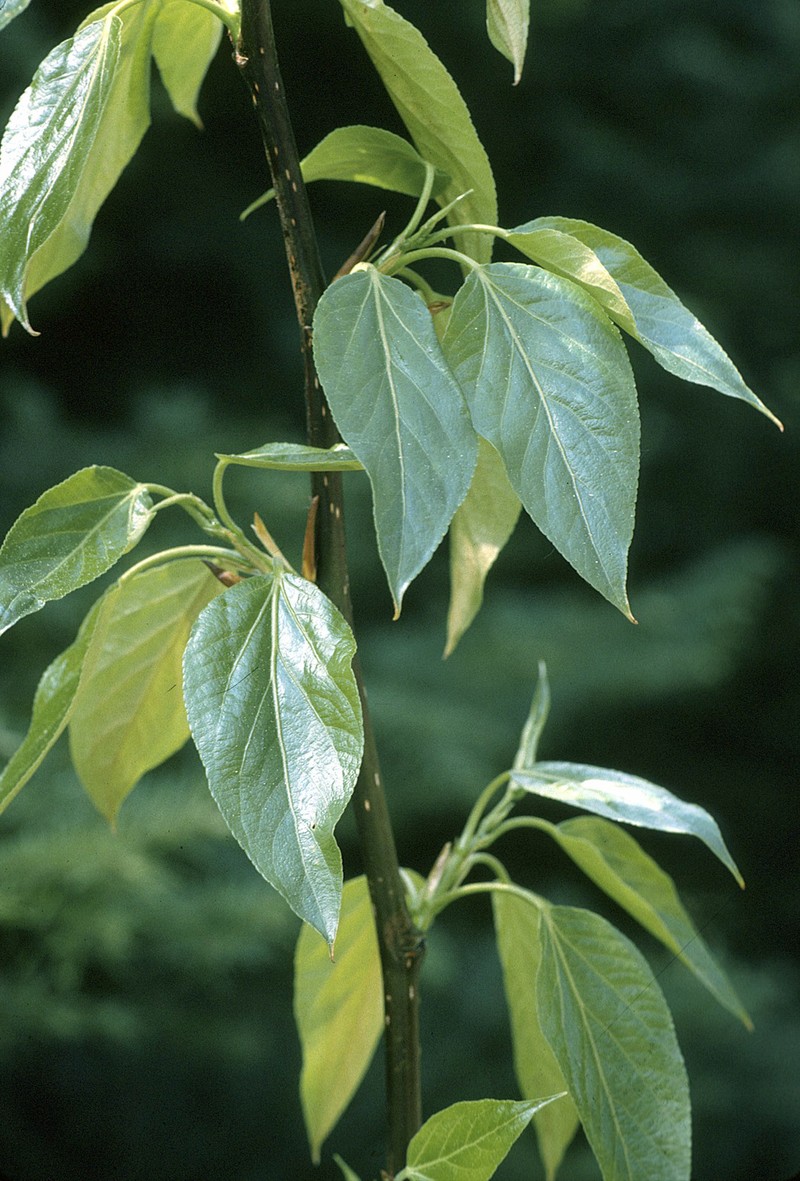
Taxonomy
- Division:
- Magnoliophyta | - Flowering plants
- Family:
- Salicaceae
- Genus:
- Populus
- Species:
- Populus balsamifera
Growth Characteristics
- Life Cycle:
- Perennial
- Growth Habit:
- Tree
- Height:
- More than 40 ft
- Light Requirements:
- Full Sun
- Drought Tolerance:
- High
- Bloom Months:
- apr, may
- Bloom Colors:
- Yellow, Green, Brown
Native Range
United States: Alaska, California, Colorado, Connecticut, District of Columbia, Delaware, Iowa, Idaho, Illinois, Indiana, Massachusetts, Maryland, Maine, Michigan, Minnesota, Montana, North Dakota, New Hampshire, New Jersey, Nevada, New York, Ohio, Oregon, Pennsylvania, Rhode Island, South Dakota, Utah, Virginia, Vermont, Washington, Wisconsin, West Virginia, Wyoming, Canada: Alberta, British Columbia, Manitoba, New Brunswick, Nova Scotia, Northwest Territories, Nunavut, Ontario, Prince Edward Island, Quebec, Saskatchewan, Yukon
Keystone Species Ranking
- Caterpillar Keystone:
- ★☆☆☆☆
Based on number of butterfly and moth species using this genus as host plant (Source: National Wildlife Federation)
Host Plant for Caterpillars
Acleris maximana, Acronicta dactylina, Acronicta impleta, American Dagger Moth (Acronicta americana), American hornet moth (Sesia tibialis), Bethune's Pinion (Lithophane bethunei), Big Poplar Sphinx (Pachysphinx occidentalis), Black-rimmed Prominent (Pheosia rimosa), Blinded Sphinx (Paonias excaecata), Bordered Sallow (Pyrrhia umbra), Bruce's prominent moth (Clostera brucei), Cecropia moth (Hyalophora cecropia), cherry blotch miner moth (Phyllonorycter propinquinella), Cherry Casebearer Moth (Coleophora pruniella), Clostera apicalis, Colocasia propinquilinea, Confused Haploa (Haploa confusa), Confused Morrisonia (Morrisonia confusa), Copper Underwing (Amphipyra pyramidoides), dusky clearwing (Paranthrene tabaniformis), Eastern blackheaded budworm (Acleris variana), Eastern spruce budworm (Choristoneura fumiferana), Egira dolosa, Enargia infumata, Endothenia albolineana, Epinotia criddleana, Epinotia nisella, Eupithecia columbiata, Eupithecia ravocostaliata, Fall webworm (Hyphantria cunea), funeral dagger moth (Acronicta funeralis), Garden Tiger Moth (Arctia caja), Gluphisia septentrionis, Grey Amphipyra (Amphipyra glabella), Grey pug (Eupithecia subfuscata), Gypsonoma substitutionis, Hare-Lip Dagger Moth (Acronicta lepusculina), Herald (Scoliopteryx libatrix), hibiscus Quaker (Orthosia hibisci), Homoglaea hircina, impressed dagger moth (Acronicta impressa), Io moth (Automeris io), Ipimorpha pleonectusa, Lace-winged zale (Zale minerea), Large aspen tortrix (Choristoneura conflictana), large looper moth (Autographa ampla), Lintner's gluphisia moth (Gluphisia lintneri), locust borer (Paranthrene robiniae), maple-basswood leafroller (Sparganothis pettitana), Modest Sphinx (Pachysphinx modesta), Norman's Quaker (Crocigrapha normani), nutmeg (Discestra trifolii), oak nycteoline (Nycteola revayana), Obliquebanded leafroller (Choristoneura rosaceana), Olethreutes glaciana, One-eyed sphinx (Smerinthus cerisyi), Pale Enargia (Enargia decolor), Phyllonorycter nipigon, Phyllonorycter salicifoliella, poplar tortricid moth (Cydia populana), Portland Phosphila (Pheosia portlandia), Pyrrhia sp., Raphia frater, Red-banded leafroller (Argyrotaenia velutinana), Red-humped caterpillar moth (Schizura concinna), Ross's tussock moth (Gynaephora rossii), Rusty Tussock Moth (Orgyia antiqua), Semioscopis inornata, Semiothisa neptaria, sulphur moth (Hesperumia sulphuraria), tentoriferella (Machimia tentoriferella), three-lined leafroller (Pandemis limitata), Three-spotted sallow (Eupsilia tristigmata), ugly-nest caterpillar moth (Archips cerasivorana), Unmarked dagger moth (Acronicta innotata), Variable Tussock Moth (Dasychira vagans), Western tent caterpillar (Malacosoma californica), White Satin Moth (Leucoma salicis), White Underwing (Catocala relicta), White-marked Tussock Moth (Orgyia leucostigma), Dreamy Duskywing (Erynnis icelus), Eastern Tiger Swallowtail (Papilio glaucus), Lorquin's admiral (Basilarchia lorquini), ⚠️Persius duskywing (Erynnis persius), Red-spotted Purple (Basilarchia arthemis), Western Tiger Swallowtail (Papilio rutulus)
Soil Requirements
- Soil Type:
- rich, well-drained loamy soil
- pH:
- 5.5 - 7.5 (slightly acidic to neutral)
- Drainage:
- tolerates poor drainage
- Moisture:
- consistently moist
- Notes:
- Commonly found in riparian zones and floodplains.
Germination Information
Pre-treatment: Cuttings are cut into 15 to 20 cm lengths, with the base recut and 1/3 of leaves or buds removed. Cuttings are placed in a 2 minute fungicide bath to remove surface pathogens. Cuttings are treated with 1000 to 2000 ppm liquid IBA or none, and stuck in mist bed with at least 2 nodes below the surface of the rooting medium.
Establishment: Cuttings can be collected from either stooling beds or from the wild. Collections are made after leaves have fallen from the stems in late fall or early winter and before buds begin to swell in the spring. Only current years growth is collected from stems that have diameters between 3/8 and 5/8 inch diameters.
Source: npn.rngr.net