
Palmer Oak
Quercus palmeri
- Native to:
- Mexico, United States
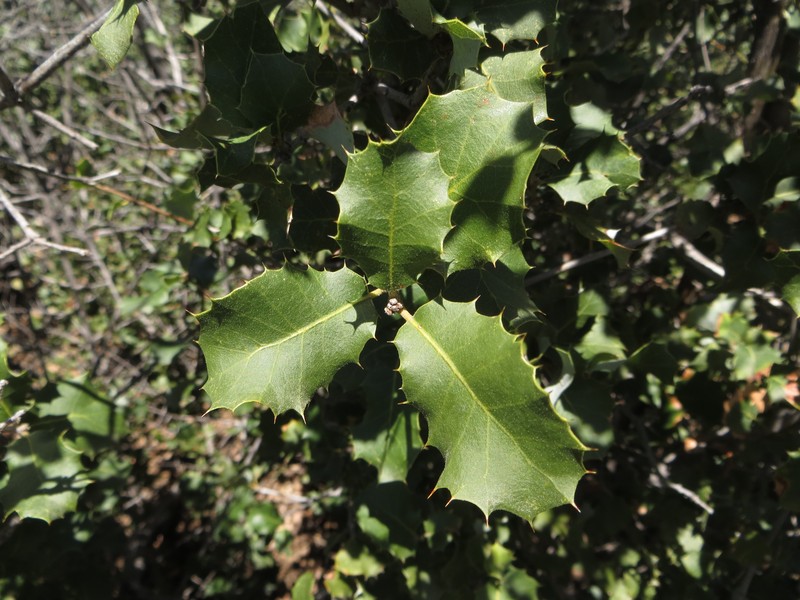
Tentaculata
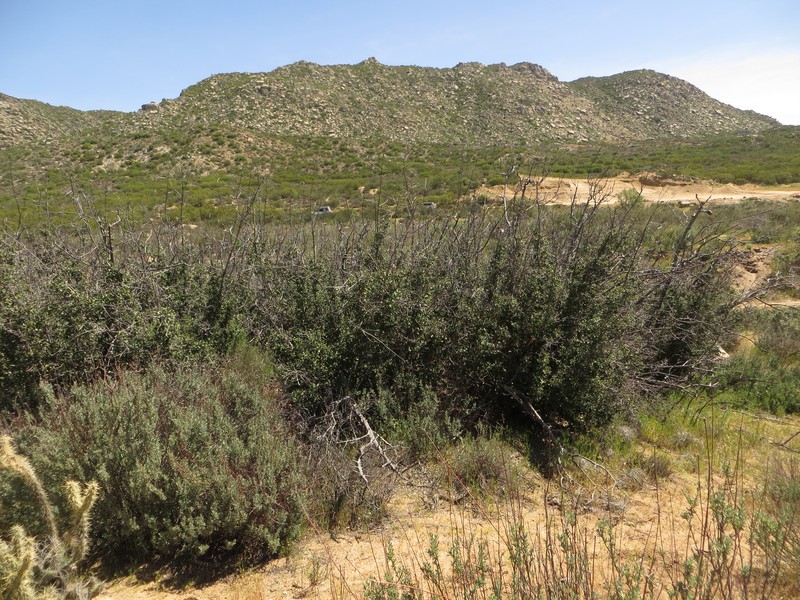
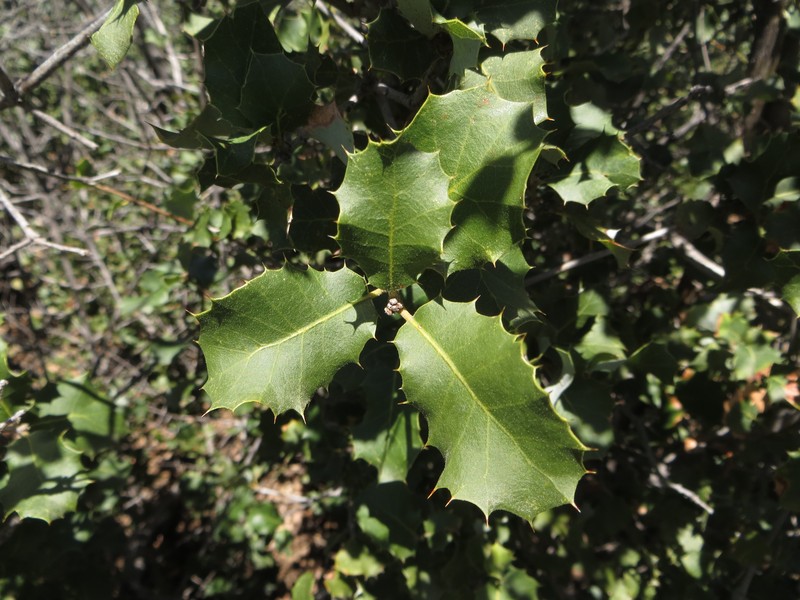
Taxonomy
- Division:
- Magnoliophyta | - Flowering plants
- Family:
- Fagaceae
- Genus:
- Quercus
- Species:
- Quercus palmeri
- USDA Symbol:
- QUPA10
Growth Characteristics
- Life Cycle:
- Perennial
- Growth Habit:
- Shrub , Tree
- Height:
- 600 cm
- Light Requirements:
- Full Sun
- Drought Tolerance:
- High
Wildlife Benefits
- Caterpillars:
- ★★★☆☆ Recorded caterpillar host plant (HOSTS Database)
Keystone Species Ranking
- Caterpillar Keystone:
- ★★★★★ Butterfly & moth species supported by this genus (NWF)
Host Plant for Caterpillars
Acrocercops sp., Buck Moth (Hemileuca maia), California oakworm (Phryganidia californica), Cameraria conglomeratella, Cameraria diabloensis, Cameraria leucothorax, Cameraria shenaniganensis, Decodes montanus, Dicogaster coronada, Distinct Tolype (Tolype distincta?), Epinotia emarginana, Eriocraniella falcata, Evippe sp., Hemihyalea edwardsii, Henricus sp., indiscreet cissusa moth (Cissusa indiscreta), McDunnough's underwing (Catocala mcdunnoughi), Neocrania bifasciata, Orgyia cana (Orgyia cana), Pseudocopivaleria anaverta, Rectiostoma fernaldella, Sicya pergilvaria, Stilbosis dulcedo, Telphusa sedulitella, Tolype sp., Western tent caterpillar (Malacosoma californica), Western tussock moth (Orgyia vetusta), Bredow's sister (Adelpha bredowii), Golden Hairstreak (Habrodais grunus), Western Tiger Swallowtail (Papilio rutulus)
Garden & Ecology Notes
- Wildlife Value:
- birds, small mammals
- Fire Ecology:
- Fire adapted — tolerates or benefits from fire
- Fire Notes:
- Resprouts from root crown after fire; adapted to frequent fire regimes.
Soil Requirements
- Soil Type:
- rocky, well-drained, nutrient-poor soil
- pH:
- 5.5 - 7.5 (slightly acidic to neutral)
- Drainage:
- excellent drainage required
- Moisture:
- dry to moderate
- Notes:
- Commonly found in chaparral and desert regions
Propagation & Germination
- Stratification:
- Cold/moist stratification required — 30–60 days
- Germination Time:
- 30–90 days
- Notes:
- Seeds benefit from cold stratification; sow in fall or after cold treatment.
Pre-treatment: Cold-moist stratification for 30 days at 1–5°C (34–41°F).; then Scarify, then cold-moist stratify for 60 days.
Source: Claude AI
Where to Buy
Nationwide Seller
- Sheffield's Seed (seeds)